Oman's Mina Al Fahal Terminal Resumes Operations After Explosion Halts Crude Loadings
Operations restored at Gulf's last major crude export point outside Hormuz

Muscat | EcoPulse24
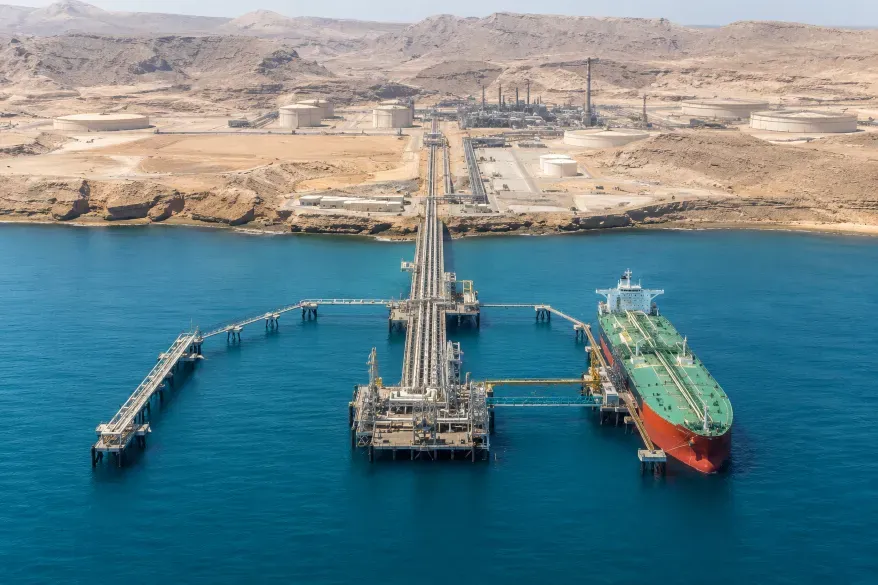
Oman's main crude oil export terminal at Mina Al Fahal has resumed operations following an explosion that temporarily disrupted loadings at the strategically critical facility, Bloomberg reported, citing traders familiar with the matter. No berths were directly affected by the blast, and Omani crude loadings that had initially been pushed back are now resuming, according to the traders, who asked not to be named as they are not authorised to speak to the media. Neither state-owned Petroleum Development Oman nor the Mina Al Fahal port had responded to requests for comment at the time of publication.
Third incident in three months signals a pattern, not an isolated event
The explosion cannot be read in isolation. In March, an attack on the terminal prompted tankers to evacuate the area as a precautionary measure, though the port reopened within hours. In May, loadings that had already been scheduled were preliminarily pushed back by several days amid a tanker jam caused by a surge in orders from French major TotalEnergies. Today's blast marks the third incident affecting Mina Al Fahal in as many months - a pattern that carries structural implications for one of the few remaining crude loading points still operating outside the Strait of Hormuz.
Strategic location amplifies every disruption
Mina Al Fahal is located on the Gulf of Oman, outside the Persian Gulf entirely, meaning the conflict is now visibly reaching beyond the strait itself into open-ocean export infrastructure. This geographic distinction has made the terminal one of the most closely watched energy facilities in the world since the onset of the regional conflict now entering its fourth month. The explosion occurred between the terminal's two single-buoy mooring berths, known as SBM 1 and SBM 2, which are used to load crude oil onto tankers. Iranian state media reported the explosion, but Iran's military has neither claimed nor denied responsibility.
Oman's role as a longstanding diplomatic back-channel between Tehran and Washington adds a particularly consequential dimension to any targeting of its energy infrastructure. The fact that Oman has been serving as a diplomatic intermediary in US-Iran talks adds a particularly serious dimension: targeting or destabilising Omani infrastructure risks undermining the one neutral channel both sides have been willing to use.
Oil markets absorb the news with WTI at $92.80
At the time of publication, WTI crude was trading at $92.80 per barrel. The resumption of operations at Mina Al Fahal provides immediate relief to a market that has been pricing escalating infrastructure risk across Gulf energy assets. However, the pattern of recurring disruptions at this specific terminal - even when operations are swiftly restored - continues to add a structural risk premium to loading schedules relied upon by refineries across Asia and Europe.
| Incident | Date | Impact | Resolution |
|---|---|---|---|
| Attack on terminal | March 2026 | Tanker evacuation | Reopened within hours |
| Tanker loading jam | May 2026 | Multi-day loading delays | Gradual clearance |
| Explosion at SBM berths | June 5, 2026 | Loadings pushed back | Operations resuming |
Source: Bloomberg, Reuters. Official confirmation from PDO and port authority pending at time of publication.
EcoPulse24 Analysis
The resumption of operations at Mina Al Fahal is the short-term headline. The medium-term story is the accumulation of three disruptions at a single terminal in ninety days. Each incident - regardless of how quickly operations resume - adds to the maritime insurance risk premium, extends cargo scheduling uncertainty, and raises the baseline cost of routing crude through what has become one of the Gulf's last viable loading corridors outside the Strait of Hormuz.
What distinguishes this incident from the March attack is the geographic signal it sends. Mina Al Fahal sits outside the Persian Gulf entirely, on the open waters of the Gulf of Oman. If the conflict's reach is extending to infrastructure in this zone, the effective perimeter of energy supply risk in the region is materially wider than markets have been pricing. That shift, even if today's disruption proves temporary, is not a temporary development - it is a recalibration of the threat envelope that will influence how operators, insurers, and importers approach Gulf crude logistics for months ahead.
For Gulf energy markets and the broader oil pricing complex, the key variable is no longer whether Mina Al Fahal can resume operations after each incident - it demonstrably can. The key variable is how many incidents the terminal can absorb before the cumulative operational uncertainty begins to permanently redirect crude flows toward alternative loading points, however limited those alternatives may be.
Sources & References
Editorial Note
Disclaimer
© 2025 EcoPulse24. All rights reserved.