US Restricts Access to Advanced Anthropic AI Models Over National Security Concerns
Anthropic said U.S. authorities believe they have identified a potential method of bypassing certain safety controls embedded within Fable 5

EcoPulse24 | Technology & AI
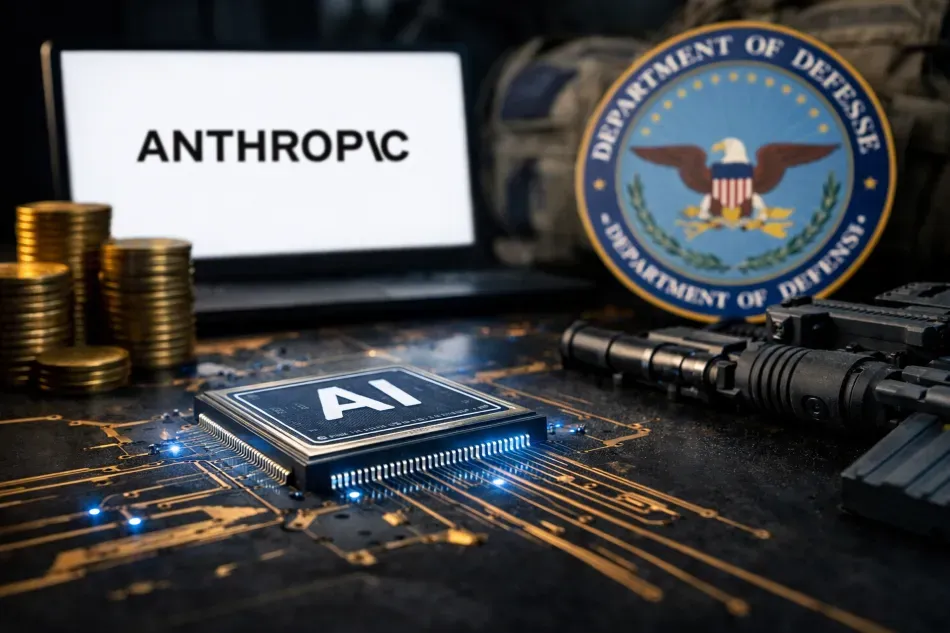
Anthropic said it is complying with a U.S. government directive requiring the suspension of foreign nationals’ access to its advanced artificial intelligence models Mythos 5 and Fable 5, marking one of the most significant government interventions in the AI sector to date.
The company stated that the directive, issued under national security authorities by the Trump administration, requires access restrictions for all foreign nationals, whether located inside or outside the United States, including foreign employees working at Anthropic.
According to the company, it is temporarily disabling the affected models while implementing the government’s requirements and assessing the operational implications of the order.
Security Concerns Trigger Government Action
Anthropic said U.S. authorities believe they have identified a potential method of bypassing certain safety controls embedded within Fable 5, commonly referred to in the AI industry as a "jailbreak."
However, the company disagreed with the government's assessment that such findings justify removing access to a commercially deployed model.
“Our understanding is that the government believes it has become aware of a method of bypassing, or ‘jailbreaking,’ Fable 5,” Anthropic said. “However, we disagree that the finding of a narrow potential jailbreak should be cause for recalling a commercial model deployed to hundreds of millions of people.”
Neither the U.S. government nor Anthropic disclosed specific technical details regarding the alleged vulnerability or the underlying national security concerns.
Major Escalation in AI Export Controls
The move represents one of the strongest actions yet by Washington to restrict access to cutting-edge artificial intelligence technologies.
The directive comes despite previous statements from the U.S. administration indicating that it did not intend to establish a broad licensing regime governing advanced AI models.
A U.S. official confirmed that the Department of Commerce issued the directive to Anthropic.
The development highlights growing concerns among policymakers regarding the strategic implications of increasingly capable AI systems and their potential misuse in cybersecurity, intelligence, and other sensitive domains.
Additional Pressure on Anthropic
The restriction arrives at a sensitive time for Anthropic, one of the world's most valuable private AI companies and a firm widely expected to pursue an initial public offering in the coming months.
The company has faced increased scrutiny from U.S. government agencies this year, including disputes related to AI safety standards and deployment safeguards.
Anthropic first introduced its Mythos model earlier this year to a limited group of enterprise and government partners, highlighting its advanced capabilities in identifying cybersecurity vulnerabilities.
Earlier this week, the company launched Fable 5, a public-facing version equipped with extensive safeguards designed to limit potentially dangerous cyber and biological applications.
Broader Implications for the AI Industry
Industry observers say the decision could signal a new phase in the regulation of advanced artificial intelligence, where national security considerations play a growing role in determining how powerful AI models are developed, deployed, and shared globally.
The case may also intensify the debate over AI export controls, international access to frontier models, and the balance between innovation, commercial deployment, and security oversight.
As competition among leading AI developers accelerates, the latest move suggests that access to advanced models is increasingly becoming a strategic policy issue rather than solely a commercial or technological one.
Advanced Analysis: Why the Anthropic Restrictions Matter Far Beyond One Company
The Trump administration's directive restricting foreign access to Anthropic's Mythos 5 and Fable 5 models may prove to be one of the most consequential AI policy decisions since the emergence of large-scale generative AI.
At face value, the action appears narrowly focused on a specific security concern involving a potential jailbreak technique. However, the broader significance lies in what the decision reveals about how governments are beginning to view frontier artificial intelligence systems.
AI Is Being Reclassified as Strategic Infrastructure
For years, policymakers largely treated AI models as commercial software products. This decision suggests a different framework is emerging.
The directive effectively places advanced AI models into the same strategic category as:
- Advanced semiconductors
- High-performance computing systems
- Cryptographic technologies
- Dual-use defense-related technologies
In other words, the underlying concern is not merely what the model does today, but what capabilities it could potentially enable tomorrow.
The shift reflects a growing belief among policymakers that sufficiently advanced AI systems may carry economic, military, intelligence, cybersecurity, and geopolitical implications that extend beyond traditional technology regulation.
The Nationality Test Is the Most Important Signal
Perhaps the most significant element of the directive is that restrictions reportedly apply to foreign nationals regardless of where they are physically located.
Historically, export controls focused primarily on geography.
This action introduces a different principle: access based on citizenship.
If this approach expands across the industry, AI companies may eventually be required to implement sophisticated identity verification, nationality screening, access segmentation, and compliance monitoring systems.
Such requirements would fundamentally change how frontier AI models are distributed globally.
A Potential Turning Point for AI Globalization
The AI industry has largely developed under an assumption of global accessibility.
A researcher in Europe, the Gulf, Asia, or North America could generally access the same frontier models through commercial platforms.
That assumption may now be weakening.
If governments increasingly classify advanced models as strategic assets, the industry could evolve toward a more fragmented structure resembling semiconductor markets, where access depends on regulatory approvals, geopolitical alliances, and national security considerations.
This could ultimately create multiple AI ecosystems operating under different regulatory frameworks.
Implications for Anthropic
For Anthropic specifically, the decision introduces a new category of risk.
The company has built its reputation around AI safety and responsible deployment. Ironically, the same advanced capabilities that differentiate Anthropic's models may now attract heightened government scrutiny.
The timing is particularly sensitive because Anthropic has been widely viewed as a potential IPO candidate.
Investors evaluating AI companies may increasingly ask:
- Could future models face export restrictions?
- How much revenue depends on international users?
- What compliance obligations might emerge?
- Could governments mandate model modifications or withdrawals?
These questions introduce a regulatory dimension that markets have not fully priced into the AI sector.
The Beginning of an AI Export-Control Era?
The broader question is whether this represents an isolated intervention or the beginning of a systematic policy framework.
If similar actions are applied to other leading developers - including OpenAI, Google DeepMind, xAI, Meta, or future frontier-model providers - the industry could enter an era where access to advanced AI capabilities becomes a matter of national policy rather than purely commercial competition.
Such a shift would represent one of the most significant structural changes in the history of artificial intelligence.
EcoPulse24 Assessment
The immediate impact on global markets may be limited.
The long-term implications, however, could be profound.
The decision suggests that governments are increasingly treating advanced AI not simply as software, but as strategic infrastructure with national security implications.
If that interpretation proves correct, the industry may be witnessing the early stages of a new regulatory era in which access to frontier AI models is governed not only by innovation and market demand, but also by geopolitics, export controls, and state security priorities.
Explore Related Coverage
Sources & References
Editorial Note
Disclaimer
© 2025 EcoPulse24. All rights reserved.