Bitcoin's 7% Weekly Surge Was Never a Crypto Story
Bitcoin's 7% weekly rise was driven by global macro shifts, not crypto sentiment, mainly due to Middle East ceasefire and ETF inflows.


Ecopulse24 | Dubai
Masadir market signals show the move tracked a broad macro liquidity shift - not digital asset sentiment
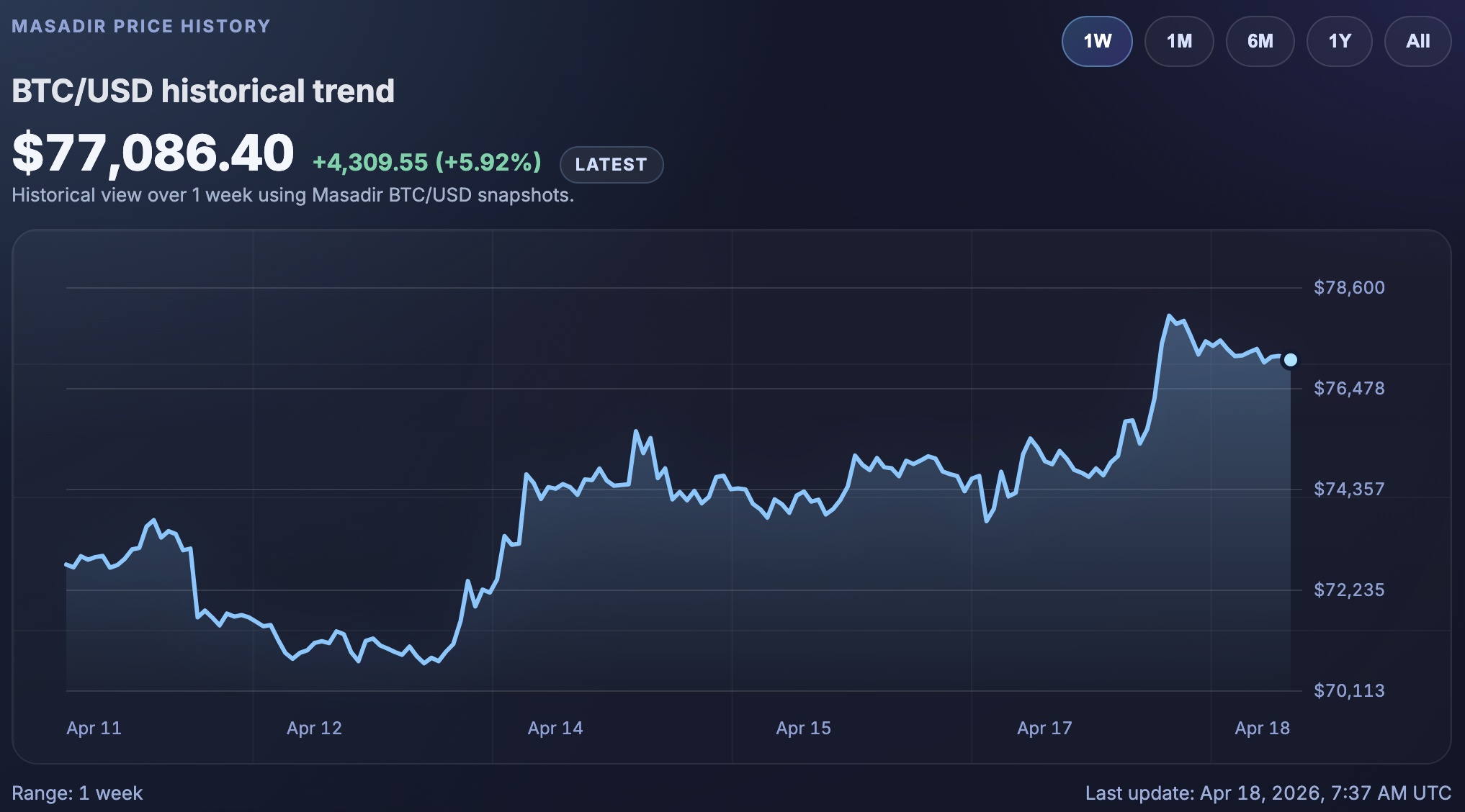
Bitcoin climbed from roughly $70,000 to a weekly peak of $78,015 on April 17, 2026 - a gain of approximately 7.2% in seven trading days, according to Masadir BTC/USD price snapshots. The timing, the speed, and the cross-asset context tell a story that has little to do with cryptocurrency markets and everything to do with global macro conditions.
The catalyst was geopolitical, not digital. Oil prices tumbled sharply after Iranian Foreign Minister Seyed Abbas Araghchi declared the Strait of Hormuz "completely open" during a 10-day ceasefire between Israel and Lebanon - with prices having already begun easing after Trump announced the truce. That single development triggered a simultaneous wave across multiple asset classes - and Bitcoin was squarely inside it.
A cross-asset move, not a crypto rally
Masadir's Cross-Asset Inflation Bias signal - which composites energy, precious metals, and GCC equity direction into a single macro regime score - printed at −0.85 on April 17, reflecting softening inflation conditions across input classes. This is an emerging analytical framework built from live market data, not an established benchmark, and should be read as directional rather than precise.
The individual components, however, are unambiguous: the energy basket fell 4.49%, driven by Brent crude down 6.89% and WTI down 6.61%. Precious metals rose 2.06%, with silver leading at +3.23% and gold gaining 0.89%. The Growth and Liquidity Pulse signal - which blends Bitcoin momentum with GCC equity breadth - printed at +1.48, signaling risk-on conditions across the board.
Independent analysis confirmed the macro-driven nature of the move: Bitcoin's primary driver was geopolitical de-escalation, with the cryptocurrency showing a 64% correlation with the S&P 500 at the time - a figure that points to broad risk sentiment, not crypto-specific demand.
This is the defining characteristic of Bitcoin in 2026. As of early 2026, Bitcoin's correlation with the Nasdaq 100 had risen to 0.72, reflecting its deepening integration into the broader equity risk complex - suggesting the asset now participates in global risk-on cycles rather than trading as a purely monetary hedge.
The macro trigger, the institutional amplifier
The distinction matters: macro conditions were the trigger, but institutional market structure was the amplifier. U.S. spot Bitcoin ETFs have introduced a structural demand layer that did not exist in prior cycles. In the week surrounding the ceasefire announcement, ETF inflows surged, with BlackRock's IBIT recording its best single-day performance since early March - a signal of renewed confidence from traditional finance players rotating back into risk assets.
This changes the mechanics of how Bitcoin responds to macro events. Rather than the sharp, sentiment-driven spikes of earlier cycles, the ETF bid provides a structural floor that absorbs selling pressure and amplifies recoveries when risk appetite returns. The 7.2% weekly gain reflects both forces working simultaneously - a macro catalyst landing on a market structurally positioned to respond.
The Hormuz variable - and why the pullback matters
The April 17 peak at $78,015 was followed by a partial retreat visible in Masadir's price history. That pullback reflects a market that moved on expectation rather than confirmed resolution. ING analysts warned that despite the Hormuz declaration, physical oil markets were becoming tighter every day that passed without actual resumption of oil flows through the strait, estimating roughly 13 million barrels per day of supply remained disrupted.
The retreat from peak levels likely reflects a combination of factors: unconfirmed physical reopening of the strait, weekend liquidity thinning typical of crypto markets, and technical resistance near the $78,000 level. Attributing the pullback to any single cause overstates what the data shows. What is clear is that the risk-on wave that lifted Bitcoin was priced on the announcement - and the market moved to partially reprice as the durability of the ceasefire remained uncertain.
What the signals say next
The mixed composite score of −0.85 captures exactly this tension: energy conditions are softening on ceasefire optimism, but precious metals remain elevated - a classic split between markets pricing in relief and investors hedging against the possibility that relief does not hold.
The FOMC meeting scheduled for April 28 – 29 is the next critical variable, with officials facing tilted risks from geopolitical tensions, elevated oil prices, and sticky inflation - core PCE having risen to 3.1% - making any pivot toward easing unlikely in the near term.
A hawkish Fed signal, or any deterioration in the ceasefire terms, would rapidly reverse the risk-on conditions that drove the weekly surge. The IMF's April 2026 World Economic Outlook flagged that downside risks dominate the global outlook, with a longer or broader conflict in the Middle East among the scenarios most capable of significantly weakening growth and destabilizing financial markets.
The 7.2% gain was real. The macro conditions that produced it remain, at their core, unresolved.
Sources & References
Editorial Note
Disclaimer
© 2025 EcoPulse24. All rights reserved.