What Happens to OpenAI's $1 Trillion IPO If Elon Musk Wins?
If Musk wins in court, OpenAI's $1T IPO could be blocked or devalued; if he loses, IPO likely proceeds at a premium.

EcoPulse24 | London
Tuesday, April 28, 2026
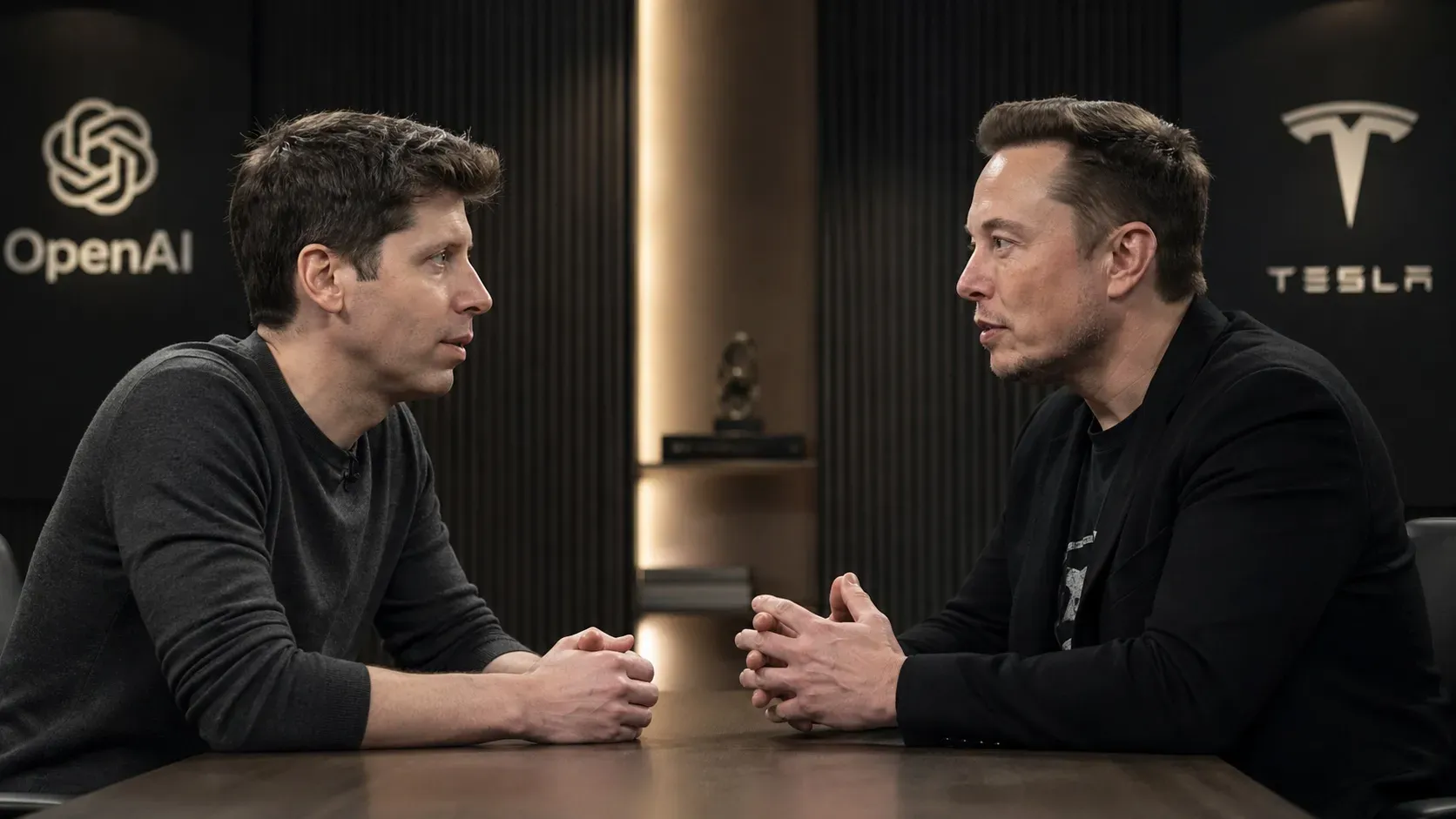
The trial that began Monday in Oakland, California is not simply a billionaire grudge match. It is a legal proceeding that could determine whether the most anticipated IPO of the decade goes ahead as planned - or gets derailed entirely.
Nine jurors were seated Monday in the high-stakes legal battle between Elon Musk and OpenAI CEO Sam Altman, drawn from a pool of 40 Bay Area residents through five hours of close questioning. Altman and OpenAI President Greg Brockman attended in person - an unusual move for executives of their profile.
The Case in Plain Terms
OpenAI was founded in 2015 as a nonprofit, primarily funded by Musk, before evolving into a commercial enterprise now valued at $852 billion. Musk alleges that Altman and Brockman betrayed the company's founding mission to develop AI for humanity's benefit - and that they enriched themselves in the process.
Of 26 original claims, only two survive: unjust enrichment and breach of charitable trust. The fraud allegation was dismissed Friday. Musk's legal team has said he is seeking up to $134 billion in wrongful gains - with proceeds directed back to the original charity, not to Musk personally. He is also seeking the removal of Altman and Brockman from OpenAI leadership.
The Move That Changes Everything
On the same day jury selection began, OpenAI dismantled three structural protections of its charitable mission simultaneously - a sequence Musk's lawyers will almost certainly present to jurors as evidence of exactly what they allege.
The AGI clause - which had given the nonprofit board power to terminate Microsoft's commercial rights once artificial general intelligence was achieved - is gone. Microsoft's IP license shifted from exclusive to non-exclusive through 2032, opening the door for OpenAI to work with Amazon Web Services, Google Cloud, and Oracle. And Microsoft's cloud exclusivity ended entirely, while OpenAI continues paying Microsoft through 2030 with no revenue share flowing back.
The timing is not incidental. These changes happened on the morning of trial. Musk's lawyers will use them in court.
The IPO Question Nobody Is Asking
OpenAI is targeting a public listing in Q4 2026 at a valuation approaching $1 trillion. The company is in informal talks with Wall Street banks and is racing to list before rival Anthropic, which is planning its own October debut. CFO Sarah Friar confirmed the company will allocate a portion of IPO shares to retail investors, calling broad participation essential to building trust in AI.
But the IPO math changes dramatically depending on what happens in court by May 21.
If Musk wins - and proves breach of charitable trust - the court could order OpenAI's restructuring unwound, force leadership changes, or impose conditions on any public offering. A company entering a roadshow under a cloud of legal liability and forced restructuring will not command a $1 trillion valuation. It will command a discount.
If Musk loses - OpenAI walks into its IPO with the lawsuit resolved, governance questions answered, and a clear runway to market. The stock will likely open at a premium.
The trial is therefore not just a legal event. It is a pre-IPO pricing event - and the market has not yet priced it that way.
The Structural Problem Beneath the Drama
Strip away the personalities and what remains is a genuine governance crisis. OpenAI is losing $14 billion per year and does not expect profitability until 2030. HSBC estimates the company may need over $207 billion in additional funding between now and then - even accounting for projected revenue growth.
A company burning cash at this rate, undergoing forced structural changes, facing a credible legal challenge to its nonprofit-to-for-profit conversion, and simultaneously preparing a blockbuster IPO is carrying more risk than its $852 billion valuation implies.
OpenAI has called the lawsuit "a baseless and jealous bid to derail a competitor," arguing that Musk's motivations are transparently competitive given his own AI company, xAI. That argument may resonate with a jury. It does not resolve the structural questions that institutional investors will ask before committing capital.
What Musk Does Next
Three paths are available to him. He can win in court and seek to block or restructure the IPO - the most legally consequential outcome. He can lose in court but continue the public pressure campaign through X, targeting retail investors before the roadshow begins. Or, in the most ironic scenario, he could simply buy OpenAI shares on the open market after the IPO and become a shareholder in the company he sued.
The third option is unlikely. The first two are not.
EcoPulse24 Analysis
For investors in the Gulf and across the MENA region watching the AI sector, the Musk-Altman trial carries a direct implication: the valuation at which OpenAI enters public markets will be set, in part, by what nine jurors in Oakland decide before May 21.
If you are considering exposure to OpenAI - directly at IPO or indirectly through SoftBank, Microsoft, or other stakeholders - the trial is not background noise. It is material information.
The company that defined the modern AI era is heading to court and to market simultaneously. Both outcomes will shape the investment landscape for years to come. Watch both carefully.
Sources & References
Editorial Note
Disclaimer
© 2025 EcoPulse24. All rights reserved.