Germany Inflation Surges to 2.7% in March 2026, Highest Since January 2024
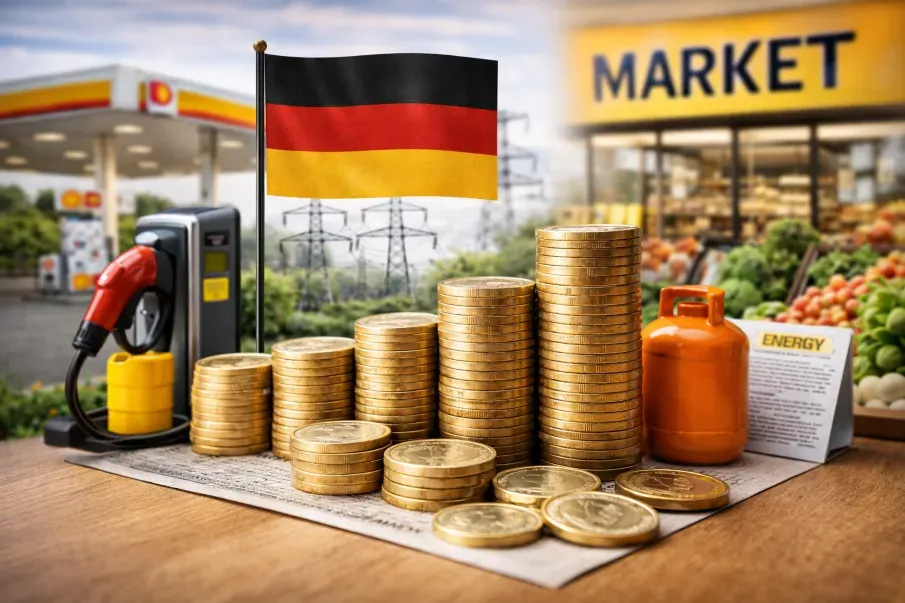
Germany's annual inflation jumped to 2.7% in March 2026, driven by a 7.2% energy price rebound, the highest level since January 2024.

EcoPulse24 | Berlin
Germany's annual inflation rate climbed to 2.7% in March 2026, up sharply from 1.9% in February and matching market forecasts, according to preliminary estimates released today. The reading marks the highest level since January 2024 and was driven primarily by a 7.2% surge in energy prices, ending 26 consecutive months of energy price declines. The data was published on Monday, March 30, 2026, by Germany's Federal Statistical Office (Destatis).
Breakdown of March Inflation Components
The energy component was the dominant driver of the acceleration, surging 7.2% year-on-year after a prolonged streak of annual declines that had helped keep German inflation in check throughout 2024 and into early 2025. Services inflation held steady at 3.2%, unchanged from the prior month, reflecting persistent domestic demand pressure in the labor-intensive services sector. Core inflation, which strips out food and energy prices, remained at 2.5% in March, indicating that underlying inflationary pressures remain elevated even before energy is factored in. Food price inflation eased to 0.9% from 1.1% in February, providing a partial offset to the surge in energy costs.
On the harmonized basis closely watched by the European Central Bank, the Harmonized Index of Consumer Prices (HICP) rose to 2.8% in March, a 14-month high that keeps both measures above the ECB's 2% inflation target. The HICP reading is particularly significant as it forms the basis for ECB monetary policy deliberations across the 20-member eurozone.
ECB Policy Implications
The sharper-than-expected energy-driven acceleration in German inflation complicates the ECB's path forward. Markets have significantly repriced their rate expectations in recent weeks, with analysts now pricing in at least two ECB rate hikes in 2026, abandoning earlier forecasts that had anticipated further rate cuts following the easing cycle of 2024-2025. The inflation data from Germany, the eurozone's largest economy, arrives alongside preliminary figures from Spain and Ireland, all of which pointed to accelerating price pressures in March driven by energy costs.
European natural gas futures (TTF) have surged more than 70% in March 2026 amid ongoing disruptions to supply routes in the region. The UK's 10-year gilt yield has also risen sharply, hovering near 4.9%, its highest level since July 2008, as investors recalibrate rate expectations across major central banks. Bank of England policymaker Alan Taylor noted he saw a "high bar" for raising rates and preferred to await more clarity before adjusting policy.
Implications for the MENA Region
Rising inflation and tightening monetary policy in Europe carry direct implications for Gulf Cooperation Council economies and broader MENA markets. Higher European interest rates tend to support the US dollar, which puts pressure on non-pegged MENA currencies and increases the cost of dollar-denominated imports for energy-importing countries like Egypt and Jordan. For oil-exporting GCC states, elevated energy prices represent a revenue windfall, though the benefit is partially offset by higher import costs for manufactured goods and capital equipment sourced from Europe.
The OECD warned today that ongoing disruptions to energy supply routes are weighing on its positive global growth forecasts, with particular concern about the pass-through from energy prices to broader consumer inflation across advanced economies. Germany's March data represents an early confirmation of that risk materializing in real-time inflation figures.
Historical Context
German inflation had fallen significantly through 2023 and 2024 following its peak of over 10% in late 2022, driven by post-pandemic supply normalization and declining energy prices. The return to 2.7% in March 2026, while well below that peak, represents a meaningful reversal of the disinflationary trend and signals that the "last mile" of the ECB's inflation-fighting effort may prove more difficult than policymakers had anticipated earlier this year. The energy component's 7.2% rise, ending 26 months of declines, marks a structural shift in the inflation dynamics that the ECB will need to monitor closely in the months ahead.
EcoPulse24 Analysis
EcoPulse24 Analysis: Germany's March inflation print at 2.7% is a pivotal data point for global fixed-income markets and central bank watchers. The energy-driven reversal, while expected by forecasters, confirms that the disinflationary environment that supported rate cuts throughout 2025 has ended. For GCC investors with exposure to European equities and bonds, the repricing of ECB rate expectations signals potential volatility in European assets in the near term. The key variable to watch is whether energy price pressures prove sustained or whether diplomatic and supply developments ease costs in April-a scenario that would allow the ECB to pause before tightening. For now, the data firmly reinforces the case for a higher-for-longer rate environment in Europe.
Sources & References
Editorial Note
Disclaimer
© 2025 EcoPulse24. All rights reserved.