Intel Joins Musk’s Terafab in Strategic Shift Toward AI-Scale Chip Manufacturing
Intel partners with Musk's Terafab to boost AI-scale chip production, aiming for 1 terawatt compute output and industry leadership.

Global | EcoPulse24
Intel aligns with Musk’s Terafab to redefine chip production at AI scale
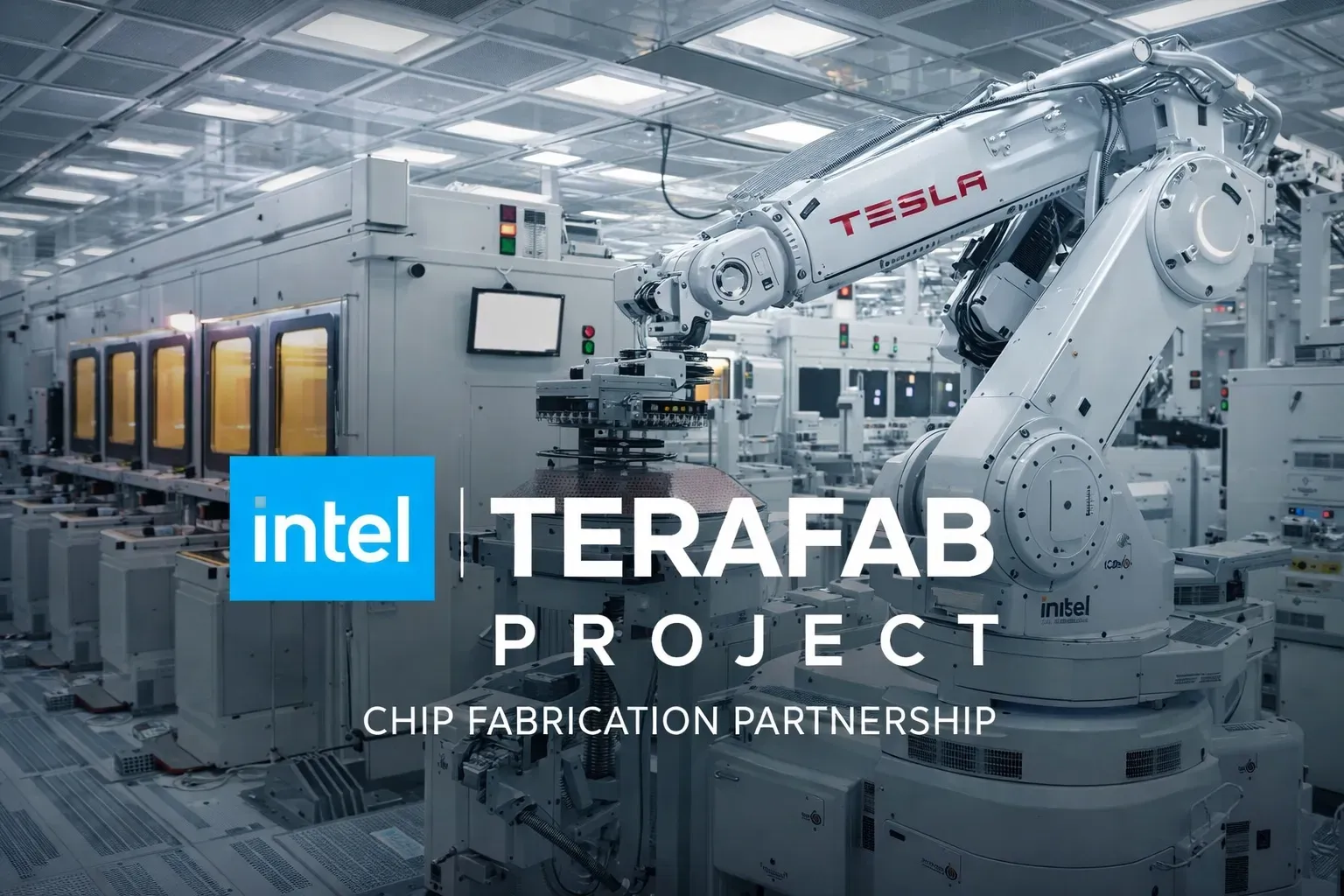
Intel Corp. has entered a strategic partnership with Elon Musk’s ambitious Terafab project, marking a pivotal move in the evolving semiconductor landscape and reinforcing Intel’s attempt to reclaim technological leadership.
The collaboration centers on developing advanced semiconductors for Tesla, SpaceX, and xAI, with Intel contributing to the “refactoring” of chip manufacturing processes - a critical stage aimed at enhancing performance, reliability, and scalability of next-generation chips.
The announcement triggered a strong market reaction, with Intel shares rising nearly 4% in New York trading, reflecting investor confidence in the company’s renewed strategic direction.
Terafab represents a fundamental shift in semiconductor production. Unlike traditional foundry models, the project aims to vertically integrate design, fabrication, and advanced packaging, targeting an unprecedented scale of computing output - approximately 1 terawatt of compute capacity annually.
The initiative is expected to be based in Austin and jointly operated by Tesla and SpaceX, positioning it at the intersection of artificial intelligence, robotics, and space infrastructure - sectors increasingly defined by demand for high-performance compute.
For Intel, the move signals a calculated return to relevance after years of declining market share and lost technological edge. Under CEO Lip-Bu Tan, the company has been restructuring operations, securing strategic investments, and rebuilding its manufacturing footprint - including a recent $14.2 billion deal to reacquire part of its Irish fabrication facility.
The Terafab partnership places Intel within a new generation of semiconductor ecosystems, where compute capacity, not just chip design, becomes the defining competitive metric.
EcoPulse24 Analysis
This partnership reflects a structural shift in the semiconductor industry - from a fragmented supply chain toward integrated compute ecosystems.
Musk’s Terafab is not just a manufacturing project; it is an attempt to industrialize compute at scale, treating processing power as a core infrastructure layer similar to energy or logistics.
Intel’s role is strategically significant. Rather than competing directly with foundries like TSMC, Intel is positioning itself as a co-architect of next-generation fabrication systems, embedding itself in high-growth verticals such as AI, robotics, and space computing.
The concept of producing 1 terawatt of compute annually signals a transition toward hyperscale silicon production, where demand is driven not by consumer devices, but by autonomous systems, AI training clusters, and distributed compute networks.
If executed successfully, Terafab could redefine competitive dynamics in the chip industry, shifting power away from traditional contract manufacturers toward integrated platforms that control both hardware and compute output.
For Intel, this is not just a partnership - it is a strategic re-entry into the frontier of semiconductor innovation.
Understanding the Terafab Project
FAQ
1. What is Terafab?
Terafab is a next-generation semiconductor manufacturing initiative led by Elon Musk, designed to produce massive compute capacity for AI, robotics, and space technologies.
2. Why is Intel involved?
Intel brings advanced fabrication, packaging, and process engineering expertise, helping optimize chip performance and reliability at scale.
3. What makes Terafab different from traditional chip factories?
Unlike conventional foundries, Terafab integrates chip design, manufacturing, and packaging into a unified system focused on delivering large-scale compute output.
4. What does “1 terawatt of compute” mean?
It refers to an extremely high level of processing capacity produced annually, aimed at powering future AI models, robotics systems, and space data infrastructure.
5. How could this impact the semiconductor industry?
Terafab could shift the industry toward vertically integrated compute platforms, challenging traditional players like TSMC and redefining how chips are produced and deployed.
Sources & References
Editorial Note
Disclaimer
© 2025 EcoPulse24. All rights reserved.