US Stocks Fall Sharply as Oil Surge and Gulf Tensions Fuel Market Uncertainty
US stocks fell sharply as Gulf tensions and surging oil prices raised inflation fears; S&P 500, Dow down 1.5%, Nasdaq down 1.7%.

New York | EcoPulse24
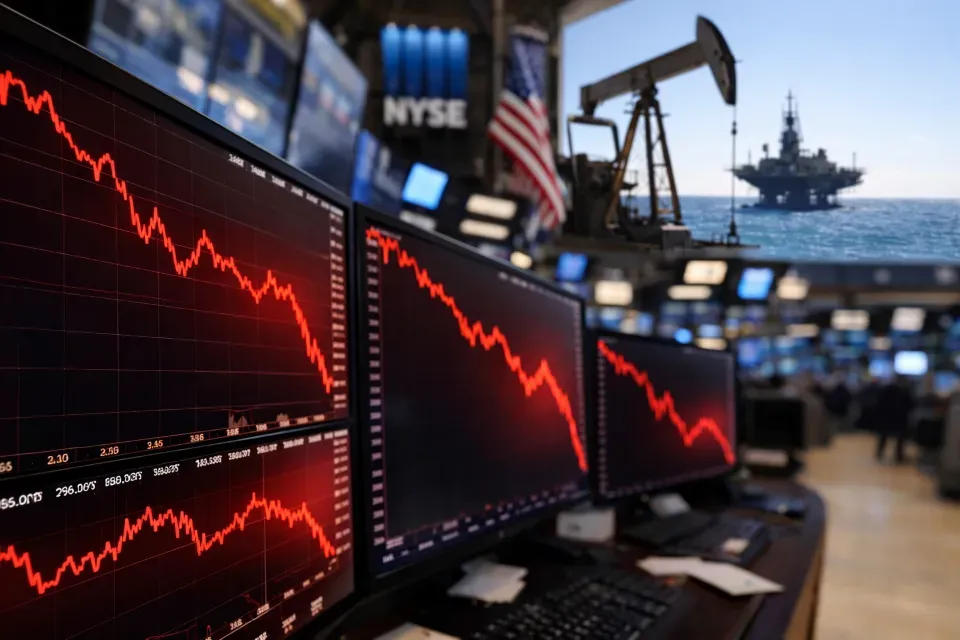
US stock markets closed sharply lower on Thursday as escalating tensions in the Middle East and surging oil prices heightened investor anxiety about inflation and global economic stability.
The S&P 500 and the Dow Jones Industrial Average both declined 1.5%, while the Nasdaq Composite fell 1.7%, as investors moved away from risk assets amid growing concerns over the expanding conflict in the Persian Gulf and its potential impact on global energy supplies.
The sell-off followed a sharp rise in oil prices, with Brent crude climbing above $100 per barrel and WTI crude approaching the same level, after strong rhetoric from Iran’s new Supreme Leader Mojtaba Khamenei, who stated that the Strait of Hormuz must remain closed to pressure international rivals.
The Strait of Hormuz is one of the most critical chokepoints in the global energy system, with roughly 20% of the world’s oil trade passing through the narrow waterway. Any prolonged disruption to shipping routes in the region could significantly tighten global energy supplies and amplify inflationary pressures.
Despite the International Energy Agency’s coordinated release of 400 million barrels from strategic reserves, investors remained cautious, viewing the move as insufficient to fully offset potential supply disruptions if tensions escalate further.
Higher energy prices also raised concerns about the persistence of inflation, complicating the outlook for monetary policy and economic growth.
Financial stocks were among the biggest losers during the session. Morgan Stanley shares dropped 4.1% after the firm placed limits on withdrawals from certain private credit funds, raising concerns about liquidity pressures in segments of the alternative investment market.
Technology stocks also faced selling pressure as investors shifted toward defensive sectors such as energy and commodities.
Market participants are now closely watching the Federal Reserve’s upcoming policy meeting next week, where policymakers are widely expected to hold interest rates steady while assessing the economic implications of rising geopolitical tensions and energy costs.
Traders believe the Fed may adopt a cautious stance until there is greater clarity on how the conflict in the Middle East could affect inflation, supply chains, and global financial conditions.
EcoPulse24 Analysis
The recent decline in US equities underscores the growing sensitivity of financial markets to geopolitical shocks in energy-producing regions. Rising oil prices not only threaten to rekindle inflation but also increase uncertainty for central banks navigating a fragile global recovery. If tensions in the Gulf persist or intensify, energy markets could remain volatile, potentially keeping pressure on global equities while reinforcing demand for defensive assets.
Sources & References
Editorial Note
Disclaimer
© 2025 EcoPulse24. All rights reserved.