Adani and IHC Launch $11.5 Billion Aluminium Venture to Strengthen Global Supply Chains
Adani Enterprises and IHC's IRH will develop an $11.5 billion aluminium project in India, strengthening global supply chains and industrial growth.

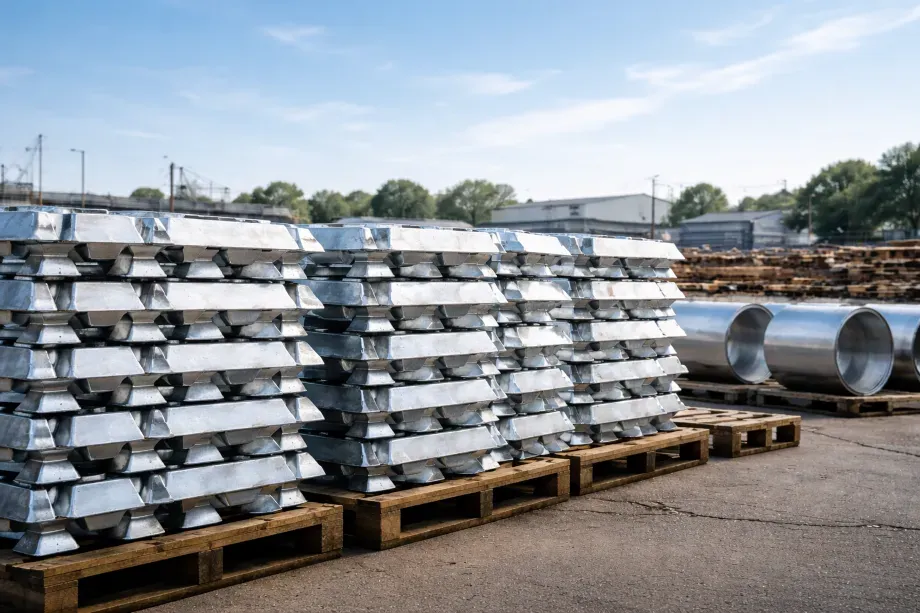
Bhubaneswar | EcoPulse24
Adani Enterprises and International Resources Holding (IRH), an IHC Group company through 2PointZero, have agreed to establish a 50:50 joint venture to develop an integrated USD 11.5 billion aluminium project in India's eastern state of Odisha, marking one of the country's largest industrial investments aimed at strengthening global aluminium supply chains.
The proposed greenfield development will include a 4 million metric tonnes per annum (MMTPA) alumina refinery, a 2 MMTPA aluminium smelter, a 4,000-megawatt captive power plant and a 1 MMTPA downstream manufacturing park, making it India's largest integrated aluminium investment. The project is expected to become Odisha's largest foreign direct investment proposal while supporting approximately 53,500 jobs across construction and long-term operations.
UAE and India deepen strategic industrial partnership
The project represents another milestone in the expanding investment relationship between the UAE and India, with IHC continuing to deploy capital into strategic sectors that support long-term industrial development.
The agreement builds on an established partnership between the Adani Group and IHC across energy, infrastructure and artificial intelligence-related investments. Earlier this year, IHC portfolio company ePointZero entered a joint venture with Adani Green Energy to develop renewable energy projects across India, while the latest initiative expands cooperation into metals and advanced manufacturing.
The two companies signed the memorandum of understanding with the Government of Odisha, which views the investment as a cornerstone of the state's long-term industrial expansion strategy.
Integrated aluminium ecosystem targets global competitiveness
Unlike conventional aluminium investments focused solely on refining or smelting, the proposed project is designed to integrate the complete value chain from alumina refining and aluminium production to downstream manufacturing.
The manufacturing park is expected to attract producers serving sectors including transportation, construction, power infrastructure, renewable energy and advanced engineering, helping expand India's domestic manufacturing capabilities while supporting export-oriented industrial growth.
Developing an integrated production platform is expected to improve efficiency, strengthen supply chain resilience and increase value-added manufacturing within India rather than relying primarily on exports of raw materials.
Aluminium demand supported by energy transition and industrial growth
The investment comes as global demand for aluminium continues to expand, driven by renewable energy infrastructure, electric vehicles, transmission networks, aerospace manufacturing and lightweight industrial applications.
Aluminium has become one of the strategic industrial metals supporting the global energy transition because of its combination of low weight, durability and recyclability. Rising investment in electrification and clean energy infrastructure is expected to remain an important driver of long-term demand.
By investing in large-scale integrated production, Adani and IHC are positioning themselves to benefit from structural growth in aluminium consumption while strengthening regional manufacturing capacity.
Project to be developed in two phases
According to the partners, the project will be executed in two stages with investments of approximately ₹66,000 crore during the first phase and ₹44,000 crore during the second.
Construction activities are expected to generate around 35,000 jobs, while mining, refining, smelting and downstream manufacturing operations are projected to support an additional 18,500 long-term positions, reinforcing the project's economic significance for Odisha.
Project Overview
The following table summarizes the key elements of the investment.
| Item | Details |
|---|---|
| Investors | Adani Enterprises & IRH (IHC Group) |
| Structure | 50:50 Joint Venture |
| Total Investment | USD 11.5 billion |
| Location | Odisha, India |
| Alumina Refinery | 4 MMTPA |
| Aluminium Smelter | 2 MMTPA |
| Captive Power Plant | 4,000 MW |
| Downstream Manufacturing | 1 MMTPA |
| Expected Employment | Approximately 53,500 jobs |
EcoPulse24 Analysis
The proposed investment reflects a broader transformation taking place across global industrial policy, where countries and corporations are increasingly seeking to secure control over strategic supply chains rather than relying on fragmented international production networks.
Aluminium is becoming one of the most strategically important industrial materials of the coming decade. Beyond its traditional role in construction and packaging, demand is expanding rapidly through electric vehicles, renewable energy systems, high-voltage transmission infrastructure, aerospace manufacturing and advanced engineering. As governments accelerate industrial modernization and energy transition programmes, access to reliable aluminium production is becoming a strategic economic advantage.
For IHC and its subsidiary IRH, the transaction also illustrates how Gulf investment groups are evolving beyond financial investors into long-term industrial partners. Rather than taking passive stakes in international assets, they are increasingly participating in the development of large-scale manufacturing ecosystems that combine natural resources, processing capacity and downstream production. This approach creates exposure to multiple stages of the value chain instead of relying on commodity prices alone.
From India's perspective, the project supports the country's ambition to expand domestic manufacturing while increasing value-added production from its abundant mineral resources. Building an integrated aluminium ecosystem allows more processing to occur within the country, strengthens export competitiveness and attracts additional manufacturers that depend on secure supplies of industrial metals.
The partnership also reinforces the growing economic relationship between the UAE and India, which has expanded well beyond trade into infrastructure, renewable energy, logistics, technology and industrial manufacturing. Large cross-border investments such as this demonstrate how Gulf capital is increasingly supporting industrial development in high-growth economies while diversifying investment exposure across sectors critical to future economic expansion.
More broadly, the transaction reflects a structural shift in global investment priorities. As supply-chain resilience, industrial security and strategic materials move higher on government and corporate agendas, investments in integrated manufacturing platforms are likely to become increasingly important. Companies capable of combining upstream resources with downstream production and international market access will be better positioned to capture long-term value as demand for industrial metals continues to grow.
Sources & References
Editorial Note
Disclaimer
© 2025 EcoPulse24. All rights reserved.