AI Boom Sparks Investor Anxiety as U.S. Markets Face Potential Correction
AI sector fears spark global market selloff; investors shift to defensive stocks, viewing correction as healthy amid ongoing AI optimism.
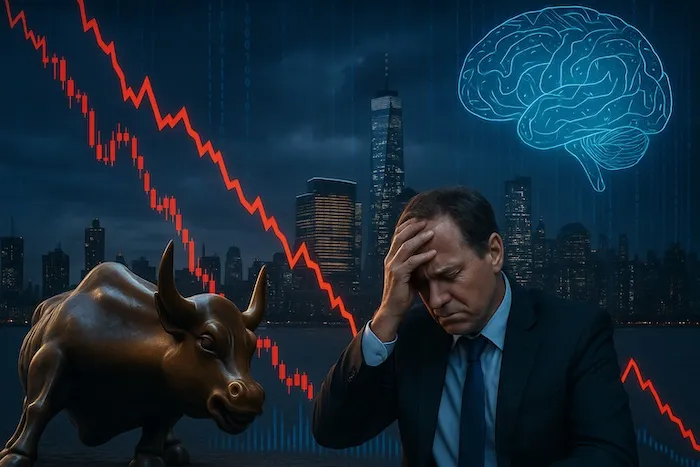
Tech Euphoria Meets Market Reality
Global financial markets saw a sharp downturn this week as fears of an overheated artificial intelligence (AI) sector sent shockwaves through major indices. Following months of record-breaking rallies in AI-linked companies, investors are now grappling with mounting warnings from leading banks that a correction may be imminent.
The selloff began in the U.S. and quickly rippled across Asia and Europe, halting what had been one of the strongest bull runs in recent history. The S&P 500 and Nasdaq both saw declines of more than 2% in early trading, while Asian technology giants in Japan, South Korea, and Taiwan posted notable losses.
Overvaluation Fears Surface
The correction fears stem from concerns that the exponential growth in AI company valuations may have outpaced their underlying earnings and adoption rates. Market analysts suggest that investors have priced in years of growth within just months, creating a speculative imbalance reminiscent of the dot-com bubble of the early 2000s.
Senior executives from major U.S. banks, including JPMorgan and Goldman Sachs, have cautioned that while the AI revolution presents real long-term opportunities, the near-term valuation multiples “leave little room for error.” As a result, even strong earnings reports have not calmed fears of a broader rebalancing.
Investor Sentiment Turns Defensive
Investor behavior has shifted markedly over the past week. Many portfolios are rotating away from high-growth AI and semiconductor stocks toward defensive sectors such as utilities, healthcare, and consumer staples. Treasury yields have fallen slightly as demand for safer assets increased, signaling a short-term “flight to quality.”
“This is not a rejection of AI,” said one market strategist. “It’s a recognition that no industry, no matter how promising, can sustain indefinite parabolic growth without a breather.”
The Broader U.S. Market Impact
The U.S. remains the epicenter of AI-driven enthusiasm, with companies such as Nvidia, Microsoft, and Alphabet representing a large portion of total market capitalization. A correction in these names could have a disproportionate effect on major indices, given their weighting in the S&P 500 and Nasdaq Composite.
Still, most economists view the recent pullback as a healthy normalization rather than a crash. The fundamentals of the U.S. economy - strong employment, steady consumer spending, and growing corporate investment in automation - remain intact.
Long-Term Outlook: AI Is Here to Stay
While the near-term volatility is unsettling, few analysts doubt the transformative potential of AI. The sector continues to attract record levels of venture capital funding, and corporate adoption of AI tools is accelerating across finance, manufacturing, and healthcare.
Market strategists argue that corrections, while painful, are a normal part of price discovery and may even strengthen long-term investor confidence. “The AI narrative isn’t collapsing - it’s maturing,” one analyst said. “Investors are learning to distinguish between sustainable innovation and speculative excess.”
Conclusion: From Hype to Balance
The AI boom has redefined market optimism and technological ambition. Yet, as with any disruptive force, it brings periods of instability before true value emerges. Investors are now adjusting their expectations - balancing the undeniable promise of artificial intelligence with the reality that innovation cycles are rarely linear.
Sources & References
Editorial Note
Disclaimer
All rights reserved
Please review the Terms & Conditions.
© 2025 EcoPulse24.