Analysis: Why the Massive Precious Metals Crash?
Gold and silver crashed after extreme rallies due to profit-taking, Fed policy clarity, dollar rebound, and margin calls. Correction, not a collapse.

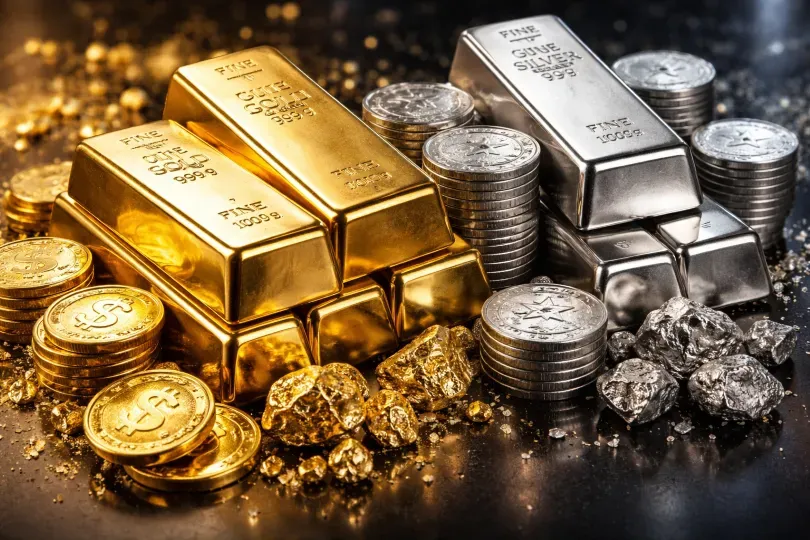
Primary Trigger: Extreme Profit-Taking After Parabolic Rally
Gold hit $5,608 on Thursday (all-time record), then crashed -12% to below $4,800 within 24 hours. Silver reached $122 (unprecedented level), then plummeted -31% to below $80. This is classic speculative bubble deflation after vertical price moves.
When assets surge this violently in such short timeframes, they become massively overbought. Professional traders and institutional investors simultaneously rush to lock in profits, triggering cascading sell orders that accelerate the decline.
Key Factors Behind the Collapse:
1. Technical Exhaustion & Overextension
- Gold's 6-month rally (+40-50% from October lows) created unsustainable valuation levels
- Silver's parabolic move (doubling in weeks) signaled extreme speculative excess
- Technical indicators (RSI, MACD) flashed "severely overbought" warnings before the crash
- When momentum-driven assets lose upward velocity, reversals are swift and brutal
2. Kevin Warsh Fed Chair Nomination = Policy Certainty
Trump's announcement removed a major uncertainty premium from gold prices:
- Warsh is viewed as hawkish/orthodox monetary policy advocate
- Markets interpret this as reduced risk of dollar debasement
- Speculation about Trump pressuring the Fed for extreme rate cuts dissipated
- Safe-haven premium embedded in gold prices evaporated
Critical insight: Gold had priced in worst-case scenarios (Fed capitulation, currency crisis). Warsh's nomination suggested those fears were overblown.
3. Dollar Stabilization
Your news mentions "a nascent rebound in the dollar" - even a minor USD recovery devastates precious metals after extreme rallies because:
- Gold/silver are inversely correlated to dollar strength
- Speculative long positions were built on dollar collapse assumptions
- Currency stabilization removes the panic-buying justification
4. Reassessment of Fundamental Drivers
Investors stepped back and questioned:
- Were geopolitical risks truly justified at these price levels? (Cuba oil tariffs are minor compared to earlier escalations)
- Is the Iran nuclear tension materially worse than before? (Talks were proposed, not rejected)
- Did tariff threats warrant 50%+ silver rallies? (Market realized this was speculation, not industrial demand)
The reality check: None of the underlying concerns (Trump tariffs, Mideast tensions) actually worsened Thursday-to-Friday. Yet prices collapsed because they had overshot rational risk premiums.
5. Liquidity Crunch & Margin Calls
When silver dropped 10-15% initially, leveraged speculators faced margin calls, forcing them to liquidate positions regardless of fundamentals. This creates a self-reinforcing downward spiral:
- Price drop → Margin calls → Forced selling → Deeper price drop → More margin calls
This is why silver (-31%) crashed harder than gold (-12%): smaller markets amplify volatility and silver attracts more speculative leverage.
6. Copper's Decline Signals Broader Reset
Copper's -6.5% drop is particularly telling because it's an industrial metal, not just a safe haven. This suggests:
- Investors questioning the "AI/EV infrastructure demand" narrative's timing
- Recognition that supply constraints don't justify immediate price explosions
- Realization that tariff fears may hurt industrial demand more than help metal prices
What This Means for EcoPulse24 Coverage:
Frame this NOT as "bubble pop" but as "correction after speculative excess":
✅ Gold remains +30-35% YTD even after the crash
✅ Silver still +30% for the month despite Friday's bloodbath
✅ Fundamentals (dollar weakness, geopolitical risks, Fed uncertainty) haven't disappeared - only the panic premium evaporated
Key narrative: Markets had priced in Armageddon scenarios (dollar collapse, Fed surrender, WW3). When none materialized immediately AND Warsh's nomination signaled policy normalcy, speculative froth vaporized.
Critical Questions for Deeper Analysis:
- Did physical gold demand (jewelry, central banks) justify $5,600? (Likely no - that was pure speculative fever)
- Will silver's industrial demand (solar, EVs) support $80-100 long-term? (Possible, but not at this pace)
- Is this a healthy correction or the start of a bear market? (Depends on whether dollar strength persists and geopolitical risks fade)
For professional investors: This is a volatility reset, not a fundamental shift. Those who bought gold at $2,000-3,000 are still massively profitable. Those who chased it above $5,000 just learned an expensive lesson about momentum trading.
Explore Related Coverage
Sources & References
Editorial Note
Disclaimer
Please review the Terms & Conditions.
© 2025 EcoPulse24. All rights reserved.