Beijing Breaks Tech Deadlock, Approves Imports of Nvidia H200 AI Chips Under Strict Regulations
China approves Nvidia H200 AI chip imports for top firms under strict rules, reopening trade and boosting AI, with local chip quotas required.

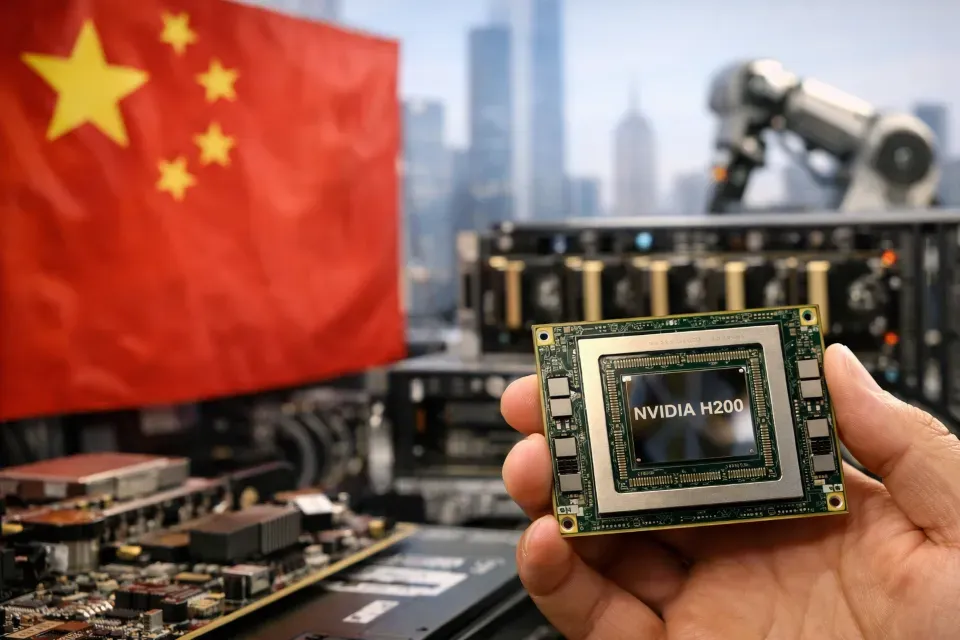
Beijing | EcoPulse24
China has granted approval for the first batch of imports of Nvidia's H200 AI chips, representing a significant shift in the technological restrictions between Beijing and Washington. The approval, which coincided with Nvidia CEO Jensen Huang's visit to China this week, covers several hundred thousand chips, initially targeting major Chinese internet companies.
The first batch is allocated to three main groups: Alibaba, Tencent, and ByteDance, while other companies are on a waiting list for future approvals. This decision ends the customs suspension that previously blocked chip imports and opens a regulated import channel with strict usage and regulatory conditions.
Trade Figures (Value):
- Total declared orders from Chinese companies: over 2 million chips
- Approximate price per chip: $27,000
- Nominal total value: $54 billion
- Value after 25% US export tax: around $40 billion
Performance and Technology (Context):
The H200 is Nvidia's second most powerful AI chip from the Hopper generation (one generation behind Blackwell), offering 141GB HBM3e memory and 4,800 GB/s bandwidth, with performance estimated at about six times that of the H20 chip. Nvidia's current available inventory is around 700,000 chips.
Usage and Regulatory Conditions:
- Permitted: Commercial uses, major internet companies, AI application development.
- Prohibited: Military applications, sensitive government entities, critical infrastructure, and state-owned enterprises.
- Additional requirement: Importing companies must also purchase a quota of Chinese domestic chips (e.g., from Huawei and Cambricon).
US-China Context:
From the US side, exports were allowed as of January 13, 2026, with a 25% tax imposed on each sale and a shift from a 'default denial' policy to 'case-by-case review.' In China, approval came after weighing the need to meet surging AI demand against supporting the domestic semiconductor industry.
Corporate Impact (Performance):
- Nvidia: Potential annual revenues of $40 – 50 billion, regaining a foothold in a market where its share dropped from 95% to zero.
- Chinese companies: Large orders, including over 200,000 chips each for Alibaba and ByteDance, to boost AI competitiveness.
EcoPulse24 Analysis:
The decision reflects a strategic trade-off: limited access to advanced technology in exchange for strict usage controls and incentives for local industry. For Nvidia, the move reopens access to the world’s second largest economy and offers significant revenue potential, albeit under regulatory constraints. For Beijing, it is an attempt to quickly bridge capability gaps without abandoning self-sufficiency goals, making the next phase a test of balancing transitional dependence with building local alternatives.
Explore Related Coverage
Sources & References
Editorial Note
Disclaimer
© 2025 EcoPulse24. All rights reserved.