Binance Launches Direct UAE Dirham Transfers in Move to Deepen Digital Asset Adoption
partnership with Abu Dhabi Commercial Bank (ADCB), enables users to transfer funds directly between their bank accounts and Binance accounts

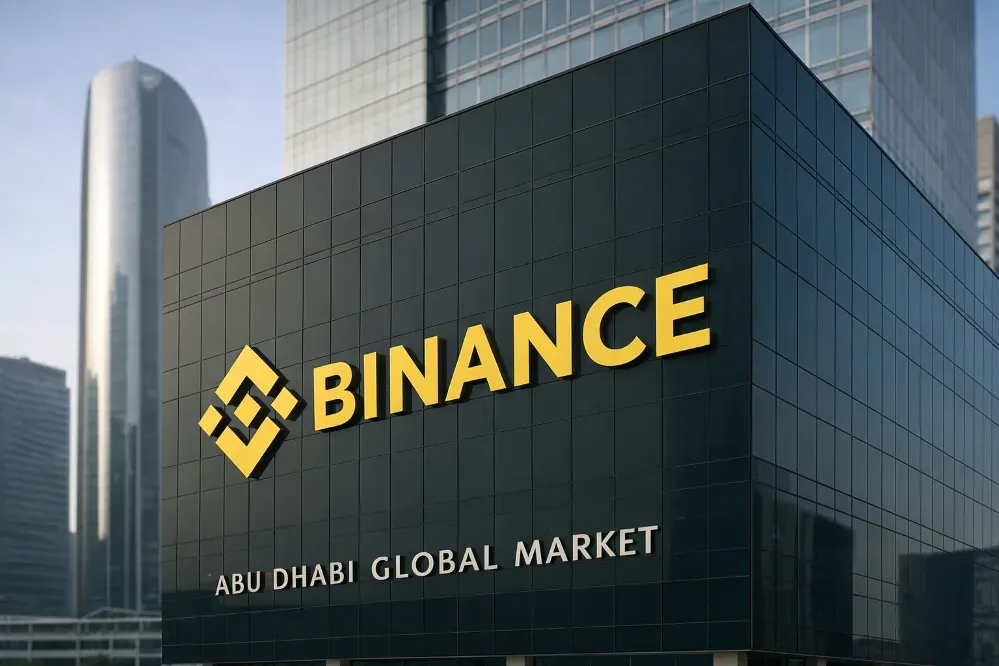
Abu Dhabi | EcoPulse24
Binance, the world’s largest digital asset exchange, has launched a regulated solution for direct UAE dirham (AED) deposits and withdrawals in the United Arab Emirates, marking a significant step in connecting traditional banking infrastructure with the digital asset ecosystem and strengthening the country’s position as a leading global hub for financial innovation.
The new service, introduced in partnership with Abu Dhabi Commercial Bank (ADCB), enables users to transfer funds directly between their bank accounts and Binance accounts using the UAE’s national currency. The platform offers fee-free AED deposits, with a minimum transaction size of AED 10 and daily limits of up to AED 7.2 million. Withdrawals are also supported with low transaction fees and the same daily transfer limits, with most transactions processed within the same business day.
The launch eliminates several of the operational barriers that have traditionally existed between conventional financial systems and digital asset markets, reducing the need for intermediaries and minimizing foreign exchange conversion costs for users operating within the UAE.
Binance Expands UAE Integration Through Regulated Banking Infrastructure
The initiative reflects the growing convergence between regulated banking institutions and digital asset platforms as governments and financial regulators around the world seek to create frameworks that support innovation while maintaining market integrity and investor protection.
For Binance, the introduction of direct AED transfers represents more than a new payment feature. It provides users with a seamless gateway between fiat currency and digital assets, allowing investors to enter and exit cryptocurrency markets using the local currency without relying on international payment channels or multiple conversion steps.
The development also highlights the increasing role of regulated banking partners in supporting the growth of the digital asset economy.
UAE Strengthens Its Position as a Global Digital Asset Hub
The launch comes as the UAE continues to build one of the world's most advanced regulatory environments for virtual assets, attracting global exchanges, blockchain companies, fintech firms, and digital infrastructure investments.
Over the past several years, the country has introduced licensing frameworks and regulatory structures designed to provide greater clarity for digital asset businesses while supporting responsible innovation.
This approach has helped position the UAE as one of the most attractive jurisdictions for companies seeking a stable and regulated environment for crypto-related operations.
As a result, the country has emerged as a key destination for digital asset firms expanding into the Middle East, Africa, and South Asia.
Direct AED Access Reduces Friction for Investors
The ability to move funds directly between bank accounts and digital asset platforms is increasingly viewed as a critical component of market maturity.
Historically, many investors faced additional costs and delays when transferring funds into crypto markets due to reliance on foreign currencies, international payment providers, or third-party intermediaries.
By allowing direct AED deposits and withdrawals, Binance and ADCB are simplifying access to digital assets while reducing operational complexity for users.
The streamlined process may also improve liquidity flows between traditional finance and the crypto sector by making capital transfers faster and more efficient.
Key Features of the New Service
| Feature | Details |
|---|---|
| Currency | UAE Dirham (AED) |
| Banking Partner | Abu Dhabi Commercial Bank (ADCB) |
| Deposit Fees | Free |
| Minimum Deposit | AED 10 |
| Daily Transfer Limit | AED 7.2 million |
| Withdrawal Support | Available |
| Processing Time | Typically within the same business day |
Traditional Finance and Digital Assets Continue to Converge
The partnership reflects a broader trend across global financial markets, where traditional financial institutions are increasingly participating in digital asset infrastructure rather than remaining on the sidelines.
Major banks, payment providers, exchanges, and financial technology companies are investing heavily in services that connect regulated banking systems with blockchain-based financial networks.
As regulatory frameworks mature, industry participants are increasingly focused on creating secure, compliant pathways between fiat currencies and digital assets.
The UAE has become one of the most active jurisdictions in facilitating this transition, with regulators and market participants working to establish infrastructure capable of supporting long-term growth in the sector.
EcoPulse24 Analysis
The significance of Binance’s AED integration extends beyond transaction convenience. It represents another step in the gradual integration of digital assets into mainstream financial infrastructure.
For years, one of the largest challenges facing cryptocurrency adoption was the separation between traditional banking systems and digital asset markets. While investors could access crypto markets, moving capital between the two ecosystems often involved additional costs, delays, and operational complexity.
Direct AED connectivity addresses that challenge by creating a more efficient bridge between conventional finance and the digital economy.
The move also reinforces the UAE’s strategic ambition to become a leading global center for financial technology, blockchain innovation, and virtual assets. While competition among international financial centers continues to intensify, the UAE has increasingly differentiated itself through regulatory clarity and infrastructure development.
From a broader market perspective, developments such as this are often more important than short-term cryptocurrency price movements. They represent the underlying infrastructure being built to support the next phase of digital asset adoption.
As financial institutions, regulators, and technology companies continue to develop integrated solutions, the distinction between traditional finance and digital assets may become increasingly blurred, reshaping how capital moves through the global financial system over the coming decade.
Sources & References
Editorial Note
Disclaimer
© 2025 EcoPulse24. All rights reserved.