Wall Street Falls as Chip Selloff Deepens on AI Spending Concerns and Geopolitical Risks
US stocks fell as chipmakers dropped on AI spending worries, Middle East tensions boosted inflation fears, and Netflix slid on weak outlook.

New York | EcoPulse24
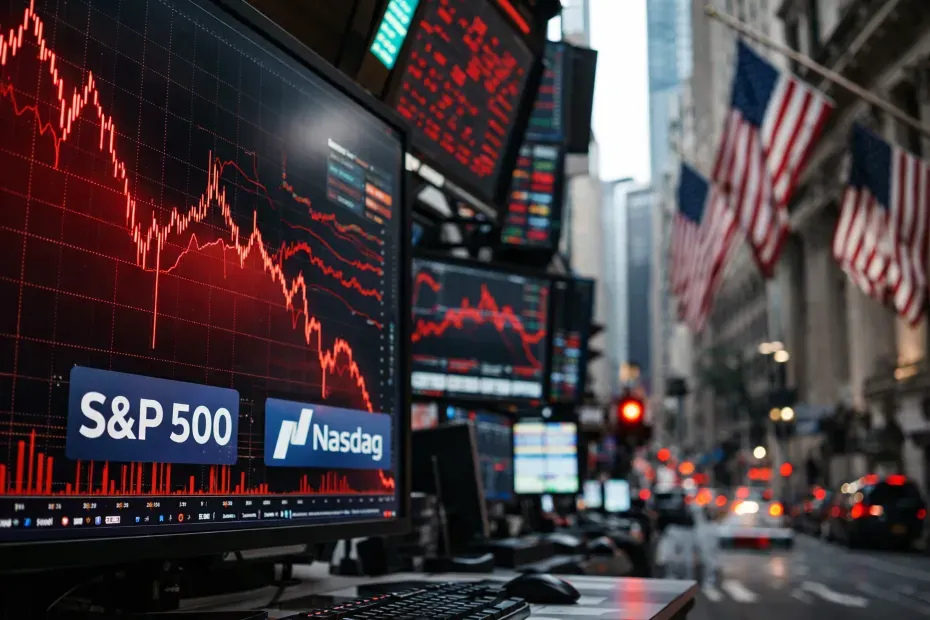
U.S. stocks ended sharply lower on Friday as a renewed selloff in semiconductor stocks, rising geopolitical tensions and fresh inflation concerns prompted investors to reduce exposure to technology shares.
The S&P 500 fell 0.6%, while the Nasdaq 100 dropped 1.5%, reflecting heavy losses across the technology sector. The Dow Jones Industrial Average also retreated by roughly 100 points.
AI Infrastructure Spending Concerns Hit Chipmakers
Semiconductor stocks led the decline after investors reassessed expectations for future spending by hyperscale technology companies on artificial intelligence infrastructure.
Market participants increasingly questioned whether major cloud providers would maintain the aggressive pace of AI-related capital expenditure that has fueled chipmakers throughout the year.
The concerns were reinforced by continued advances in China's artificial intelligence sector, particularly following the latest Kimi large language model released by Moonshot AI, which has intensified expectations that more efficient AI models could reduce future computing requirements.
Among the biggest decliners:
-
Micron Technology fell more than 4%.
-
Intel dropped more than 4%.
-
Nvidia lost around 2%.
The pullback reversed part of this year's strong rally in AI-linked semiconductor stocks.
Middle East Risks Add Inflation Pressure
Investor sentiment was also affected by renewed geopolitical tensions in the Middle East, where continuing conflict contributed to higher energy prices.
The rise in fuel costs revived concerns that inflation could remain elevated, potentially complicating the Federal Reserve's path toward monetary easing.
Higher oil prices have become an increasingly important market variable as investors evaluate their impact on consumer prices, corporate margins and interest rate expectations.
Trump Remarks Raise China Concerns
Markets also reacted to fresh political uncertainty after U.S. President Donald Trump accused China of interfering in the 2020 U.S. presidential election.
The remarks raised concerns that diplomatic relations between Washington and Beijing could deteriorate again, threatening the fragile trade truce established following last year's tariff disputes.
Any renewed escalation between the world's two largest economies could further pressure global supply chains and technology investment.
Netflix Drops After Weak Outlook
Outside the semiconductor sector, Netflix shares fell 11% after the streaming company projected another quarter of slowing revenue growth.
The guidance disappointed investors despite continued profitability, adding further pressure to the broader technology sector.
EcoPulse24 Analysis
Friday's decline illustrates that investor attention is shifting from enthusiasm over artificial intelligence toward questions about the sustainability of AI investment. Semiconductor stocks have been among the market's strongest performers over the past year, supported by expectations of unprecedented spending on data centers and AI infrastructure.
However, growing evidence that next-generation AI models are becoming more efficient - and therefore potentially requiring fewer computing resources - has introduced uncertainty over the pace of future capital expenditure by hyperscale cloud providers.
At the same time, higher oil prices and ongoing geopolitical tensions are reviving inflation risks just as markets had begun pricing in a more accommodative Federal Reserve. If energy prices remain elevated, expectations for interest-rate cuts could be pushed further into the future, adding another headwind for high-growth technology stocks.
For investors, the combination of AI spending uncertainty, geopolitical risks and persistent inflation concerns represents a challenging backdrop that could keep market volatility elevated in the weeks ahead.
Explore Related Coverage
Sources & References
Editorial Note
Disclaimer
© 2025 EcoPulse24. All rights reserved.