Bitcoin's Future Depends on Quantum Risks, ETF Trends, and Whale Activity
Bitcoin's outlook hinges on quantum security, ETF inflows (bullish), and whale sell-offs (bearish), creating mixed price pressures.
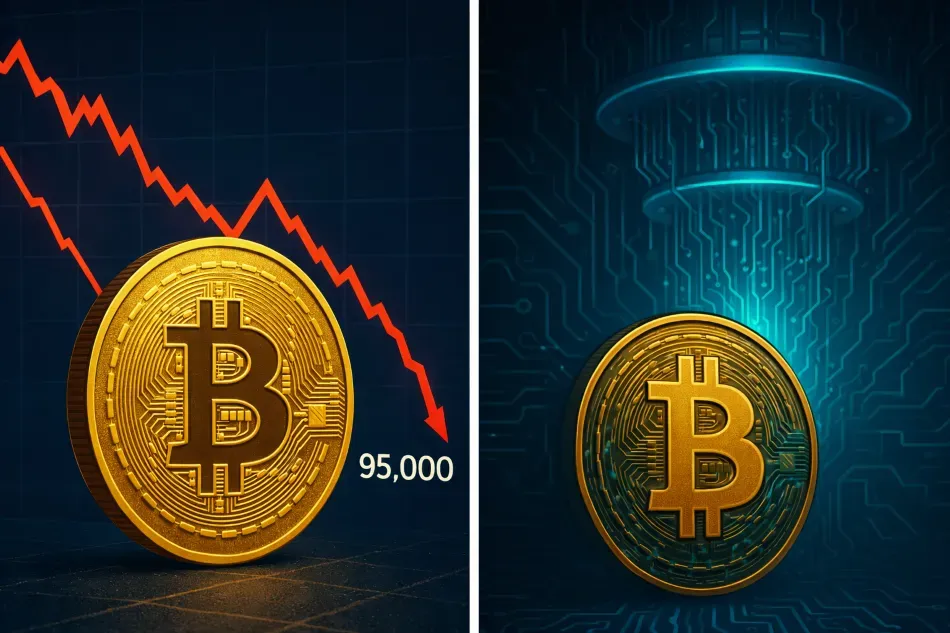
Key Takeaways
1. Quantum Security Upgrade (Mixed Impact)
2. Institutional ETF Inflows (Bullish)
3. Whale Accumulation/Distribution (Bearish)
Analysis
1. Quantum Security Upgrade (Mixed Impact)
Overview: A proposed Bitcoin Improvement Proposal (BIP) seeks to replace vulnerable ECDSA/Schnorr signatures with quantum-resistant cryptography by 2027–2030. Approximately 25% of Bitcoin, including Satoshi's 1 million BTC, may be at risk if quantum attacks occur. Developers warn that compromised wallets could trigger a liquidation event exceeding $300 billion.
Implications: Bullish: Successful implementation could enhance Bitcoin's security narrative and foster BTC-backed DeFi innovations. Bearish: Challenges in decentralized coordination and potential delays could incite fear, uncertainty, and doubt (FUD), particularly if quantum computing progresses rapidly.
2. Institutional ETF Inflows (Bullish)
Overview: U.S. spot Bitcoin ETFs currently represent 6.74% of Bitcoin's market cap, with $164.5 billion in assets under management. BlackRock's IBIT holds 746,000 BTC alone. Inflows reached $3.24 billion in early October 2025, although recent weeks experienced $1.22 billion in outflows.
Implications: Continuous inflows indicate institutional confidence and lessen sell-side pressure, as ETF-held Bitcoin is largely illiquid. However, significant outflows, such as the $870 million drop in November, could lead to heightened downside volatility.
3. Whale Accumulation/Distribution (Bearish)
Overview: Whales, defined as holders of 1,000 to 10,000 BTC, have accumulated 218,570 BTC since March 2025 but recently sold off 115,000 BTC (approximately $13 billion) in just 30 days - the largest drop since 2022. The Exchange Whale Ratio reached 0.50 in August, indicating selling pressure.
Implications: Large sell-offs may trigger cascading liquidations, especially with Bitcoin nearing crucial support at $94,500. Nonetheless, long-term holders, representing 67% of the supply, remain inactive, providing some downside protection.
Conclusion
Bitcoin is caught in a balancing act between structural enhancements, institutional support, and whale-induced volatility. While ETF inflows and efforts to bolster quantum security could stabilize prices, significant whale distributions and broader economic risks persist. The critical question remains whether Bitcoin's 365-day moving average of $102,000 will transition from resistance to support, signaling a potential bullish trend.
Sources & References
Editorial Note
Disclaimer
All rights reserved
Please review the Terms & Conditions.
© 2025 EcoPulse24.