Black Friday Spending Signals US Consumer Trends
Black Friday spending rose 7.5% to reach $9.8 billion, with a shift towards digital shopping and an increase in credit card debt.

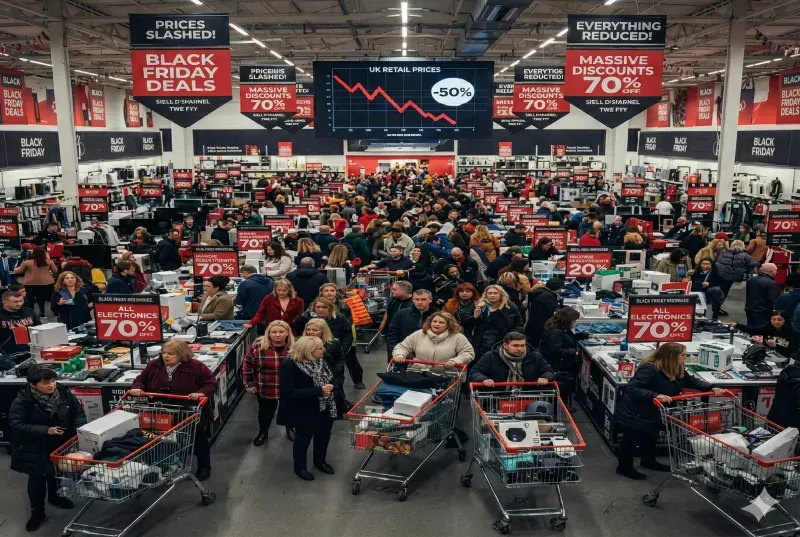
Washington (Bloomberg) -- In the 'Daily US Economy' newsletter published on December 1, 2025, Bloomberg writer Mikayla Schultz examines how Black Friday spending reflects the state of the US economy, as this traditional day serves as a critical indicator of consumer confidence amidst ongoing economic pressures. As the shopping season approaches, the report highlights a 7.5% increase in spending compared to last year, reaching $9.8 billion online alone, according to Adobe Analytics data, indicating consumer resilience despite rising inflation.
The data points to a significant shift towards digital shopping, with online sales accounting for 60% of the total, driven by Amazon and Walmart promotions that attracted millions of visitors. However, the report warns that this growth may be fueled by debt, as credit card purchases rose by 12%, reflecting concerns about sustainability amid high interest rates. Schultz stated, "Black Friday is not just a shopping day; it's a test of economic strength."
In a broader context, statistics show that categories like electronics and clothing saw a 15% increase, while spending on essential consumer goods declined, indicating consumer priorities shifting towards entertainment over necessities. This is expected to impact Federal Reserve forecasts, as strong spending may delay interest rate cuts.
The report concludes with cautious optimism, noting that robust consumption supports GDP growth of 2.5% for the fourth quarter, but calls for monitoring household debt to avert recession. These insights make Black Friday a mirror of the future of the US economy.
Sources & References
Editorial Note
Disclaimer
Please review the Terms & Conditions.
© 2025 EcoPulse24. All rights reserved.