Brent climbs above $104 as Hormuz disruption reshapes global oil risk pricing
Brent tops $104 as Hormuz tensions disrupt oil flows, driving prices up and fueling shortages in Asia-Pacific amid rising geopolitical risk.

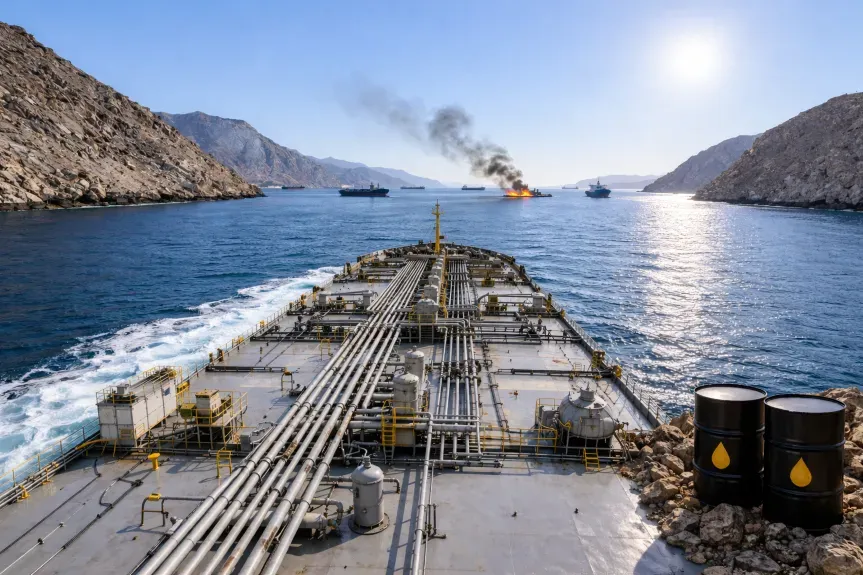
London | EcoPulse24
Brent crude traded above $104 per barrel while WTI held above $92, as markets responded to escalating geopolitical tensions around the Strait of Hormuz, with conflicting signals from the United States and Iran undermining expectations of a near-term resolution.
The immediate driver behind the price move is the growing uncertainty surrounding diplomatic efforts, after Iran rejected direct negotiations and dismissed a ceasefire proposal, instead introducing conditions tied to sovereign control over the Strait. This shifts the situation from a temporary conflict into a strategic dispute over one of the most critical energy chokepoints globally.
On the other side, the White House continues to signal that diplomatic channels remain active, with reports of a 15-point framework delivered indirectly via Pakistan aimed at reopening Hormuz. However, the divergence between both positions highlights a structural gap that reduces the probability of a quick de-escalation.
The near-closure of the Strait has already removed millions of barrels per day from global supply flows, forcing markets to adjust pricing models. Oil is no longer reacting primarily to inventory data or demand cycles, but instead to disruption risk across maritime routes that connect Gulf producers to global consumers.
This disruption is also reshaping trade flows, as tankers reroute or delay shipments under heightened security conditions. Shipping costs and insurance premiums are rising, embedding an additional layer of cost into global oil pricing, while limited transit under protection arrangements reflects an unstable operational environment.
The impact is becoming visible across Asia-Pacific markets, where major importers such as South Korea, Australia, and the Philippines are facing tightening fuel availability. This indicates that the supply shock is no longer contained within upstream logistics but is beginning to affect downstream consumption and economic stability.
More importantly, the market is undergoing a behavioral shift. Oil pricing is transitioning toward a geopolitical risk premium model, where uncertainty around supply routes and strategic control becomes a dominant pricing factor. This shift aligns oil with broader global risk assets that respond to geopolitical developments rather than purely economic indicators.
EcoPulse24 Analysis
Oil markets are entering a structurally different phase where supply security, not just production levels, determines price direction. The Strait of Hormuz is functioning as a global pricing lever, and any prolonged disruption will sustain a geopolitical premium in oil markets. This dynamic reflects a broader transformation within the global energy system, where critical infrastructure and maritime control increasingly define market behavior, reinforcing the Energy Crisis 2026 framework.
Sources & References
Editorial Note
Disclaimer
© 2025 EcoPulse24. All rights reserved.