Broadcom Shares Slide Despite 48% Revenue Growth as AI Outlook Falls Short of Expectations
Revenue from AI-related semiconductors is expected to reach approximately $16 billion in the fiscal third quarter ending in July

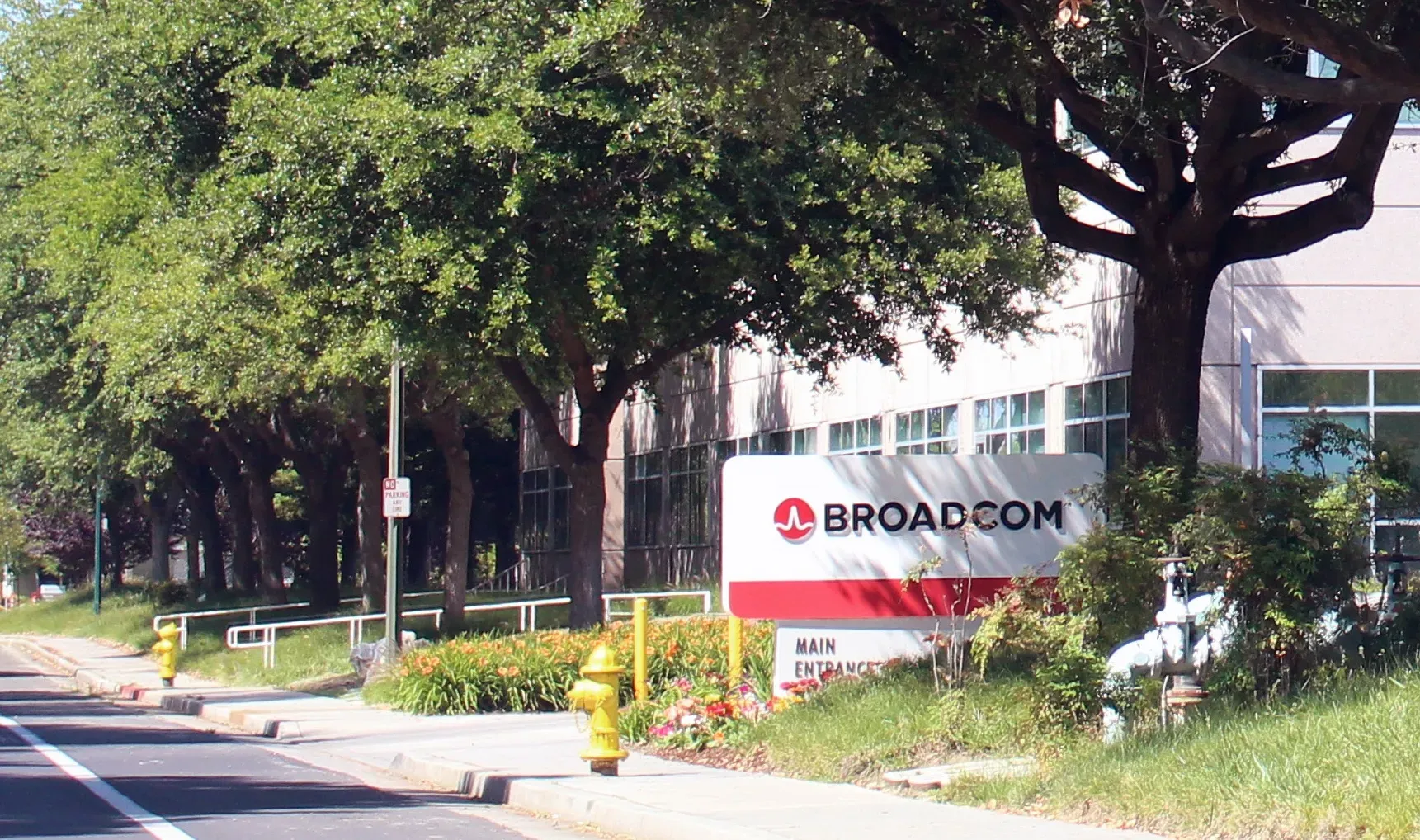
Dubai | EcoPulse24
Broadcom shares fell more than 10% in after-hours trading despite reporting stronger-than-expected quarterly results, as investors focused on the company’s softer-than-anticipated outlook for artificial intelligence-related semiconductor revenue.
The market reaction highlights a growing trend across the AI sector: strong growth is no longer enough. Investors are increasingly demanding that companies exceed already elevated expectations as the race to build AI infrastructure accelerates.
AI Revenue Forecast Misses Wall Street Expectations
Broadcom said revenue from AI-related semiconductors is expected to reach approximately $16 billion in the fiscal third quarter ending in July, below analysts’ consensus estimate of $17.2 billion.
Chief Executive Officer Hock Tan also projected that AI semiconductor revenue would reach $56 billion for the current fiscal year, compared with Wall Street expectations of approximately $57.6 billion.
While the gap between the company’s forecast and analyst estimates appears relatively small, it was enough to trigger a sharp selloff after investors had pushed AI-related stocks significantly higher in anticipation of continued acceleration in demand.
Strong Quarterly Results
For the fiscal second quarter ended May 3, Broadcom reported revenue of $22.2 billion, representing a 48% year-over-year increase and slightly exceeding analyst expectations of $22.1 billion.
Adjusted earnings came in at $2.44 per share, ahead of the consensus estimate of $2.39 per share.
The company also reported $10.8 billion in AI semiconductor revenue during the quarter, surpassing analyst forecasts of approximately $10.7 billion.
These products include AI accelerators, custom processors, and networking components used to power large-scale data centers and advanced artificial intelligence systems.
Expanding Role in the AI Ecosystem
Broadcom has emerged as one of the key beneficiaries of the global AI investment boom through long-term partnerships with major technology companies, including Google, Meta, and Anthropic.
The company has expanded beyond traditional networking hardware into custom AI chips and infrastructure solutions designed for hyperscale cloud operators and large AI developers.
According to Hock Tan, existing customer programs are expected to support the deployment of more than 20 gigawatts of computing capacity by 2028, underscoring the scale of investment currently flowing into AI infrastructure worldwide.
Competition Beyond Nvidia
Although Nvidia remains the dominant force in AI processors, Broadcom has established itself as one of the industry's most important infrastructure suppliers through its custom silicon strategy and advanced networking technologies.
As demand for generative AI, autonomous agents, and enterprise AI applications continues to rise, companies across the sector are racing to expand computing capacity and data center infrastructure.
Broadcom’s growing presence places it at the center of that expansion cycle.
EcoPulse24 Analysis
Broadcom’s latest earnings report does not suggest weakening demand for artificial intelligence.
On the contrary, the company continues to generate exceptional growth, record AI-related revenue, and strong profitability.
The real story is that Wall Street’s expectations are rising even faster than corporate performance.
Just hours after TSMC warned that global demand for advanced AI chips will exceed supply for years to come, Broadcom delivered a different - but complementary - message to investors.
Demand remains strong.
Investment in AI infrastructure remains massive.
However, the pace of growth may not always be sufficient to satisfy increasingly aggressive market expectations.
This marks an important shift in the AI investment cycle.
During the early stages of the AI boom, strong growth alone was enough to drive higher valuations. Today, investors are becoming more selective, rewarding companies that not only grow rapidly but also consistently outperform elevated forecasts.
For market participants, Broadcom’s results reinforce a key reality:
The AI boom is still expanding, but Wall Street is becoming far more demanding about who the winners will be.
Explore Related Coverage
Sources & References
Editorial Note
Disclaimer
© 2025 EcoPulse24. All rights reserved.