UAE Non-Oil Foreign Trade Nears AED 2 Trillion in Record First Half of 2026
UAE's non-oil foreign trade hit AED 1.94T in H1 2026, up 13.1%, with exports at a record AED 452.8B, highlighting strong economic growth.

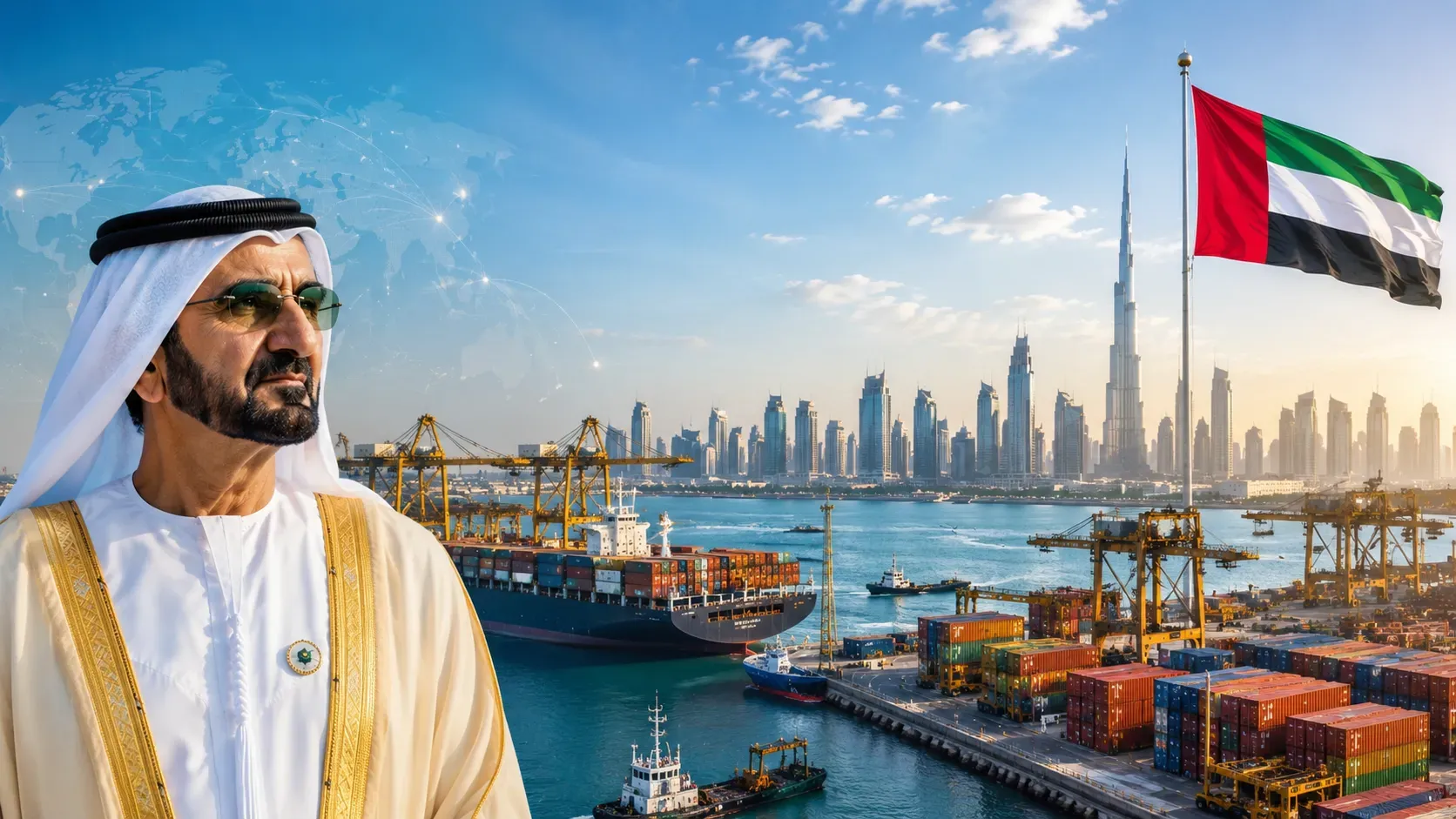
Dubai | EcoPulse24
The United Arab Emirates recorded a historic performance in its non-oil foreign trade during the first half of 2026, with total trade approaching the AED 2 trillion milestone for the first time over a six-month period.
His Highness Sheikh Mohammed bin Rashid Al Maktoum, Vice President, Prime Minister of the UAE and Ruler of Dubai, announced that the country's non-oil foreign trade reached AED 1.937 trillion, representing a 13.1% year-over-year increase.
The announcement also revealed that the UAE's non-oil exports climbed to a new all-time high of AED 452.8 billion, underscoring the country's continued success in expanding its export base and strengthening its position as one of the world's leading trade and logistics hubs.
Record Trade Performance
Commenting on the figures, Sheikh Mohammed bin Rashid said the latest results demonstrate the strength of the UAE economy and the effectiveness of its long-term development strategy.
"These are not merely trade figures. They reflect the strength of our economy, the effectiveness of our development choices, and the world's confidence in the UAE."
The figures represent one of the strongest trade performances in the country's history, highlighting sustained momentum across non-oil sectors despite an increasingly challenging global economic environment.
Non-Oil Exports Reach New High
The record AED 452.8 billion in non-oil exports reflects growing international demand for UAE-produced and re-exported goods, supported by continued investment in advanced logistics infrastructure, manufacturing, and global supply-chain connectivity.
The performance also underscores the expanding role of the UAE's Comprehensive Economic Partnership Agreements (CEPAs), which continue opening new export opportunities and strengthening trade relations with international partners.
UAE Strengthens Global Trade Position
The UAE has steadily expanded its role as a global trading hub through investments in ports, airports, free zones and digital trade infrastructure, while pursuing an economic diversification strategy aimed at reducing dependence on hydrocarbon revenues.
The latest trade figures reinforce the country's position as one of the Middle East's most dynamic economies, supported by rising private-sector activity, international investment flows and growing integration into global supply chains.
Key Figures
| Indicator | Value |
|---|---|
| Non-oil foreign trade | AED 1.937 trillion |
| Annual growth | 13.1% |
| Non-oil exports | AED 452.8 billion (Record High) |
EcoPulse24 Analysis
The UAE's latest trade performance highlights the accelerating impact of its long-term economic diversification strategy. Nearly reaching AED 2 trillion in non-oil trade within just six months demonstrates not only the resilience of domestic economic activity but also the country's increasing importance in global commerce.
Equally significant is the record level of non-oil exports, which signals that the UAE is expanding beyond its traditional role as a regional re-export center toward becoming a more diversified producer and exporter of higher-value goods and services.
The results also reflect the cumulative impact of strategic investments in logistics infrastructure, trade facilitation, free zones and bilateral trade agreements. As global supply chains continue to evolve, the UAE appears well positioned to capture a growing share of international trade flows connecting Asia, Europe, Africa and the Middle East.
If the current pace is maintained through the second half of the year, 2026 could mark another milestone in the UAE's transition toward a more diversified, trade-driven economy with an increasingly prominent role in global commerce.
Explore Related Coverage
Sources & References
Editorial Note
Disclaimer
© 2025 EcoPulse24. All rights reserved.