Capital Market Authority Approves Petro Rabigh Capital Reduction to SAR 16.71 Billion Pending Shareholder Approval
CMA approves Petro Rabigh's capital cut to SAR 16.71B, pending shareholder approval; no change in share count, aims to offset losses.

Riyadh | EcoPulse24
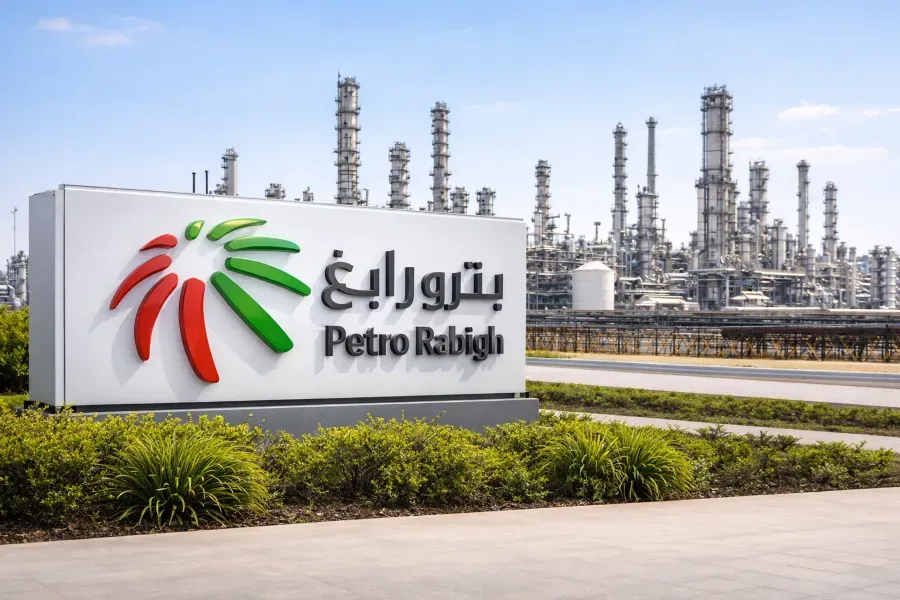
Petro Rabigh, the Rabigh Refining and Petrochemical Company, announced that it has received approval from the Capital Market Authority (CMA) for its request to reduce the company’s capital, after fulfilling all regulatory requirements and addressing related comments. The company had submitted its application to the CMA on October 28, 2025, with the announcement following on October 29, 2025. On February 12, 2026, the CMA approved the reduction of Petro Rabigh’s capital from SAR 21,973,649,980 to SAR 16,709,999,980 by lowering the nominal value per share from SAR 10 to SAR 6.85. The reduction will take effect at the end of the second trading day following the extraordinary general assembly’s approval.
Completion of the process remains contingent upon the extraordinary general assembly’s approval and the fulfillment of all related legal procedures. Petro Rabigh stated it will issue a shareholder circular detailing the proposed mechanism and expected impacts to enable shareholders to vote on the decision. The date of the extraordinary general assembly will be announced in due course.
Share performance: Price: SAR 7.57 | Change: +0.02 (+0.26%) | Traded value: SAR 16,891,846.51 | Volume: 2,226,320 shares. The stock witnessed active trading exceeding SAR 16.89 million during the session, with a slight price uptick, signaling a measured market reaction to the regulatory development.
EcoPulse24 Analysis:
The CMA's approval marks a significant milestone in Petro Rabigh’s capital restructuring plan, commonly undertaken to address accumulated losses or optimize the balance sheet. Reducing the nominal value per share without changing the share count aligns the capital with the company's actual financial status and enhances future flexibility. The positive, albeit limited, share reaction suggests the market views this as an expected regulatory step within a broader restructuring process, pending further details in the shareholder circular regarding the reduction’s impact on equity and financial metrics.
What does capital reduction mean?
In this case, capital reduction is implemented by lowering the nominal value per share without canceling any shares, so the number of shares remains unchanged. The difference between the old and new capital is typically used to offset accumulated losses or to realign equity components with the company’s actual financial situation. Shareholders do not receive cash compensation; rather, the capital structure is adjusted to reflect the company’s financial position.
Why do companies reduce capital?
Common reasons include:
- Addressing accumulated losses affecting equity
- Aligning capital with actual book value
- Improving financial ratios relating to losses versus capital
- Preparing for future steps such as capital increases or financial restructuring
In the refining and petrochemicals sector, which is subject to sharp profit cycles and margin volatility, companies may restructure capital following financial pressures from product price swings or rising operating and financing costs.
For shareholders, their relative ownership does not change - they retain the same number of shares and ownership percentage. However, the recorded capital and equity components are adjusted, potentially improving the ratio of accumulated losses to capital. The market price of the share is determined by supply and demand, not nominal value, so reducing the nominal value does not necessarily lead to a direct price drop.
For Petro Rabigh, this decision is part of a broader effort to reset its capital base. Capital reduction can help clean up the balance sheet, improve negotiation flexibility with lenders, prepare for future financing plans, and provide greater clarity for investors. However, capital reduction alone does not resolve operational challenges; true improvement depends on the company’s ability to enhance operating margins and cash flows. Without operational reforms, the move may be only a temporary accounting adjustment. The market will closely watch the extraordinary general assembly and shareholder circular for the actual impact on equity and the company’s financial trajectory.
Explore Related Coverage
Sources & References
Editorial Note
Disclaimer
© 2025 EcoPulse24. All rights reserved.