China oil and gas imports fall as Hormuz disruption tightens energy flows and reshapes supply access
China's oil and gas imports fell in March due to Gulf disruptions, highlighting rising supply risks and a shift to prioritize domestic energy security

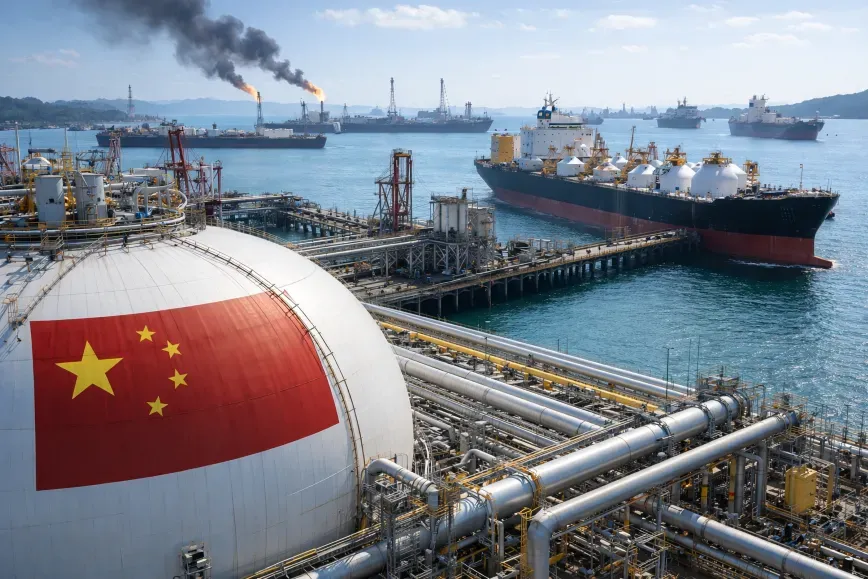
Beijing | EcoPulse24
China energy imports decline as Gulf disruption hits flows
China’s oil and natural gas imports declined in March, signaling the early impact of Persian Gulf disruptions and the effective closure of the Strait of Hormuz on global energy flows, as supply constraints begin to override demand dynamics for the world’s largest energy importer.
Crude oil imports fell 2.8% year-on-year to 49.98 million tons, according to official customs data, although volumes were higher than in February. Despite the monthly drop, year-to-date imports remain up 8.9%, reflecting continued stockpiling efforts as China attempts to secure supply amid escalating geopolitical risk.
Natural gas imports showed a sharper contraction, falling 11% year-on-year to 8.18 million tons, leaving first-quarter volumes 4% below last year’s pace. This decline highlights increasing strain on both seaborne and pipeline-linked supply systems, particularly as maritime routes face disruption.
The primary driver behind the decline is the disruption of shipping flows through the Strait of Hormuz, following escalation linked to Iran. Cargo arrivals from key Gulf producers such as Saudi Arabia and Iraq declined, while independent Chinese refiners - previously reliant on discounted Iranian crude - faced reduced access due to tightening enforcement and logistical constraints.
At the same time, China reduced exports of refined oil products by 12% to 4.60 million tons, as authorities imposed restrictions to preserve domestic fuel availability. This policy shift indicates a strategic pivot toward internal energy security, prioritizing supply stability over external market participation.
Liquefied natural gas imports also weakened significantly, with ship-tracking data showing a 22% year-on-year drop to 3.74 million tons. The decline reflects both logistical disruptions and supply-side damage, particularly affecting flows from Qatar, which accounts for roughly a quarter of China’s LNG imports.
While overland pipeline supplies from Russia, Central Asia, and Myanmar continue to operate at near full capacity, they offer limited flexibility to offset the decline in maritime imports. This structural constraint exposes China’s dependence on seaborne energy flows and limits its short-term ability to rebalance supply.
China energy trade flows – March snapshot
| Indicator | Volume | YoY Change |
|---|---|---|
| Crude oil imports | 49.98 million tons | -2.8% |
| Natural gas imports | 8.18 million tons | -11% |
| LNG imports | 3.74 million tons | -22% |
| Refined product exports | 4.60 million tons | -12% |
These figures point to a system under pressure, where access to energy flows - not just pricing - has become the dominant constraint shaping trade behavior.
EcoPulse24 Analysis
China’s latest energy import data reflects a structural shift in the global energy system, where physical access to supply is increasingly constrained by geopolitical disruption rather than traditional demand cycles. The decline in imports does not signal weakening consumption alone, but rather the emergence of logistical and security barriers affecting energy flows.
The closure of the Strait of Hormuz represents a critical inflection point, as it disrupts one of the most important maritime corridors in global oil and gas trade. For China, this creates a mismatch between strategic demand - evidenced by ongoing stockpiling - and the ability to physically secure and transport energy resources.
The sharp drop in LNG imports is particularly significant, as it highlights the vulnerability of seaborne gas markets to geopolitical shocks. With pipeline infrastructure already operating near capacity, China has limited short-term alternatives, reinforcing upward pressure on global LNG prices and increasing competition among importing nations.
The decision to curb refined product exports further underscores a shift toward domestic prioritization. By retaining more fuel internally, China is effectively reducing its role as a balancing supplier in global refined markets, which could amplify supply tightness elsewhere and contribute to inflationary pressure.
At the macro level, this development signals a transition toward a supply-constrained energy regime, where security, redundancy, and control over logistics networks become more valuable than cost efficiency. China’s trade data is not only a reflection of domestic conditions, but also a leading indicator of how global energy systems are being reshaped under geopolitical stress, with long-term implications for pricing, trade flows, and economic stability.
Explore Related Coverage
Sources & References
Editorial Note
Disclaimer
© 2025 EcoPulse24. All rights reserved.