Dallas Fed's Logan Backs 'Modest' Interest Rate Hike as Inflation Risks Persist
Dallas Fed's Logan supports a modest rate hike, citing persistent inflation risks despite recent data; Fed policymakers remain divided.

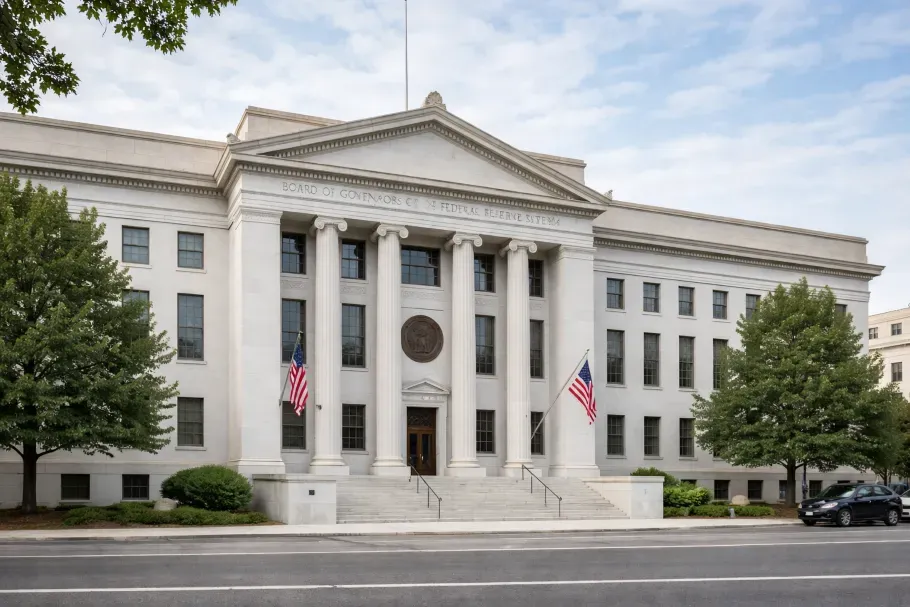
Houston | EcoPulse24
Dallas Federal Reserve President Lorie Logan said a modest increase in U.S. interest rates would currently provide a better balance between inflation risks and the Federal Reserve's dual mandate, signaling that underlying price pressures remain too strong despite recent improvements in inflation data.
Speaking from prepared remarks for an event in Houston on Thursday, Logan said she believes "a modestly higher policy rate would better balance the outlook and the risks around the Federal Open Market Committee's dual-mandate goals."
She also warned that "every month inflation remains above target has added pressure to Americans' household budgets," underscoring concerns that price growth continues to weigh on consumers.
One Month of Better Inflation Data Is Not Enough
Logan's remarks came after this week's U.S. inflation reports showed relatively encouraging readings for both consumer and producer prices.
However, she argued that a single month of softer inflation does not provide sufficient evidence that price pressures are sustainably returning to the Federal Reserve's 2% target.
Instead, Logan pointed to several indicators suggesting inflation remains persistent beneath the surface.
Core Inflation Remains Elevated
Among the measures highlighted by Logan:
| Inflation Indicator | Latest Reading |
|---|---|
| Core PCE Inflation | 3.4% |
| New York Fed Persistent Inflation Model | 3.4% |
| Core Services Inflation (Excluding Housing) | Little progress over the past year |
She noted that core PCE inflation has moved higher since December, while the New York Federal Reserve's multivariate persistent inflation measure also remains at 3.4%, indicating underlying inflation has not eased as much as headline data might suggest.
Logan added that market-based measures of core services inflation excluding housing have shown little meaningful improvement over the past twelve months.
According to her assessment, inflation appears more likely to stabilize in the "mid-2% range" rather than fully returning to the Federal Reserve's 2% objective.
Geopolitics and AI Could Add New Inflationary Pressures
Beyond current inflation data, Logan warned of additional upside risks that could complicate the inflation outlook.
She cited renewed geopolitical tensions in the Middle East as a potential source of higher energy prices and broader inflationary pressures.
She also suggested that continued investment related to artificial intelligence could eventually expand beyond semiconductor manufacturing, creating stronger demand across additional sectors of the economy and generating broader price pressures.
Markets Still Expect Rates to Stay Unchanged This Month
Despite Logan's comments, financial markets continue to assign only a 12.3% probability that the Federal Reserve will raise interest rates at its July 28 – 29 policy meeting, according to market pricing cited by CNBC.
Investors continue to view September or October as the more likely window for any policy tightening should inflation remain elevated.
Logan did not indicate whether she intends to support an increase at the upcoming meeting, nor did she specify the size of any potential rate hike.
Debate Inside the Federal Reserve Continues
Logan's comments highlight the growing divergence of views among Federal Reserve policymakers.
Her position contrasts with remarks made a day earlier by New York Fed President John Williams, who said inflation has likely peaked and argued that keeping interest rates unchanged remains appropriate.
At the same time, other policymakers - including Cleveland Fed President Beth Hammack and Minneapolis Fed President Neel Kashkari - have also shifted toward expecting at least one additional rate increase before the end of the year.
Hammack has likewise pointed to expanding artificial intelligence infrastructure investment as a potential driver of persistent inflation.
EcoPulse24 Analysis
Logan's remarks reinforce the view that the Federal Reserve's inflation debate has entered a new phase. Rather than questioning whether inflation is falling, policymakers are increasingly focused on whether it is falling fast enough to justify maintaining current policy settings. The concern is no longer headline inflation alone but the persistence of underlying price pressures across core services and broader sectors of the economy.
Her comments also illustrate that the Federal Reserve is beginning to incorporate structural drivers into its inflation outlook. Beyond traditional factors such as wages and energy prices, policymakers are now evaluating how long-term investment cycles - including artificial intelligence infrastructure - could reshape demand across labor, industrial equipment, electricity, construction, and technology supply chains.
The divergence between Logan and Williams highlights that consensus within the FOMC has become less certain. While markets continue to expect rates to remain unchanged in July, policymakers appear increasingly divided over whether inflation has truly returned to a sustainable path toward the 2% target.
From a macro perspective, even if the Federal Reserve leaves rates unchanged this month, continued hawkish rhetoric from voting members could keep Treasury yields elevated, support the U.S. dollar, and maintain pressure on rate-sensitive assets including equities, real estate, and precious metals. Markets are therefore likely to pay closer attention to upcoming inflation and employment data as expectations shift toward the September and October policy meetings.
Explore Related Coverage
Sources & References
Editorial Note
Disclaimer
© 2025 EcoPulse24. All rights reserved.