Emirates SkyCargo Expands Freighter Fleet as Global Air Cargo Demand Accelerates
SkyCargo added a converted Boeing 777-300ER Special Freighter as it expands cargo capacity to support growing global trade and e-commerce demand.

Dubai | EcoPulse24
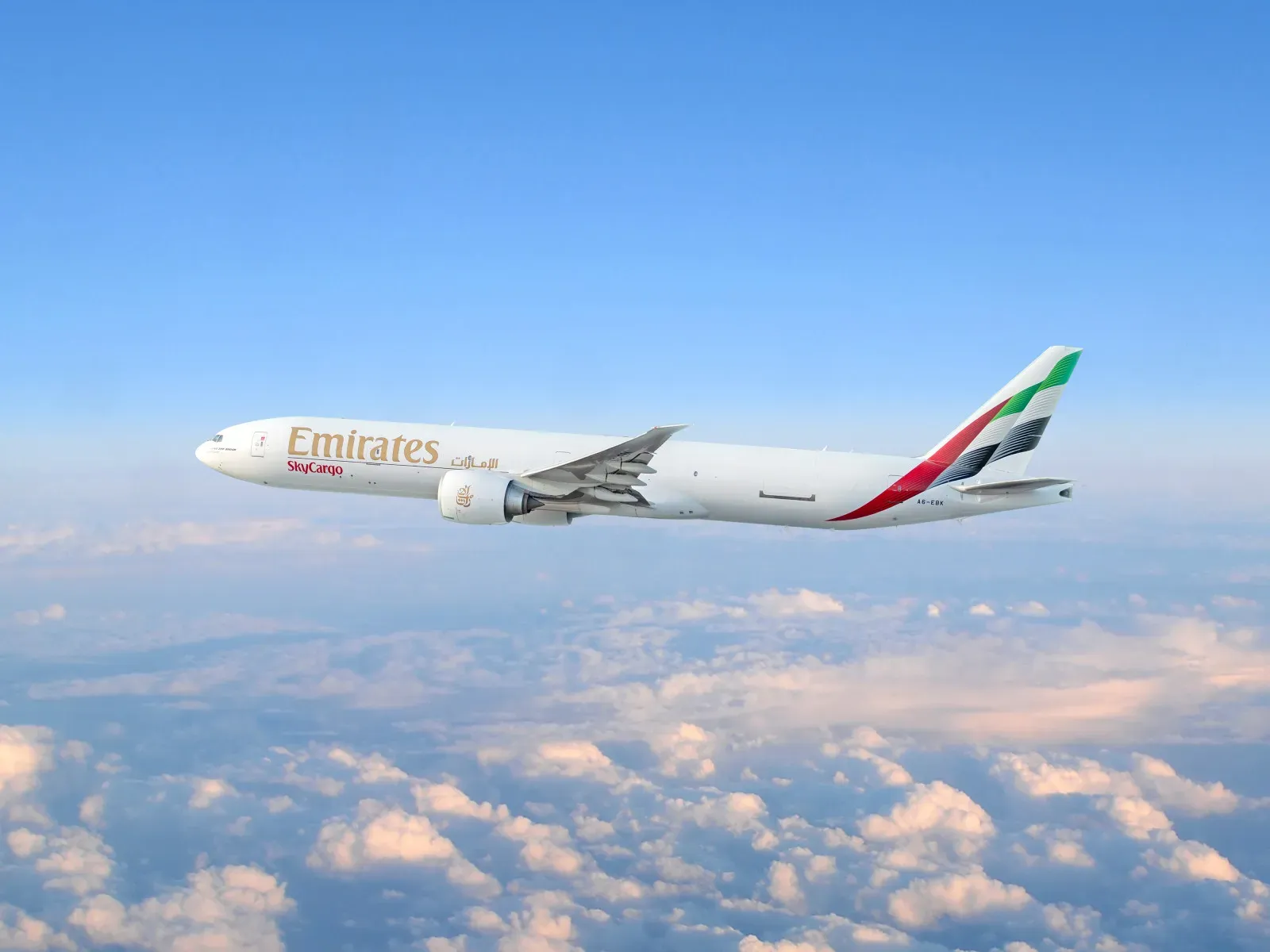
Emirates SkyCargo has expanded its dedicated freighter fleet with the entry into commercial service of a converted Boeing 777-300ER Special Freighter (777-300ERSF), reinforcing its long-term strategy to increase air cargo capacity as global demand for cross-border trade and e-commerce continues to rise.
The aircraft, registered as A6-EBK, is the latest addition to Emirates SkyCargo's growing cargo fleet. Unlike factory-built freighters, it was converted from a passenger aircraft previously operated by Emirates, enabling the airline to increase capacity while maximizing the value of existing fleet assets.
Fleet expansion supports rising global cargo demand
The introduction of the converted aircraft comes as Emirates SkyCargo continues to expand its freight operations in response to growing international demand for air cargo services.
Cross-border e-commerce, pharmaceutical logistics, high-value industrial shipments and time-sensitive cargo have significantly increased demand for dedicated freighter capacity, encouraging airlines worldwide to invest in larger and more flexible cargo fleets.
Emirates said the aircraft has already entered commercial service, transporting cargo through Dubai across multiple international markets.
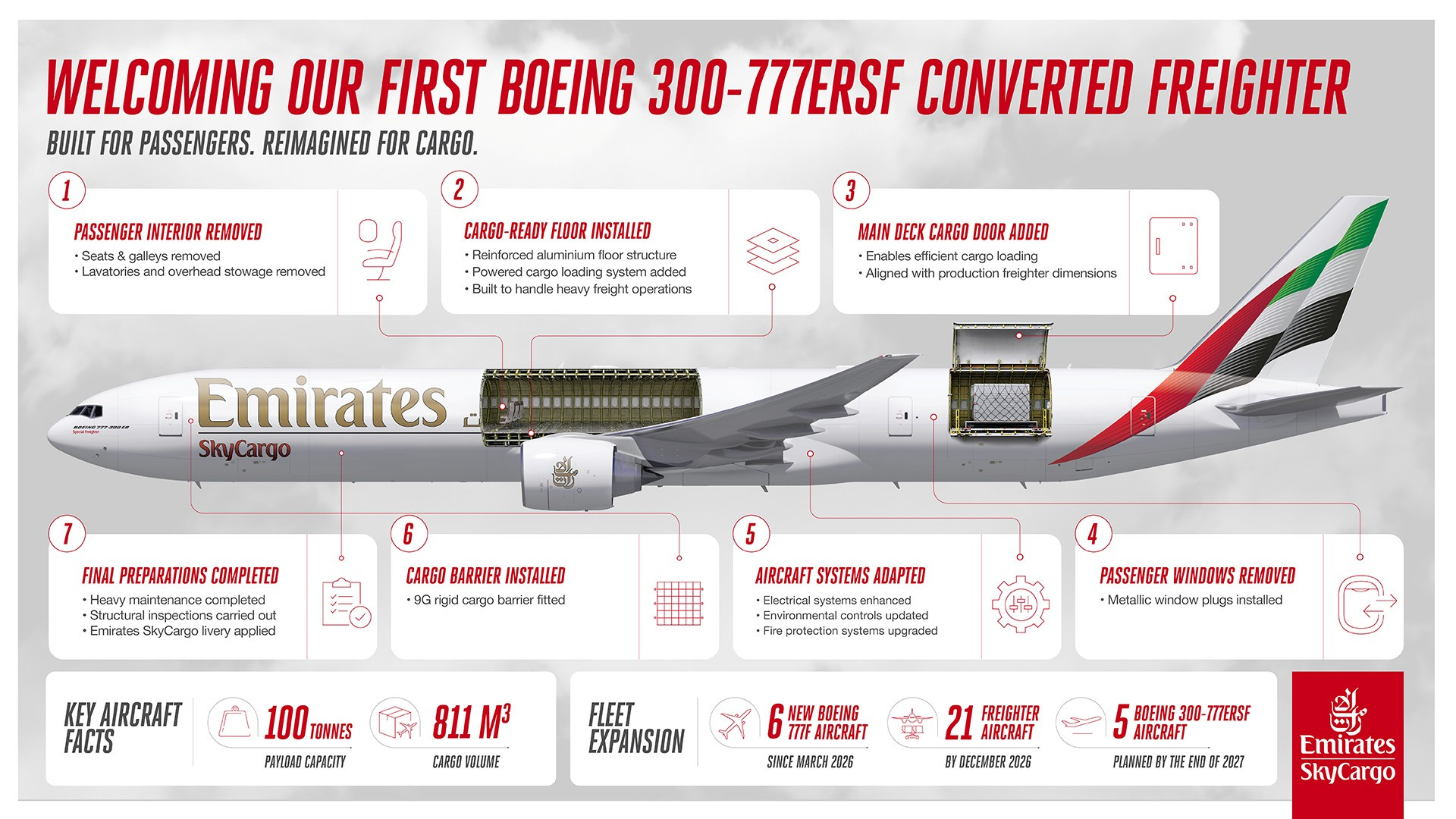
Passenger aircraft transformed into a dedicated freighter
Converting a Boeing 777-300ER into a dedicated cargo aircraft required a comprehensive engineering program extending over several months.
The project involved removing the passenger cabin, reinforcing the aircraft's floor structure to accommodate heavy cargo pallets, installing a large main-deck cargo door, integrating a powered cargo loading system and upgrading fire detection, environmental control and cargo monitoring systems.
The conversion also introduced new crew facilities and operational systems specifically designed for long-haul cargo missions while maintaining the aircraft's original structural integrity and flight performance standards.
Capacity growth remains a strategic priority
The converted aircraft forms part of a broader fleet expansion strategy underway in 2026.
Emirates SkyCargo has already taken delivery of six factory-built Boeing 777 Freighters since March and expects four additional Boeing 777Fs and another converted freighter before the end of the year.
The expansion is designed to provide additional capacity, increase operational flexibility and strengthen the airline's ability to support critical international trade routes.
Dubai strengthens its position in global logistics
As one of the world's largest international cargo operators, Emirates SkyCargo serves more than 150 destinations across six continents through its Dubai hub.
The growing fleet allows the carrier to transport a wider range of specialized cargo, including pharmaceuticals, perishables, e-commerce shipments and other temperature-sensitive products requiring advanced environmental controls throughout transport.
Fleet Expansion Snapshot
| Item | Details |
|---|---|
| Aircraft | Boeing 777-300ER Special Freighter |
| Registration | A6-EBK |
| Origin | Converted from Emirates passenger aircraft |
| Current Status | Commercial service |
| Network | 150+ destinations worldwide |
| 2026 Fleet Deliveries | 6 Boeing 777Fs delivered |
| Expected in 2026 | 4 additional Boeing 777Fs + 1 converted freighter |
EcoPulse24 Analysis
The addition of another dedicated freighter reflects a broader structural shift taking place across global aviation. While passenger traffic has largely recovered following the pandemic, cargo has become an increasingly strategic business driven by rapid growth in cross-border e-commerce, pharmaceutical logistics and high-value manufacturing supply chains.
Rather than relying exclusively on new aircraft deliveries, Emirates is combining factory-built freighters with converted passenger aircraft to accelerate fleet growth while improving capital efficiency. Aircraft conversions allow airlines to expand capacity faster than waiting for new production slots, particularly as demand for wide-body freighters continues to exceed manufacturing availability.
The strategy also reinforces Dubai's position as one of the world's leading logistics and cargo hubs. With global supply chains increasingly dependent on rapid international transportation, carriers with diversified fleets and extensive route networks are better positioned to capture rising demand across Asia, Europe, the Middle East and Africa.
Another important aspect of the expansion is the growing importance of specialized cargo. Pharmaceuticals, biotechnology products, perishables and high-value electronics require sophisticated temperature management and monitoring systems, transforming cargo aircraft into critical infrastructure supporting healthcare, manufacturing and international commerce.
Emirates SkyCargo's continued investment demonstrates that cargo is no longer viewed simply as a complementary airline business. Instead, freight operations have become a strategic growth engine supported by fleet expansion, infrastructure investment and network development. As global trade patterns continue evolving and e-commerce volumes expand, dedicated freighter capacity is expected to remain a key competitive advantage for international airlines operating large logistics networks.
Sources & References
Editorial Note
Disclaimer
© 2025 EcoPulse24. All rights reserved.