EU-Mercosur Trade Agreement to Enter Provisional Application in May 2026
The European Commission announced the EU-Mercosur free trade agreement will enter provisional application from May 2026, covering 700 million people.

EcoPulse24 | Brussels
The European Commission announced on Monday that the trade agreement between the European Union and the Mercosur bloc will enter into provisional application starting early May 2026, marking a historic milestone for one of the world's largest trade deals after more than two decades of negotiations.
Agreement Details and Timeline
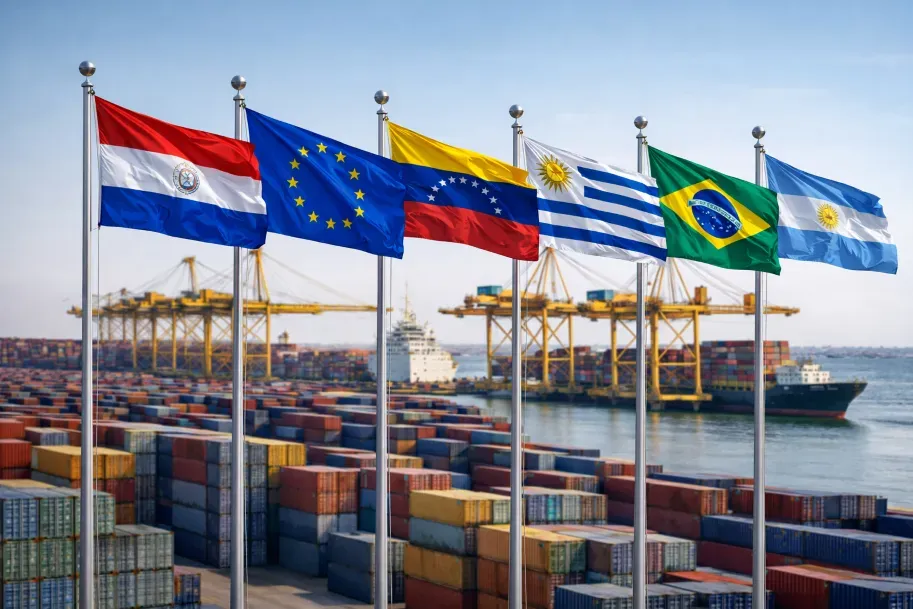
The provisional application of the EU-Mercosur agreement allows key trade provisions to take effect before the full ratification process is complete across all EU member states. The deal covers the European Union and four South American economies-Argentina, Brazil, Paraguay, and Uruguay-together representing a combined market of more than 700 million people and a combined GDP exceeding 20 trillion US dollars.
Tariff Reductions and Market Access
The agreement is expected to eliminate or significantly reduce tariffs on a wide range of goods. European exporters stand to gain improved access for industrial goods, machinery, chemicals, and pharmaceuticals in South American markets, while Mercosur agricultural producers gain preferential access to the EU's large consumer market. The European Commission projects that the deal will save EU exporters more than 4 billion euros annually in customs duties.
Long Road to Completion
Negotiations between the EU and Mercosur first began in 1999, making this one of the longest-running trade negotiation processes in modern history. The deal was politically agreed in 2019 but faced several years of delay over concerns related to environmental standards, deforestation policies in Brazil, and opposition from European agricultural lobbies, particularly in France. Its entry into provisional force in May 2026 represents a decisive breakthrough after those setbacks.
Strategic Context: Diversifying Trade at a Critical Time
The timing of the agreement's provisional entry into force carries additional strategic weight. With global supply chain disruptions stemming from the Strait of Hormuz crisis affecting energy and commodity flows, both the EU and Mercosur nations have strong incentives to deepen bilateral trade ties and reduce exposure to disrupted trade routes. South American agricultural and energy exports, particularly from Brazil and Argentina, represent a meaningful diversification option for European importers.
EcoPulse24 Analysis
EcoPulse24 Analysis: The EU-Mercosur agreement's provisional entry into force is a significant structural development for global trade architecture. For the Gulf region, its implications are indirect but real-as European manufacturers gain cheaper South American inputs, competitive dynamics in sectors like food, chemicals, and machinery could shift in ways that affect MENA import prices and sourcing patterns. More broadly, the agreement is a signal that major economic blocs are actively building resilient, diversified trade relationships outside disrupted Middle Eastern corridors, a trend that could gradually reshape commodity and goods flows across the Gulf over the medium term.
Explore Related Coverage
Sources & References
Editorial Note
Disclaimer
© 2025 EcoPulse24. All rights reserved.