China's Trade Hits New Records as AI Demand Fuels Exports While Domestic Economy Slows
China's June 2026 trade hit record highs on AI-driven exports, but weak domestic demand and a slowing economy persist.

Beijing | EcoPulse24
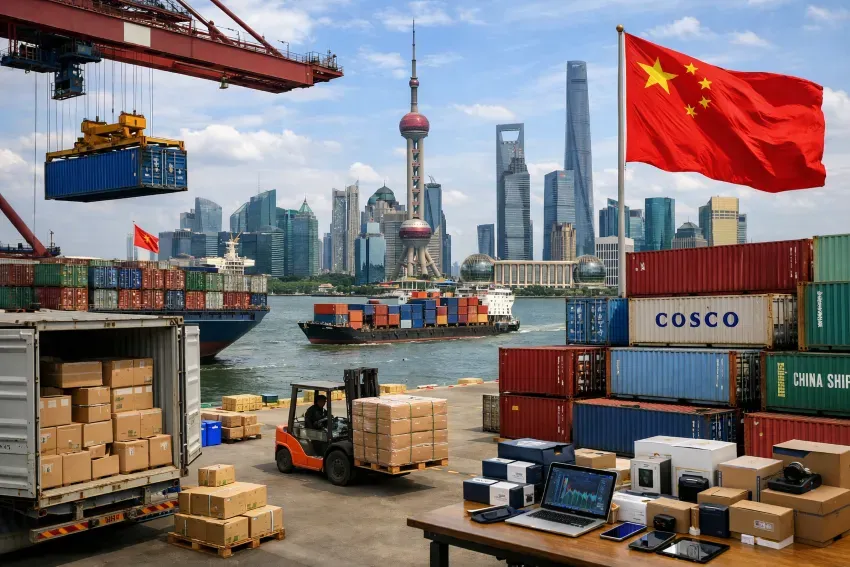
China's foreign trade delivered another record-breaking performance in June 2026, with both exports and imports reaching all-time highs as global demand for AI-related technology products continued to strengthen, even as investors prepared for slower second-quarter economic growth and awaited fresh policy signals from Beijing.
Official trade data showed exports surged 27% year-on-year to a record USD 412.39 billion, well above market expectations and marking the strongest expansion in several months. At the same time, imports jumped 36% to an all-time high of USD 286.76 billion, the fastest annual increase since June 2021, exceeding forecasts by a wide margin and extending a 13-month expansion streak.
The combination of record exports and the strongest import growth in five years lifted China's trade surplus to USD 125.62 billion, the second-largest monthly surplus on record. During the first six months of 2026, China's exports increased 17.6% to USD 2.12 trillion, while imports climbed even faster at 26.6%, reaching USD 1.55 trillion.
Export performance was once again led by technology manufacturing. Strong global demand for AI-related hardware, higher semiconductor prices and accelerated shipments ahead of potential new US tariffs supported record overseas sales. Shipments expanded across major trading partners, including the United States, Japan, South Korea, Taiwan, ASEAN, Australia and the European Union.
Imports also revealed a more nuanced picture of China's economy. The record increase was driven primarily by semiconductor purchases and industrial inputs, rather than a broad rebound in domestic consumer demand. Coal imports climbed 29%, while purchases from key trading partners accelerated sharply, including South Korea (85%), Australia (65.8%), Taiwan (41.1%) and Japan (33.9%). In contrast, crude oil imports plunged 41.3%, falling to their lowest level in nearly a decade as refinery operating rates dropped to a ten-year low.
Financial markets reflected this mixed economic backdrop. The offshore yuan remained under pressure near 6.78 per US dollar, while the yield on China's 10-year government bond rebounded toward 1.74% as investors balanced stronger external trade against expectations that the economy expanded only 4.5% in the second quarter, slowing from 5.0% in the first quarter and approaching the lower end of Beijing's annual growth target.
Attention is now turning to this week's GDP release and the upcoming Politburo meeting, where investors expect additional guidance on fiscal and monetary measures aimed at supporting domestic demand and stabilizing the property sector.
China Trade Snapshot – June 2026
The latest trade data highlight the divergence between China's strong external sector and weaker domestic economy.
| Indicator | Value |
|---|---|
| Exports | USD 412.39 billion |
| Export Growth | 27.0% YoY |
| Imports | USD 286.76 billion |
| Import Growth | 36.0% YoY |
| Trade Surplus | USD 125.62 billion |
| H1 Exports | USD 2.12 trillion |
| H1 Import Growth | 26.6% |
| Offshore Yuan | 6.78/USD |
| China 10Y Yield | 1.74% |
| Expected Q2 GDP Growth | 4.5% |
EcoPulse24 Analysis
China's June trade figures reveal an economy increasingly supported by external demand while domestic activity remains under pressure. The simultaneous record highs in exports and imports might initially suggest broad-based economic strength, but a closer examination shows that the drivers of growth remain highly concentrated in manufacturing, technology and global supply chains rather than consumer-led expansion.
The export surge reflects China's continued dominance in global production of advanced technology goods. Robust demand for AI servers, integrated circuits, electronics and semiconductor-related products has become one of the strongest pillars supporting Chinese manufacturing. The prospect of additional US tariffs also encouraged exporters to accelerate shipments, temporarily boosting trade volumes and reinforcing China's position within global technology supply chains.
On the import side, the fastest growth in five years deserves equal attention. Rather than signaling a broad recovery in domestic consumption, the increase was largely driven by industrial components and semiconductor imports required to sustain manufacturing output. The sharp rise in purchases from regional technology partners such as South Korea, Taiwan and Japan highlights the deep integration of Asia's semiconductor ecosystem, where cross-border supply chains remain essential for producing next-generation AI hardware.
At the same time, the 41.3% collapse in crude oil imports paints a very different picture of China's domestic economy. Falling refinery utilization and weaker energy demand indicate that parts of the industrial sector remain subdued despite the strength of export manufacturing. Combined with persistent weakness in the property market and soft household spending, the data suggest that domestic demand has yet to recover sufficiently to become a primary engine of economic growth.
Financial markets are reflecting this divergence. The modest rebound in government bond yields and continued weakness in the offshore yuan indicate that investors remain cautious despite stronger trade data. Markets increasingly expect Beijing to introduce additional policy support after second-quarter GDP growth slows to around 4.5%, the lower boundary of the government's annual target range.
From a macroeconomic perspective, China's economy is entering a phase where external competitiveness is offsetting internal fragility. AI-driven global demand, resilient semiconductor supply chains and strong manufacturing exports continue to provide momentum, but sustainable long-term growth will ultimately depend on whether Beijing can revive consumer confidence, stabilize the property sector and encourage private investment. Until those domestic engines strengthen, China's trade sector is likely to remain the country's primary source of economic resilience.
Explore Related Coverage
Sources & References
Editorial Note
Disclaimer
© 2025 EcoPulse24. All rights reserved.