Fed Officials Signal US Interest Rates May Need to Rise Again as Inflation Pressures Persist
Many participants indicated that they would have preferred removing the language from the post-meeting statement that suggested an easing bias regard

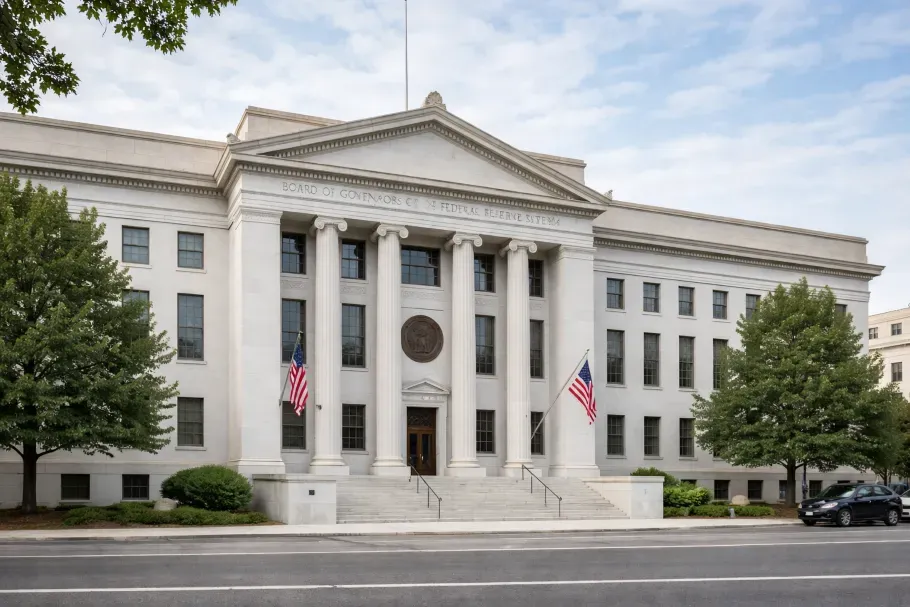
Washington | EcoPulse24
US Federal Reserve officials signaled that interest rates may need to rise again if inflation continues to remain persistently above the central bank’s 2% target, according to minutes from the Federal Open Market Committee (FOMC) meeting held in April 2026.
The minutes showed that a majority of policymakers acknowledged that “some policy firming” could become necessary if inflationary pressures fail to ease sustainably, reflecting growing concern inside the Fed that disinflation progress may be stalling amid renewed energy-driven price pressures and resilient economic activity.
Several Fed officials also pushed to remove language from the post-meeting statement that suggested a continued easing bias toward future rate cuts.
According to the minutes:
“Many participants indicated that they would have preferred removing the language from the post-meeting statement that suggested an easing bias regarding the likely direction of the Committee’s future interest rate decisions.”
The discussions underscore how rapidly Federal Reserve expectations have shifted in recent months as inflation risks linked to energy markets, geopolitical tensions and resilient consumer demand continue reshaping the US macro outlook.
The Fed kept the federal funds rate unchanged for a third consecutive meeting at a target range of 3.5% to 3.75% during the April meeting.
However, the decision exposed unusually deep divisions inside the central bank.
The vote split 8-4 marked the first time since October 1992 that four Federal Reserve officials formally dissented against an FOMC rate decision, highlighting growing internal disagreement over the future direction of monetary policy.
Despite the hawkish shift, several policymakers still argued that rate cuts could eventually become appropriate if inflation resumes a sustained decline or if the US labor market shows clearer signs of weakening.
Markets are increasingly reassessing expectations for US monetary policy after earlier assumptions that the Fed would begin cutting rates in 2026.
Instead, investors are now confronting the possibility that:
-
rates could remain higher for longer,
-
or potentially rise again,
particularly if oil prices and geopolitical disruptions continue feeding into broader inflation pressures.
The Fed minutes come as global markets monitor escalating energy-market volatility linked to the Middle East conflict and renewed concerns over supply-chain disruptions through the Strait of Hormuz.
EcoPulse24 Analysis
The significance of the latest Fed minutes lies less in the unchanged rate decision itself and more in the clear re-emergence of “rate hike risk” inside Federal Reserve discussions.
Only months ago, markets were largely focused on the timing of future rate cuts.
Now, the conversation has shifted toward whether inflation pressures linked to energy, shipping, logistics and geopolitical instability could force the Fed back into tightening mode.
The unusually high number of dissents also signals growing uncertainty inside the central bank over whether inflation is becoming structurally harder to contain.
This matters globally because higher-for-longer US interest rates affect:
-
the US dollar
-
Treasury yields
-
emerging-market liquidity
-
energy markets
-
gold
-
crypto assets
-
and global capital flows.
The Fed’s increasingly cautious tone also reinforces broader fears that the global economy may be entering a more difficult phase where geopolitical shocks and energy disruptions begin feeding directly into monetary policy and inflation expectations worldwide.
Sources & References
Editorial Note
Disclaimer
© 2025 EcoPulse24. All rights reserved.