German Bond Yields Near 9-Month High Amid Tight Monetary Policy; Austrian Manufacturing Returns to Contraction
German bond yields near 9-month high; Austria's manufacturing contracts again, highlighting eurozone's mixed economic trends.

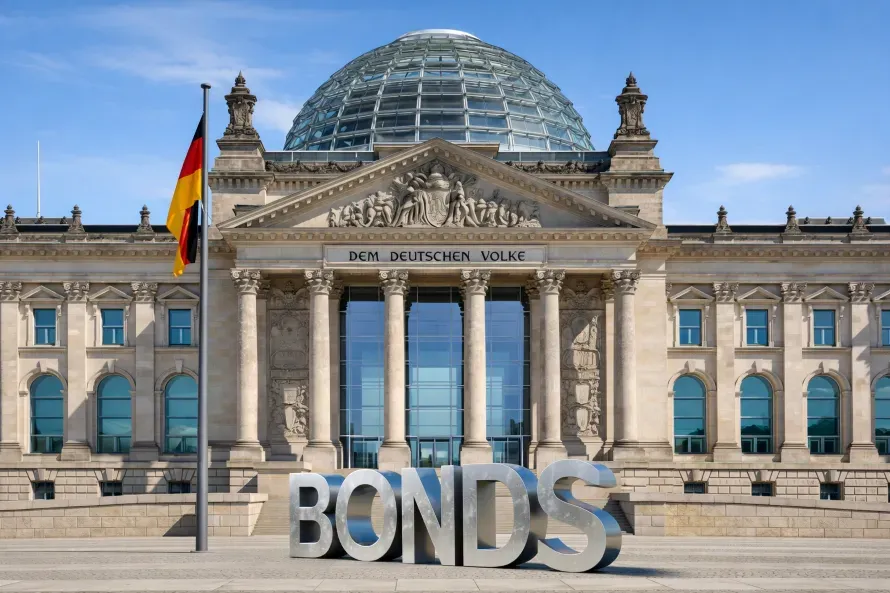
European markets saw mixed developments as German 10-year government bond yields (Bund) remained close to their highest level in nine months, while Austria's manufacturing sector returned to contraction at the end of 2025, underscoring divergent economic trends within the eurozone.
German yields edged slightly lower to around 2.85% in thin holiday trading but stayed near recent peaks amid investor focus on geopolitical developments.
Former U.S. President Donald Trump suggested that a peace deal to end the Ukraine war was closer than ever, despite ongoing disagreements over eastern Donbas.
Dutch pension system reforms also drew market attention, with a new framework set to launch from January 1, enabling the €2 trillion sector to allocate more assets to higher-risk investments - potentially impacting European bond markets.
On an annual basis, German bond yields are set to end 2025 up about 50 basis points, marking the largest yearly rise since 2022, supported by the ECB's hawkish stance, expectations of continued high rates, and anticipated fiscal stimulus in Germany.
Lawmakers approved a €524 billion federal budget for 2026, including €180 billion in borrowing to fund increased spending on defense and infrastructure after easing debt brake restrictions.
In Austria, economic data showed manufacturing activity slipping back into contraction, with UniCredit Bank Austria's manufacturing PMI falling to 49.3 in December from 50.4 in November - back below the neutral level after the first monthly expansion in over three years.
New orders saw their steepest decline in three months, leading to only marginal output growth amid weak external demand.
Employment continued to fall for the 32nd consecutive month, albeit at the slowest pace since mid-2023, supported by the first slight rise in backlogs since May 2022. Input costs remained low despite supply delays reaching a three-year high, and manufacturers cut selling prices for the eighth straight month due to stiff competition.
Despite current challenges, Austrian manufacturers showed cautious optimism about 2026 production prospects, with expectations at their highest since early 2022, signaling hopes for gradually improving demand next year.
Sources & References
Editorial Note
Disclaimer
Please review the Terms & Conditions.
© 2025 EcoPulse24. All rights reserved.