Gold Below $4,800: How the Iran War Turned the Safe-Haven Metal Into a Liability
Gold fell below $4,800 as the Iran war caused oil-driven inflation, boosting yields and the dollar, making gold less attractive as a safe haven.

Abu Dhabi | EcoPulse24
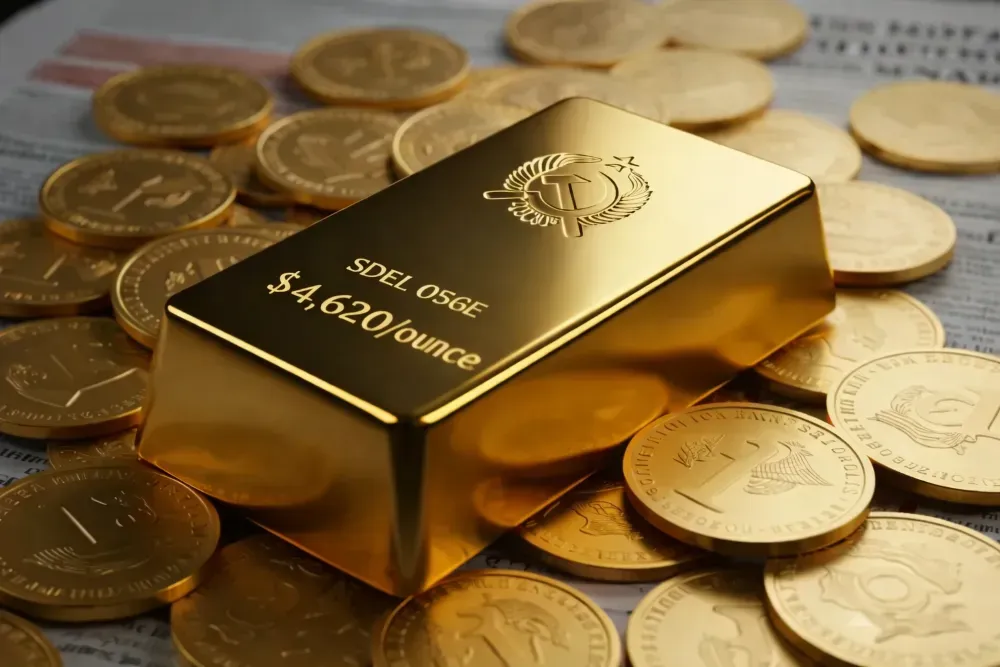
Gold held below $4,800 an ounce on Tuesday, remaining under pressure as investors cautiously awaited a second round of US-Iran negotiations before the two-week ceasefire expires this week. In a striking reversal of market logic, the metal most associated with wartime safety is being punished by the very conflict it was expected to benefit from.
Hormuz Flare-Up Reignites Oil and Inflation Fears
Gold fell after a weekend flare-up in Middle Eastern waters renewed inflation risks from an energy-supply shock and cast doubt over talks to end the Iran war, with bullion dropping as much as 1.9% before paring losses. President Trump said he is unlikely to extend the existing truce if no agreement is reached before its expiration, adding that the Strait of Hormuz will remain closed until a deal is secured.
Why Is Gold Falling During a War?
The reason is structural. The Strait of Hormuz carries approximately 20% of the world's seaborne oil. A sustained disruption does not price fear of conflict - which historically accrues to gold - but rather an oil-driven inflation shock, which accrues to the yield curve and the dollar. The mechanism operates in sequence: disruption to Hormuz transit raises the probability that oil stays elevated longer, elevated oil feeds directly into consumer price indices through energy and transport costs, and when inflation readings remain above target, the Fed's capacity to cut rates is reduced.
The Fed Tightens Its Grip
The Fed held rates at 3.50 – 3.75% in March, and the median 2026 dot shifted to one cut. The 10-year Treasury yield reached 4.25% as of April 16, and the Dollar Index climbed toward 98.12. Gold, which carries no yield, becomes less competitive as a store of value when yields rise alongside a stronger dollar - with the dollar's concurrent strength raising the effective cost of gold for non-dollar holders, compressing demand at the margin.
Losses Since the War Began
Gold has shed more than 10% from its January 2026 peak near $5,400, as concerns that higher energy prices could stoke inflation and keep global interest rates higher for longer continue to weigh on the metal. Silver has fared worse, losing more than 15% over the same period. While gold is considered an inflation hedge, higher interest rates crimp demand for the non-yielding asset.
The Gulf: Double Exposure
The 2026 Iran war has led to what the International Energy Agency characterized as the largest supply disruption in the history of the global oil market, echoing the 1970s energy crisis through acute supply shortages, currency volatility, and heightened risks of stagflation. Arab states of the Persian Gulf rely on the Strait for their energy exports and over 80% of their food imports. Yet divergence persists: Dubai's index notched a 4.2% single-day advance powered by real estate and banking stocks, while Oman has drawn investors seeking a regional safe-haven amid the upheaval.
Gold and Silver Performance - April 21, 2026
Key price and macro indicators as markets await ceasefire talks in Islamabad:
| Indicator | Value |
|---|---|
| Gold Spot Price (Apr 21, 2026) | $4,784 |
| Gold All-Time High (Jan 2026) | $5,595 |
| Gold Decline Since ATH | ~14.5% |
| Gold Decline Since War Began | > 10% |
| Silver Spot Price (Apr 21, 2026) | $79.01 |
| Silver Decline Since War Began | ~15% |
| US 10-Year Treasury Yield | 4.32% |
| Dollar Index | 98.12 |
| Fed Rate (Current) | 3.50 – 3.75% |
| Fed Cuts Expected in 2026 | One cut only |
EcoPulse24 Analysis
What is unfolding in gold markets today is not a temporary price anomaly - it is a structural stress test of one of the most deeply held assumptions in investment theory: that gold rises in wartime. This war is breaking that assumption, and understanding precisely why is essential to any informed view on precious metals through the remainder of 2026.
The core inversion lies in the transmission channel. Conventional wars generate fear and uncertainty, driving capital toward safe-haven assets. The Iran war operates primarily through an energy channel - Hormuz disruption produces an oil shock, the oil shock produces inflation persistence, inflation persistence delays rate cuts, delayed rate cuts strengthen the dollar and lift real yields, and both of those outcomes are structurally negative for a non-yielding asset priced in dollars. The war, in this sense, is not producing the macro conditions that gold needs. It is producing their opposite.
As Ilya Spivak, head of global macro at Tastylive, observed: the revival of war-trade dynamics has seen crude oil gains echo into inflation expectations, driving up both yields and the dollar simultaneously - a dual headwind that gold cannot easily absorb.
For Gulf-based investors, the paradox carries an additional dimension. The region's traditional hedge against geopolitical risk has historically been gold. But this conflict originates within the Gulf's own economic architecture - disrupting the same strait that underpins export revenues and food security. The result is a simultaneous internal and external shock for which conventional hedging models were not designed. An investor holding gold as protection against regional instability is now watching that position decline precisely because the instability materialized.
Emerging market central banks are buying approximately 60 tonnes of gold per month in 2026, with China recording 16 consecutive months of purchases. This structural flow is entirely independent of oil, the Fed, and Hormuz. It represents the long-term bullish thesis for gold - central bank de-dollarization, US fiscal pressures, and global trade fragmentation - and that thesis remains intact. But structural flows do not determine near-term price action when macro headwinds are this concentrated.
The inflation injected by weeks of oil above $100 is still in the pipeline and does not disappear with the reopening of a strait. The Fed does not pivot on one week of falling oil prices. Watch the April CPI release in mid-May and the Fed meeting on April 28 – 29 as the next critical truth catalysts.
The single most important near-term variable remains the outcome of ceasefire negotiations in Islamabad this week. A durable agreement that restores Hormuz transit would unwind the oil premium, ease inflation expectations, reduce pressure on the Fed, and mechanically weaken the dollar - all conditions that would allow gold to reclaim its traditional safe-haven premium. Until that channel closes, the metal will continue to pay the price of a war it was supposed to benefit from.
Explore Related Coverage
Sources & References
Editorial Note
Disclaimer
© 2025 EcoPulse24. All rights reserved.