Google Bets $40 Billion on Its Own Rival - And That Tells You Everything About the AI Race
Google will invest up to $40B in Anthropic, hedging its AI bets and securing cloud partnerships amid fierce competition with Amazon and Microsoft.

EcoPulse24
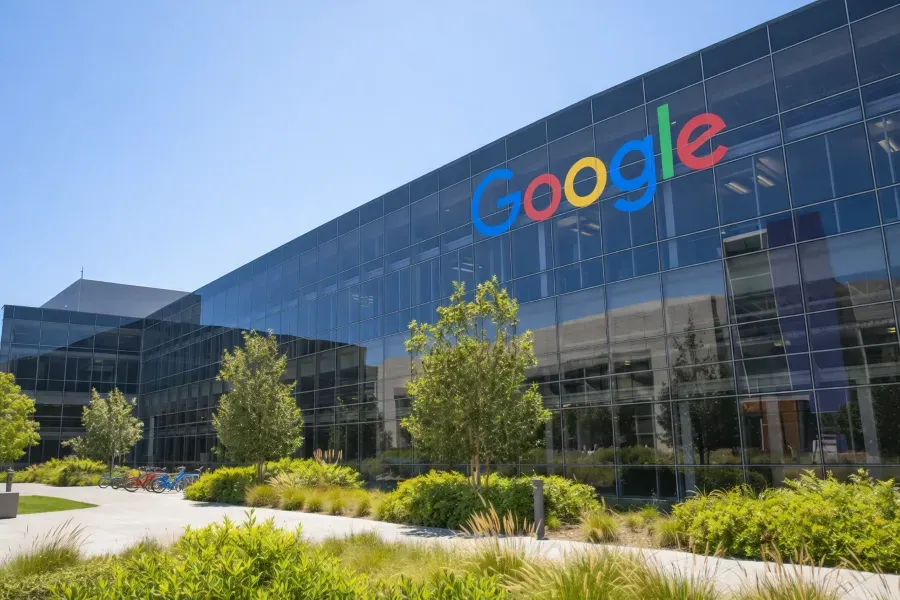
In a move that would have seemed paradoxical just a few years ago, Alphabet confirmed Friday it will invest up to $40 billion in Anthropic - the very company whose Claude models compete directly with Google's own Gemini. This is not a contradiction. This is strategy at its most ruthless.
Google is putting in $10 billion immediately, with the remaining $30 billion contingent on Anthropic hitting specific performance milestones. The message to the market is clear: Alphabet is not willing to let any credible AI contender fall into the wrong hands - even if that contender is itself a threat.
Why Would Google Fund a Competitor?
Because in the AI race, the cost of being wrong is existential.
Alphabet's move reflects a broader capital deployment strategy - directing investment toward high-return external bets where internal development hasn't yet matured, a posture CEO Sundar Pichai has publicly endorsed. Put simply: if Gemini doesn't win, Google wants a seat at the table of whoever does.
Google already provides Anthropic's Claude models through its cloud division, competing head-to-head with Amazon Web Services and Microsoft Azure - meaning this investment doubles as a customer retention play. The more Anthropic grows, the more Google Cloud benefits.
The AI race is increasingly defined by access to compute. Anthropic has been scrambling to address surging infrastructure demand, recently striking a deal with CoreWeave for data center capacity and securing this week an additional $5 billion from Amazon as part of a broader agreement targeting up to 100 billion dollars in compute spending over time.
Anthropic has expanded its use of Google's TPU chips and Cloud services, with 5 gigawatts of capacity expected to come online starting in 2027. This investment is not just capital - it is a supply chain lock-in.
The Competitive Pressure Is Real
Coming just days after Amazon committed $5 billion to Anthropic, and with Microsoft's deepening OpenAI partnership already reshaping the competitive landscape, Google is essentially hedging its bets in a winner-take-most market. No one in Silicon Valley can afford to watch from the sidelines.
Anthropic closed a $30 billion funding round in February at a $380 billion valuation, with its annualized revenue run rate surpassing $30 billion - signaling commercial traction that few AI startups have ever achieved. The company is also reportedly weighing an IPO as early as October 2026.
Market Reaction - Friday, April 24, 2026
Markets responded decisively. Alphabet (GOOGL) closed at $344.32, up 1.60%, as investors read the deal as a sign of confidence rather than desperation.
Microsoft (MSFT) closed at $424.62, gaining 2.13%, lifted by broader tech optimism heading into its April 29 earnings report.
Intel (INTC) was the session's standout, closing at $82.55 - up an extraordinary 23.61% - after a blowout Q1 earnings beat that signaled the CPU's unexpected return to relevance in the AI infrastructure stack. Trading volume hit 264 million shares, roughly 147% above its three-month average.
The S&P 500 closed up 0.79% at 7,164, while the Nasdaq Composite surged 1.63% to finish at 24,837.
Anthropic and OpenAI remain privately held. Neither trades on public markets. Anthropic's last disclosed valuation stands at $380 billion.
The Bottom Line
The $40 billion question is not whether Google trusts Anthropic. It is whether Google can afford not to. In an industry where compute access, model capability, and distribution are converging into a single winner-take-most dynamic, sitting on capital is no longer a viable strategy.
The giants are not just building AI. They are buying insurance against a future they cannot fully predict - and the premiums are measured in tens of billions.
Explore Related Coverage
Sources & References
Editorial Note
Disclaimer
© 2025 EcoPulse24. All rights reserved.