Gulf Economies Demonstrate Institutional Resilience Amid Regional Escalation
Gulf economies, led by the UAE, show resilience and stability amid regional tensions, maintaining growth, trade, and investor confidence.

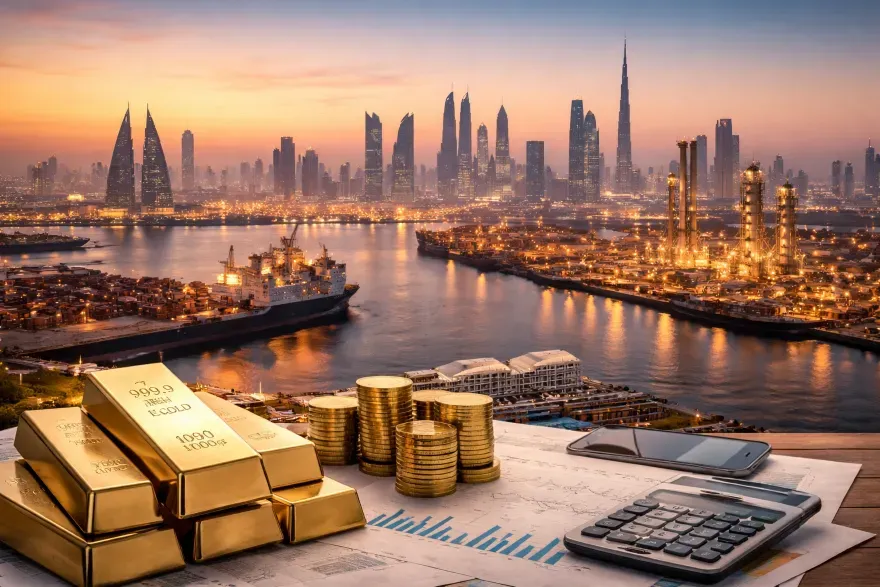
Dubai | EcoPulse24
Amid heightened military confrontations and infrastructure targeting in parts of the Middle East, Gulf economies face a dual test: protecting vital assets and maintaining confidence in ongoing economic activity. Recent indicators, however, counter pessimistic expectations, showing institutional frameworks capable of absorbing shocks without broad economic disruption. The UAE stands out as a model of operational and financial stability.
In the energy sector, Saudi Arabia's precautionary shutdown of the 550,000 bpd Ras Tanura refinery after a minor security incident did not cause extended supply disruptions. Measures were preventive, and authorities confirmed continued product flows to markets. This approach reflects evolved response mechanisms since previous attacks, with flexible protocols allowing partial or temporary halts without structural market imbalances.
Global markets quickly priced in risk with higher oil prices, but this time, Gulf states showed no signs of internal financial turmoil, maintaining steady production and exports. The balance between security caution and operational continuity demonstrates institutional maturity and effective risk management.
The UAE's rapid logistical response was notable: the suspension of Jebel Ali Port operations was brief, with full resumption after assessment. As a regional and global logistics hub, prolonged disruption would have sent negative signals, but the swift recovery highlighted crisis management efficiency.
The UAE banking sector also signaled stability, with banks confirming uninterrupted services across branches and digital channels. This was more than reassurance - it was an institutional message of liquidity and organizational strength able to absorb short-term volatility, maintaining public and corporate confidence.
There were no signs of capital flight or financial talent exodus from Dubai. International reports indicated that hedge fund and investment managers remained, viewing current developments as temporary. Dubai's status as a low-tax, highly regulated global financial center, with strong security and a flexible legal environment, continues to attract investment.
Investment confidence aligns with ongoing UAE trade expansion. A comprehensive economic partnership agreement with Ecuador, aimed at reducing or eliminating tariffs on over 96% of traded goods, underscores the UAE's push to diversify trade corridors toward Latin America. The UAE accounts for about 30% of Ecuador’s trade with the Arab world and Africa, reinforcing its role as a regional re-export and logistics hub.
In Qatar, ports recorded a 5% year-on-year increase in container handling in February, with rises in vessel and cargo movement. These figures, released during a sensitive regional period, demonstrate the continued efficiency of Gulf supply chains and the effectiveness of contingency logistics plans.
In Saudi Arabia, Electrical Industries Company announced annual financial results showing a 15.56% revenue increase and a 56.8% net profit rise, driven by high-voltage projects, infrastructure, and the oil and gas sector. This reflects ongoing domestic capital expenditure and sustained industrial activity amid tensions.
Overall, Gulf economies have not entered contraction or freeze but continue to grow across multiple sectors. Compared to previous crises, the difference lies in large financial reserves, diversified income sources, and developed regulatory frameworks. Sovereign wealth funds provide strategic buffers, while relatively low debt levels offer wider financial maneuverability.
Financial markets have shown no signs of collapse or mass withdrawals, but rather manageable volatility typical of a tense geopolitical environment, reflecting investor trust in economic fundamentals.
Crucially, Gulf economies are no longer solely dependent on oil. Tourism, logistics, technology, and manufacturing now constitute key GDP components, reducing vulnerability to sector-specific shocks. In the UAE, the non-oil economy is a significant share of activity, lending greater flexibility to growth.
The current experience demonstrates that military escalation, while serious, does not automatically lead to economic collapse if institutions are strong and infrastructure is advanced. Rapid resumption of operations, stable financial services, ongoing trade agreements, and investor confidence all indicate an economy proactively managing risks rather than reacting in confusion.
EcoPulse24 Analysis:
Indicators reveal that Gulf economies - especially the UAE - have reached a stage of institutional maturity that makes them less vulnerable to geopolitical shocks. Rapid response, operational continuity, and steady investment confidence reflect an integrated system capable of absorbing pressures without escalating into internal economic crises. In a volatile region, institutional strength and economic diversification are decisive factors, reinforcing the Gulf’s status as a robust financial and logistical bloc capable of weathering storms with minimal impact.
Explore Related Coverage
Sources & References
Editorial Note
Disclaimer
© 2025 EcoPulse24. All rights reserved.