Honda Acquires LG Battery Assets in Ohio for $2.9 Billion Amid EV Market Slowdown
Honda will buy LG's Ohio battery assets for $2.9B to boost efficiency amid a global EV slowdown and shifting supply chain strategies.

United States | EcoPulse24
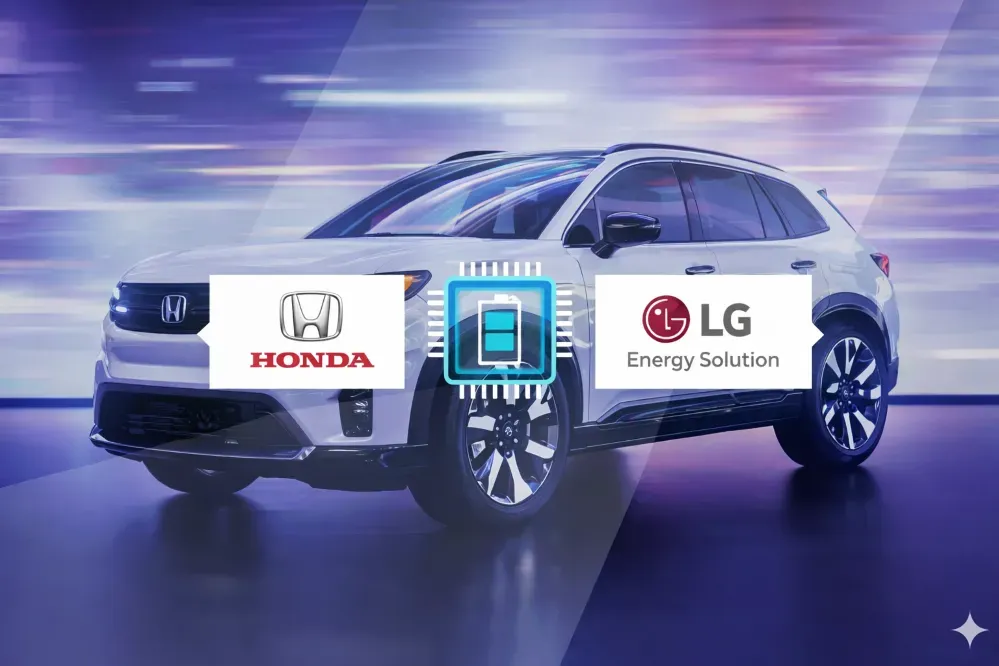
Honda Motor has revealed its intention to purchase facilities and assets from its partner LG Energy Solution at their joint battery plant in Ohio, USA, for about 4.2 trillion Korean won (approximately $2.9 billion). This move highlights the impact of the slowdown in the electric vehicle (EV) market outside China on global supply chains.
According to a regulatory filing by LG Energy Solution, the deal - set to be completed by the end of February through a Honda subsidiary in the U.S. - is expected to improve operational efficiency.
The transaction comes as growth forecasts for the EV sector decline in several Western markets, putting pressure on South Korean battery manufacturers. Ford Motor recently scaled back its ambitions in the sector, canceling a 9.6 trillion won battery deal with LG and ending a U.S. joint venture with SK Innovation.
Honda and LG Energy Solution had previously announced a $4.4 billion joint investment plan in 2022 to build an EV battery plant in Ohio, with commercial production expected to start by the end of 2025.
Separately, reports indicate that U.S. immigration authorities conducted an unprecedented raid on LG’s joint project with Hyundai Motor in Georgia, detaining more than 300 South Korean workers, adding regulatory pressures to LG’s U.S. operations.
Despite these challenges, LG Energy Solution continues to expand its industrial footprint, constructing two additional production lines in Arizona and Michigan, and accelerating growth in its energy storage business to offset the EV market slowdown.
Analytical Perspective | EcoPulse24
Honda’s acquisition of LG’s assets in Ohio reflects a restructuring within battery supply chains, as companies move to strengthen direct control over assets amid slowing EV demand. This signals a shift from rapid expansion to strategic review in the EV sector, particularly in U.S. and European markets, where operational efficiency and cost control now take precedence.
Sources & References
Editorial Note
Disclaimer
Please review the Terms & Conditions.
© 2025 EcoPulse24. All rights reserved.