Household and Government Spending Ends Two Years of Recession, Returns German Economy to Modest Growth
Germany's economy grew 0.2% in 2025 after two years of recession, driven by domestic spending, but exports and investment remain weak.

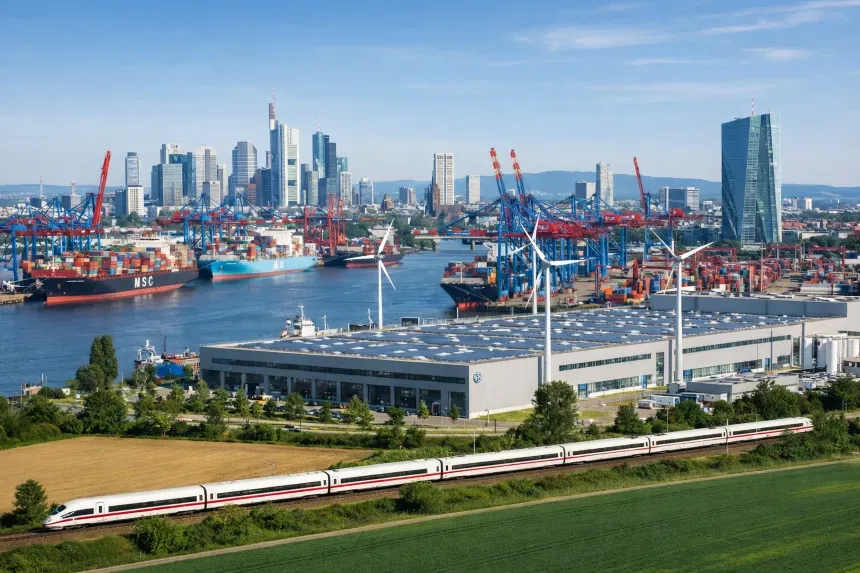
Frankfurt | EcoPulse24
The German economy returned to growth in 2025 after two consecutive years of contraction, supported by improved domestic spending despite ongoing external pressures and weak export performance. Official data indicate that the recovery is fragile and limited in scope within an unfavorable global environment.
According to Germany's Federal Statistical Office (Destatis), gross domestic product grew by 0.2% in 2025. Destatis President Ruth Brand explained that this increase was primarily due to higher household and government spending, contrasting with continued weakness in the external sector.
The export sector remained under significant pressure, affected by increased US tariffs, a stronger euro, and heightened competition from China, which limited its contribution to growth. Preliminary data also showed declining investment, particularly in construction and machinery manufacturing, reflecting sustained business caution.
On a quarterly basis, Destatis expects the economy to post 0.2% growth in the fourth quarter of 2025 compared to the third quarter, indicating a gradual improvement without a strong shift in the overall trend.
This recovery follows a challenging period for Europe’s largest economy, impacted by the energy shock from the war in Ukraine, a downturn in manufacturing, US trade pressures, and weak demand in the Chinese market. The German economy had contracted during 2023 and 2024 under the weight of these factors.
Analysis: The return to growth, albeit limited, partially eases economic and political pressures but also highlights a structural imbalance between domestic demand and the export sector. Reliance on internal spending offers temporary stability, but the sustainability of recovery depends on Germany's ability to restore export competitiveness and revive productive investment. In a volatile global trade environment, the growth path remains fragile and vulnerable to fresh external shocks.
Explore Related Coverage
Sources & References
Editorial Note
Disclaimer
© 2025 EcoPulse24. All rights reserved.