How a South Korean Presidential Aide's Facebook Post Wiped Billions Off Global Semiconductor Stocks
Kim Yong-beom - chief of South Korea's Presidential Policy Office and the most influential economic voice in the Lee Jae-myung administration

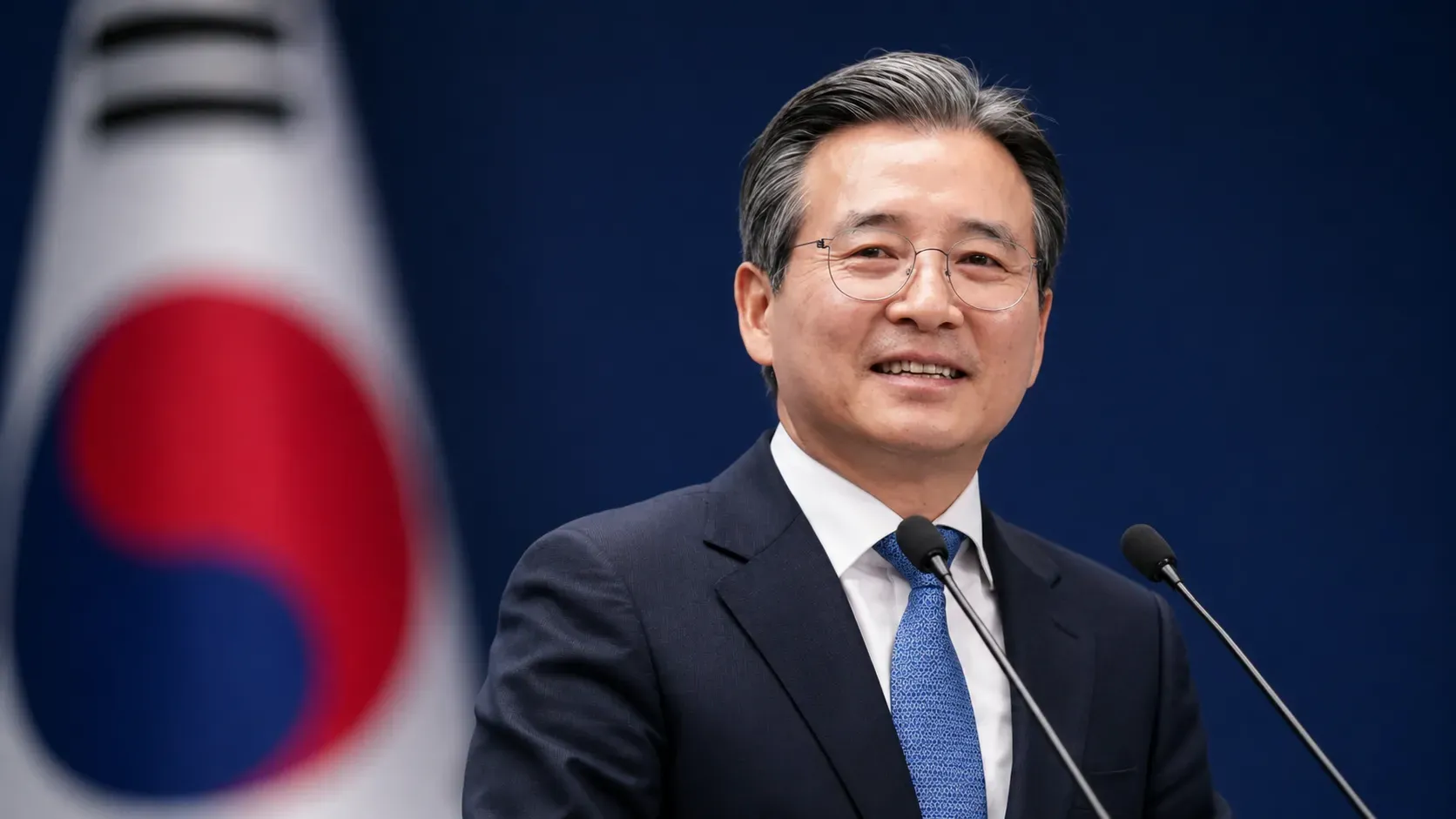
A late-night social media post by Seoul's top policy official proposing an "AI national dividend" sent shockwaves through memory and chip markets worldwide - exposing just how fragile the AI trade had become.
The post that moved markets
On the night of Monday, May 11, Kim Yong-beom - chief of South Korea's Presidential Policy Office and the most influential economic voice in the Lee Jae-myung administration after the president himself - published a Facebook post that no one on Wall Street was expecting. By Tuesday morning, it had moved global markets more than most central bank statements.
In the post, Kim argued that South Korea's dominant position in the global AI infrastructure supply chain - anchored by Samsung Electronics and SK Hynix, which together manufacture the bulk of the world's high-bandwidth memory chips - was generating an unprecedented structural profit boom. And he asked a pointed political question: who should benefit from it?
"If Korea's strategic position in the AI infrastructure supply chain creates a structural boom that leads to record-high excess tax revenue, how to use that money is not merely a matter of choice, but a matter of policy design."
Kim called it a "national dividend" or "citizen dividend" - a structured mechanism to return a share of the AI era's extraordinary gains to ordinary South Koreans. He cited Norway's sovereign wealth fund as his explicit model: just as Oslo has accumulated decades of oil revenues into a fund that benefits all citizens, Seoul could do the same with the windfall from AI chips.
Why markets panicked
The immediate market interpretation was unambiguous and brutal. Investors read the post as the opening shot of a future windfall tax regime targeting Samsung and SK Hynix directly. The Kospi - which had been on the verge of breaching the historic 8,000-point level for the first time - plunged 5.12% within hours of Bloomberg's report, sliding from 7,999 to the 7,400 range in a single session.
The damage in US markets was equally severe. The Roundhill Memory ETF (DRAM), which had rallied more than 90% in just over one month, collapsed 11.8% - its worst single day since the fund launched in April 2026. The iShares Semiconductor ETF (SOXX) shed 6.9%, its steepest drop since the Liberation Day tariff selloff of April 2025. Qualcomm fell 14.87%, Credo Technology dropped 12.64%, and Intel lost 10.97% in a single session.
The scale of the reaction reflected the extraordinary profit numbers underpinning the trade. Samsung is on pace to post $220 billion in operating profit in 2026 - second only to Nvidia globally, and ahead of Apple and Alphabet. SK Hynix's expected profit for the year stands at 239 trillion won. Samsung's Q1 2026 operating profit had already surged 48 times year-on-year. These were not abstract figures: they were the numbers making a "national dividend" politically credible.
The critical ambiguity
The panic was amplified by a critical ambiguity in Kim's language. Although he later clarified that the dividend would be funded from "excess tax revenue" - not a direct levy on corporate profits - the original post had used the terms "excess profits" and "excess tax revenue" interchangeably, referring to "ways of returning some of the gains to support social stability." Markets could not determine whether this was a redistribution of public tax receipts or a new windfall tax on Samsung's bottom line. They sold first.
The Presidential Office moved quickly to limit the damage, calling Kim's remarks "a personal opinion" with no connection to formal government policy discussions. Kim himself clarified to Bloomberg News that the mechanism he envisioned would draw on surplus fiscal revenue generated by the AI boom - not directly from corporate balance sheets.
The clarification worked, partially. The Kospi closed the session down 2.3% - a significant decline, but well off the intraday lows. Samsung and SK Hynix each ended the day down around 2.3%.
The Norway parallel
Kim's explicit reference to Norway's oil fund model is significant beyond the Korean context. On the same day Seoul was debating whether to create a sovereign-style fund for AI chip revenues, Oslo announced it expects to earn $78.7 billion from oil and gas in 2026 - a 30% upward revision driven by the Iran war pushing crude to $91 per barrel. The intellectual framework is identical: extraordinary resource rents, generated by national strategic assets, redistributed through a public mechanism rather than accruing only to private shareholders.
The deeper story: the AI trade's hidden fragility
Beyond the immediate policy debate, Tuesday's selloff revealed something important about the state of the global AI investment cycle. The DRAM ETF had gained roughly 100% in 2026 before Tuesday's session. SanDisk had surged more than 4,000% since its early-2025 spinoff debut. Samsung Electronics and SK Hynix together accounted for a record 42.2% of the entire Kospi index in May. The trade had become so concentrated, so leveraged to the assumption that AI memory profits would flow uninterrupted to private shareholders, that a single social media post could produce double-digit percentage declines in hours.
Adding further pressure, Samsung's labor union has threatened an 18-day strike beginning May 21, demanding 15% of the chip division's operating profits as bonuses - a demand that runs parallel to the government's own redistribution argument, compressing the profit outlook from two directions simultaneously.
Impact on Semiconductor Stocks - Korea AI Dividend Selloff, May 12, 2026
| Stock / ETF | Drop |
|---|---|
| Qualcomm (QCOM) | −14.87% |
| Credo Technology (CRDO) | −12.64% |
| DRAM ETF (Roundhill Memory) | −11.8% |
| Intel (INTC) | −10.97% |
| SOXX ETF (iShares Semiconductor) | −6.9% |
| SanDisk (SNDK) | −3.3% |
| Micron (MU) | −2.3% |
| AMD | −2% |
| Samsung Electronics | −2.28% |
| SK Hynix | −2.39% |
| Nvidia (NVDA) | −0.75% |
source: Investing.com · Benzinga · FX Leaders
"The speed of the decline shows the trigger was Policy Director Kim's surprise statement about the AI dividend. As Kim denied this was a windfall tax, market sentiment rebounded to some extent."
South Korea may be among the first major economies to publicly enter the political redistribution phase of the AI boom. But it is unlikely to be the last. Every major industrial revolution eventually reaches the point where governments begin asking whether the economic spoils are flowing too narrowly - and AI appears to be reaching that inflection point far faster than previous technology cycles.
A Facebook post by South Korea's top presidential aide proposing an AI national dividend sent semiconductor stocks tumbling globally - DRAM ETF fell 11.8%, Kospi plunged 5.1%.
Explore Related Coverage
Sources & References
Benzinga - SanDisk, Micron Stocks Plummet As Korea Shockwave Batters The Great Memory Boom
FXStreet - Asia wrap: The Korean tax man arrives as South Korea's AI dividend dream saps the Kospi party
Seoul Economic Daily - Kim Yong-beom's AI Dividend Remarks Rattle Korean Market
Korea Times - Chief policy staff's idea of 'national dividends' using AI profit triggers concerns
Bloomberg - Korea Roils Markets by Floating 'Citizen Dividend' From AI Tax
Japan Times - South Korea roils market by floating 'citizen dividend' from AI gains
UPI - Presidential official proposes 'public dividends' from AI-driven boom
GuruFocus - South Korea Considers 'Citizen Dividend' Amid AI Profit Surge
CNBC - TSMC, Samsung, SK Hynix's growth on Taiwan and South Korean markets
Editorial Note
Disclaimer
© 2025 EcoPulse24. All rights reserved.