India Flash PMI Falls to 3.5-Year Low in March as Middle East War Weighs on Business Activity
India's HSBC Composite PMI fell to 56.5 in March, a 3.5-year low, as the Middle East war and cost pressures dampened business activity.

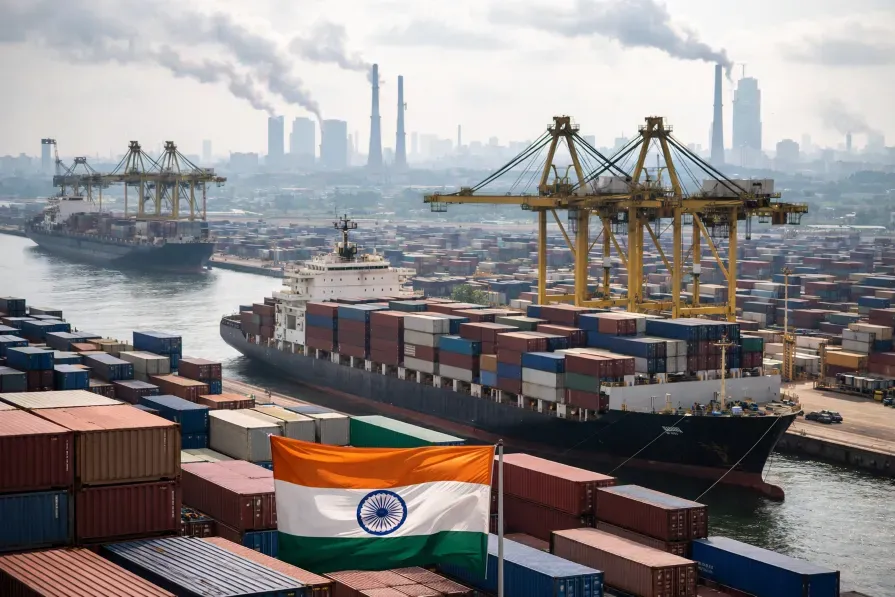
EcoPulse24 | New Delhi
India's private sector activity slowed sharply in March 2026, with the HSBC Flash Composite PMI falling to 56.5 from 58.9 in February-its weakest reading since October 2022 and below market expectations of 58.7. Companies across both manufacturing and services cited the prolonged Middle East conflict, volatile market conditions, and persistent inflationary pressures as primary factors behind the moderation, even as the index remained in expansion territory above the 50-point threshold.
Manufacturing Hits 4.5-Year Low
India's HSBC Flash Manufacturing PMI dropped to 53.8 in March from 56.9 in February, marking the weakest expansion in factory activity since September 2021. The reading came in well below expectations for a modest easing to 56.8. Output growth slowed as domestic demand softened, though international sales surged at a record pace, reflecting strong global appetite for Indian goods even amid geopolitical disruptions. Employment increased moderately, supporting ongoing capacity expansion. Input costs rose at the fastest rate in 45 months, driven by elevated energy and raw material prices linked to Middle East supply chain disruptions. Output prices rose at their strongest pace in seven months, signaling that manufacturers are beginning to pass on cost increases to consumers.
Services Growth Eases to 14-Month Low
The HSBC Flash India Services PMI eased to 57.2 in March from 58.1 in February, its weakest reading since January 2025. New business growth slowed to a three-year low, though export orders hit a series high, supported by broad-based international demand. Geopolitical tensions in the Middle East, market volatility, and inflationary pressures weighed on activity, disrupting segments such as international travel and logistics. Input costs rose at the fastest pace in nearly four years, with firms passing on only part of the increase through higher prices. Despite softer domestic demand, employment continued to expand, with hiring rising at its fastest rate since August 2025, reflecting a sustained commitment to capacity building.
Record Export Momentum Offsets Domestic Softness
The composite picture reveals a key divergence within India's economy. Domestic new orders increased at their slowest pace in over three years, while new export orders surged to a record high across both sectors. This dynamic is consistent with global supply chain shifts that have redirected sourcing toward Indian goods as alternatives to Middle East-proximate suppliers disrupted by the ongoing conflict. The data comes as India's central bank is carefully monitoring inflation trends amid elevated global energy prices driven by disruptions in the Strait of Hormuz. Analysts expect the Reserve Bank of India to maintain a cautious stance, balancing the need to support growth against the risk of entrenching elevated cost pressures that are being transmitted through both energy and commodity channels.
EcoPulse24 Analysis
EcoPulse24 Analysis: India's March flash PMI data carries meaningful implications for Gulf economies and global trade flows. The deceleration in domestic activity signals that the Middle East conflict is beginning to weigh on business confidence and consumption in one of the world's largest energy importers. At the same time, record export order momentum suggests India is capturing trade diversion as buyers seek supply chain resilience outside the Gulf region. For GCC economies, the sharp rise in Indian input costs-largely energy-driven-may dampen import demand for Gulf oil if sustained. Investors should monitor whether the RBI shifts toward an accommodative stance to cushion the slowdown, and whether India's export-led strength translates into a broader manufacturing shift that could reshape trade relationships with Gulf states in the quarters ahead.
Explore Related Coverage
Sources & References
Editorial Note
Disclaimer
© 2025 EcoPulse24. All rights reserved.