India Rupee Rebounds to 93.9 as RBI Caps Bank FX Exposure at $100M Per Day
India's rupee rebounded to 93.9/dollar after the RBI capped banks' onshore FX positions at $100M/day, effective April 10.

EcoPulse24 | New Delhi
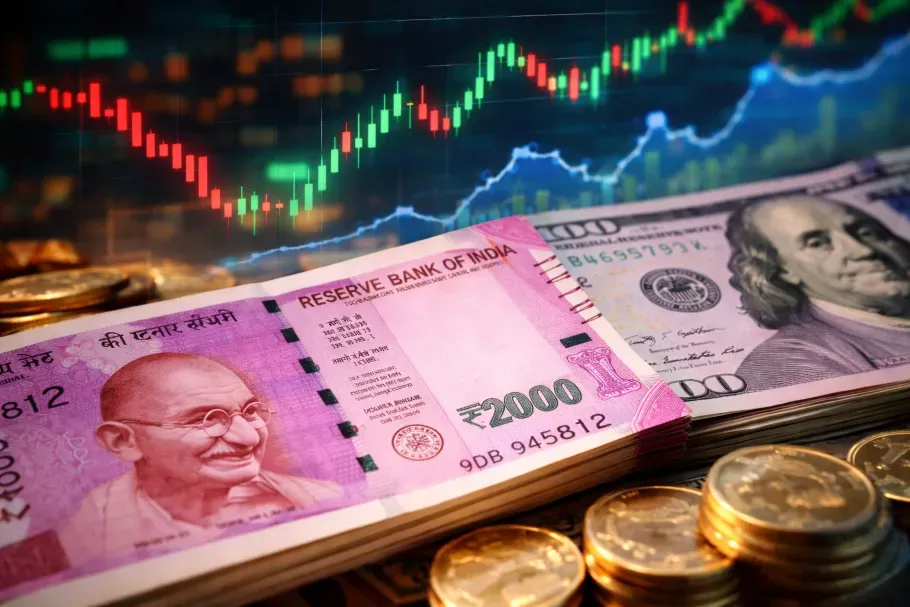
India's rupee rebounded sharply to around 93.9 per dollar on Monday, March 30, 2026, pulling back from record lows after the Reserve Bank of India announced new limits on banks' foreign-exchange exposure. The RBI said it would cap onshore open FX positions at $100 million per day, effective April 10, compelling lenders to scale back large one-sided bets against the rupee and providing immediate relief to a currency that had shed more than 4% over the past month.
The RBI Intervention: Mechanics and Scope
The Reserve Bank of India's new directive caps the net open foreign-exchange position that any domestic bank may hold onshore at $100 million per trading day, effective April 10. The measure directly targets the large speculative positions that banks had been building against the rupee in recent weeks, driven by broad dollar-buying amid Middle East tensions and surging energy prices. By imposing this ceiling, the RBI effectively forces lenders to reduce aggressive directional bets, removing a significant source of downward pressure on the currency. The central bank had already been conducting dollar sales in the spot market, but direct FX reserve intervention contributed to a depletion of more than $30 billion in the first three weeks of March alone, limiting further direct action and prompting the shift to a rules-based position limit instead.
Scale of Currency Pressure
The Indian rupee had fallen to a record low of approximately 94.82 per dollar earlier in March, representing a decline of more than 4% over the month. The currency came under sustained pressure from multiple directions: surging oil prices above $115 per barrel sharply increased India's import bill, given that the country imports around 85% of its crude oil needs. Foreign institutional investors also pulled an estimated $12.3 billion out of Indian equities in March alone, the largest monthly outflow in several years, as global risk appetite deteriorated. The Sensex index fell approximately 10.1% in March, putting it on course for its worst monthly performance in six years. These capital outflows intensified dollar demand and compounded pressure on the rupee even as the RBI attempted to absorb selling through reserves.
FX Reserve Drawdown and Policy Trade-offs
The pace of reserve depletion-more than $30 billion in less than three weeks-highlighted the unsustainable cost of direct intervention as the primary defense tool. India's foreign exchange reserves, while substantial, are finite, and deploying them at that rate risked undermining market confidence in the central bank's capacity to stabilize the currency over a more prolonged period. The shift to a position limit regime represents a more capital-efficient approach: rather than spending reserves to offset speculative flows, the RBI removes the ability to build those positions in the first place. However, analysts note that such limits can reduce market liquidity and complicate hedging for legitimate commercial importers and exporters, requiring the central bank to monitor implementation carefully.
Broader Context: Asian Currencies Under Pressure
The rupee's difficulties reflect a broader pattern across Asian currency markets, where the sustained rise in oil prices and the sharp pivot in Federal Reserve rate expectations have combined to strengthen the US dollar. Markets are now pricing approximately 12 basis points of Fed tightening in 2026, a dramatic reversal from expectations of 50 basis points of cuts just one month ago. This shift has driven dollar demand globally and created particular difficulties for oil-importing Asian economies like India, where higher energy costs simultaneously inflate the current account deficit and accelerate domestic inflation. India's consumer price inflation data and industrial production figures are due later this week and will offer further insight into the domestic economic impact of these pressures.
EcoPulse24 Analysis
EcoPulse24 Analysis: The RBI's position limit measure reflects a pragmatic acknowledgment that reserve intervention alone cannot stabilize a currency facing both fundamental balance-of-payments deterioration and speculative amplification. By removing the speculative layer, the central bank preserves reserves for genuine market dislocations while addressing a key driver of the overshoot. However, the underlying pressure-a sharply higher oil import bill at current prices-will not be resolved by FX policy alone, and any durable rupee stabilization ultimately depends on either a fall in global oil prices or a meaningful improvement in portfolio inflows. The April 10 implementation date gives markets two weeks to adjust, which may itself moderate further rupee depreciation before the rule takes effect.
Sources & References
Editorial Note
Disclaimer
© 2025 EcoPulse24. All rights reserved.