Japan Taps 80 Million Barrels of Strategic Oil Reserves to Counter Iran War Shock
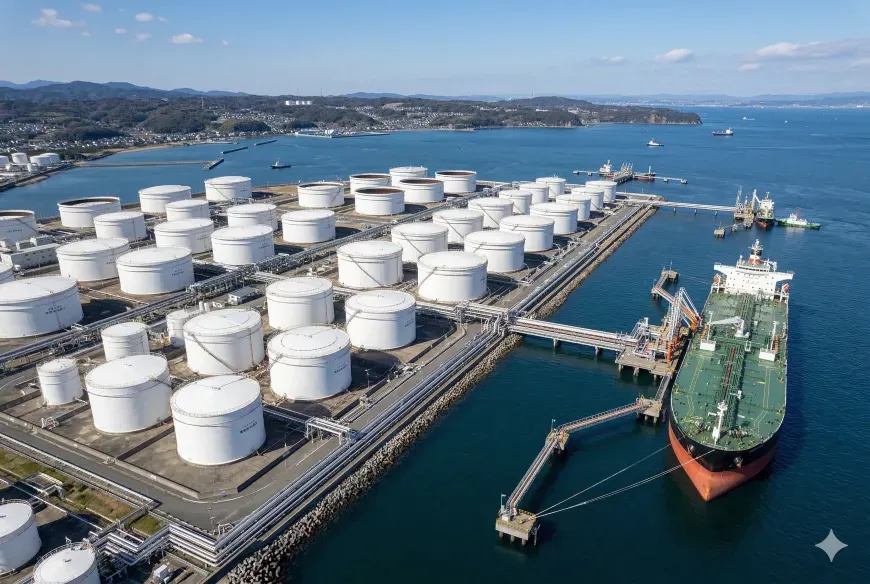
Japan begins drawing down 80 million barrels from its strategic petroleum reserves as the Iran war drives Brent crude past $100 per barrel.

EcoPulse24 | Tokyo
Japan has begun the process of releasing 80 million barrels from its strategic petroleum reserves, becoming one of the first major Asian economies to activate emergency oil stocks in response to the supply disruption caused by the Iran conflict and the ongoing closure of the Strait of Hormuz. The move reflects the acute vulnerability of energy-import-dependent economies like Japan to Middle East supply shocks, and comes as Brent crude surged past $100 per barrel for the first time since July 2022.
Scale and Urgency of the Drawdown
The 80 million barrel release from Japan's Strategic Petroleum Reserve (SPR) represents one of the largest single-country drawdowns in recent history outside of coordinated IEA actions. Japan has historically maintained one of the world's largest SPR stocks - required by law to hold at least 90 days of net imports - giving it significant buffer capacity for precisely these circumstances. The activation signals that Japanese authorities view the current Hormuz crisis as sufficiently severe to warrant emergency reserves deployment, even as the IEA simultaneously coordinates a broader 400-million-barrel release across member nations.
Japan's Dependence on Middle East Oil
Japan imports approximately 90% of its crude oil from Middle Eastern producers, making it exceptionally sensitive to any disruption in the region. Saudi Arabia, the UAE, Kuwait, and Qatar collectively supply the bulk of Japan's crude oil imports. With the Strait of Hormuz - the chokepoint through which roughly 20% of global oil supplies pass - now effectively blocked to commercial traffic, Japanese refiners face an acute near-term supply squeeze. The government's decision to tap the SPR is therefore both economically necessary and politically imperative, given the downstream impact on fuel prices across Japanese industry and households.
Coordination with the IEA
Japan's unilateral release follows and complements the IEA's coordinated 400-million-barrel release announced earlier this week, described by the agency as immediately deployable in Asian markets. The IEA release, which Japan participates in as a member country, is targeted specifically at easing supply tightness in Asian markets, which are the most directly affected by the Hormuz closure. Together, these coordinated actions represent the largest collective emergency oil deployment since the COVID-era demand crisis, though analysts caution that the current supply shock - rooted in deliberate military blockade rather than demand collapse - may prove harder to offset.
Economic Impact on Japan
Rising oil prices are exerting significant pressure on Japan's economy at a critical juncture. The Japanese yen recently touched 159.69 against the US dollar - its lowest level since July 2024 - compounding imported inflation pressures for a country that pays for energy in US dollars. Higher energy costs feed directly into Japan's industrial production costs, consumer prices, and trade balance. Japan's export competitiveness, while nominally helped by a weaker yen, faces headwinds from disrupted global supply chains and reduced demand from oil-importing trading partners also squeezed by high energy costs.
Geopolitical Implications and the Australia Factor
Japan has been in active discussions with Australia - a major non-Middle Eastern LNG supplier - to explore whether expanded Australian LNG shipments could partially substitute for disrupted Gulf supplies. However, Australia's LNG export capacity is largely contracted through existing long-term agreements, limiting its near-term flexibility. Japan is also watching developments in the Australia-Japan Energy Cooperation Framework closely, as the two countries seek to accelerate alternative supply arrangements for precisely such contingencies.
EcoPulse24 Analysis
EcoPulse24 Analysis: Japan's 80-million-barrel SPR activation illustrates how quickly a regional conflict in the Middle East can cascade into emergency energy responses across Asia. The move buys time but does not resolve the underlying supply problem; the Hormuz closure remains the central variable, and no reserve release can substitute for resumed commercial flows through the strait. For GCC producers like Saudi Arabia and the UAE, Japan's predicament underscores both the global stakes of the current conflict and the long-term incentive for major importers to accelerate energy diversification away from Gulf dependency. Watch for whether Japan escalates diplomatic pressure on the US to broker a ceasefire - Tokyo's energy security imperative may increasingly diverge from Washington's military calculus.
Explore Related Coverage
Sources & References
Editorial Note
Disclaimer
© 2025 EcoPulse24. All rights reserved.