Japanese Stocks Decline Amid Wall Street Losses Despite Four-Year High in Industrial Confidence
Japanese stocks fell 1.1% amid Wall Street losses, despite a rise in industrial confidence to a four-year high.

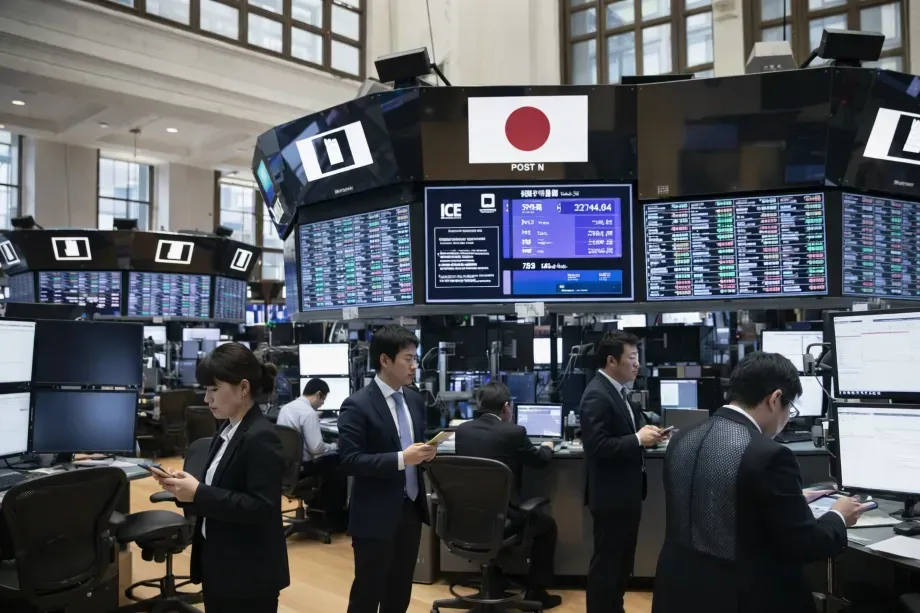
Japanese stocks declined during today's trading, affected by sharp losses in U.S. markets and renewed concerns about the sustainability of the AI wave, while local data showed a significant improvement in major industrial companies' confidence.
According to TradingEconomics, the Nikkei 225 index dropped by about 1.1%, reaching around 50,300 points, relinquishing gains from the previous session, with technology and AI stocks leading the declines.
Technological Pressures and Monetary Anticipation
The decline in the Japanese market followed losses on Wall Street, where signals regarding weak expected returns from AI investments raised questions about the high valuations of tech stocks.
Domestically, investors are awaiting the Bank of Japan's meeting this week, amid widespread expectations of an interest rate hike, with attention focused on Governor Kazuo Ueda's comments after the meeting for insights into the monetary policy trajectory through 2026.
Stock Performance
Technology stocks faced clear pressures, notably:
- SoftBank Group: -5.7%
- Kioxia Holdings: -7.6%
- Advantest: -5.1%
- Fujikura: -4.7%
- Disco Corp: -1.5%
In contrast, financial stocks outperformed the market, supported by expectations of tightening monetary policy, with gains from:
- Mitsubishi UFJ: +1.3%
- Sumitomo Mitsui: +1.9%
- Meguro Financial: +2.3%
Corporate Confidence at Four-Year High
On the economic data front, the index of major manufacturers' confidence issued by the Bank of Japan rose to 15 points in Q4 2025, compared to 14 points in Q3, marking its highest level since Q4 2021 and aligning with market expectations.
This improvement is attributed to a weak yen and continued strong global demand, particularly from AI-related sectors. Data also showed major companies' plans to increase capital spending by 12.6% in Q4, the strongest investment intention increase in eight quarters, exceeding expectations.
EcoPulse24 Reading
The Japanese scene reflects a clear disparity between short-term pressures on the stock market due to global concerns over tech valuations and improvements in domestic industrial economic fundamentals, as the upcoming decision by the Bank of Japan may represent a significant turning point for market trajectories.
Sources & References
Editorial Note
Disclaimer
© 2025 EcoPulse24. All rights reserved.