Yen Slides Toward 159.5 as BOJ Set to Hold; Japan Rebuffs US Warship Call for Hormuz
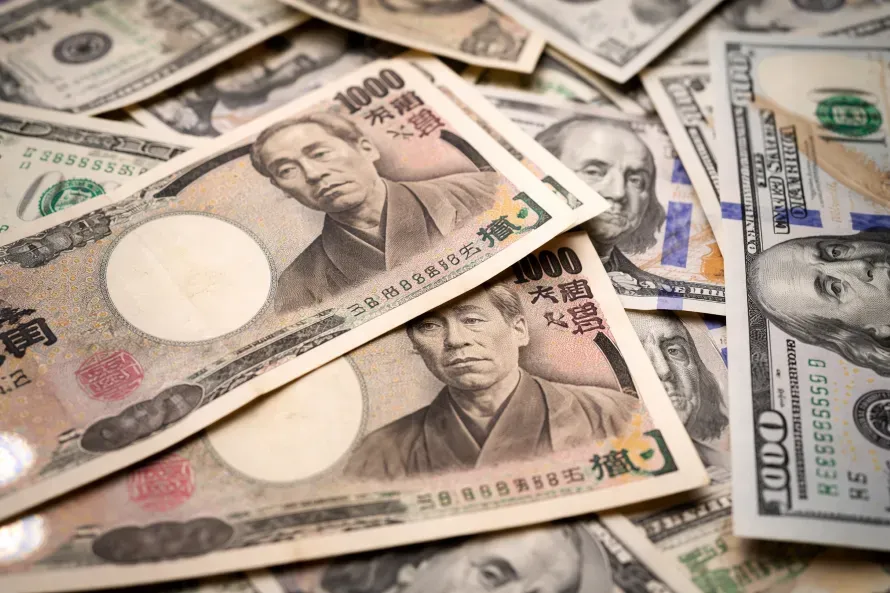
The yen fell toward 159.5 per dollar on Tuesday as the BOJ held rates and Japan rejected Trump's call to send warships to Hormuz.

EcoPulse24 | Tokyo
The Japanese yen fell toward 159.5 per dollar on Tuesday, extending its decline for a fourth consecutive session as verbal interventions from Japanese officials failed to halt the currency's slide. Finance Minister Satsuki Katayama warned that authorities are fully prepared to act at any time, citing the impact of exchange rates and rising oil prices on everyday life, yet the yen continued to weaken as global energy pressures and dollar strength persisted.
BOJ Expected to Hold Rates Steady
The Bank of Japan is widely expected to keep its benchmark interest rate unchanged at its policy meeting this week, even as underlying inflation gradually moves toward the 2% target according to Governor Kazuo Ueda. The central bank faces a particularly complex calculus as the Iran war has introduced significant uncertainty into Japan's economic outlook. As an oil-import-dependent economy, Japan faces a dual burden from surging crude prices: higher import costs that drain the current account and persistent inflation that complicates the BOJ's carefully managed policy normalization path. Market participants are speculating that a rate hike may be delayed until April or later, which has further weighed on the yen.
Japan Rebuffs US Warship Call
In a significant diplomatic development, Japan has rejected US President Donald Trump's request to deploy naval vessels to escort oil tankers through the Strait of Hormuz. The decision reflects Japan's constitutional constraints on overseas military deployment and its preference for diplomatic rather than military engagement in the Middle East conflict. However, the stance has created some friction with Washington at a time when Trump is pressing allies to contribute to securing the vital waterway. Japan imports the vast majority of its crude oil through the Persian Gulf, giving it a substantial economic stake in resolving the Hormuz crisis through other means.
Currency Market Dynamics
The yen's slide has been driven by a combination of factors: elevated oil prices that worsen Japan's import bill and weigh on the current account, dollar strength as investors seek safe-haven assets amid geopolitical risk, and the growing interest rate differential between the US Federal Reserve's policy rate and the BOJ's ultra-low rates. Japan's 10-year government bond yield held around 2.27% after a strong 20-year JGB auction, though this remains well below comparable US Treasury yields at 4.24%. Currency strategists note that the 160 per dollar level represents a key psychological threshold that could prompt more forceful intervention by Japanese authorities.
Implications for Regional Trade
A weaker yen benefits Japanese exporters whose overseas earnings translate into more yen at home, supporting companies in the automotive and electronics sectors. However, for the broader economy, the pain from higher import costs - particularly for energy - significantly outweighs export gains for most Japanese households and businesses. Regional currency markets in Asia have shown mixed reactions, with some currencies gaining against the yen even as dollar strength kept overall moves contained. South Korean and Taiwanese exporters face both competitive pressure from the weak yen and their own energy import challenges.
EcoPulse24 Analysis
EcoPulse24 Analysis: The yen's continued slide despite official warnings highlights the market's confidence that Japanese authorities face structural constraints on aggressive intervention, at least until the BOJ signals a more decisive pivot toward rate hikes. The 159.5 level is a warning signal, and a breach of 160 would almost certainly trigger coordinated intervention. For GCC investors with yen-denominated assets or Japanese investment exposure, the currency risk has become a primary concern alongside the geopolitical backdrop. The BOJ's policy decision this week carries outsized significance: any hint of an April hike timeline would likely deliver a sharp yen correction, while a firmly dovish message could accelerate the slide toward 162-163. This week's Fed decision is also critical as the US-Japan rate differential narrows only when the BOJ hikes or the Fed cuts.
Explore Related Coverage
Sources & References
Editorial Note
Disclaimer
© 2025 EcoPulse24. All rights reserved.