Jordan's Producer Prices Fall 2.9% in January 2026, Deepest Contraction Since September 2023
Jordan's producer prices fell 2.9% in Jan 2026, led by drops in manufacturing and energy costs, marking the steepest decline since Sep 2023.

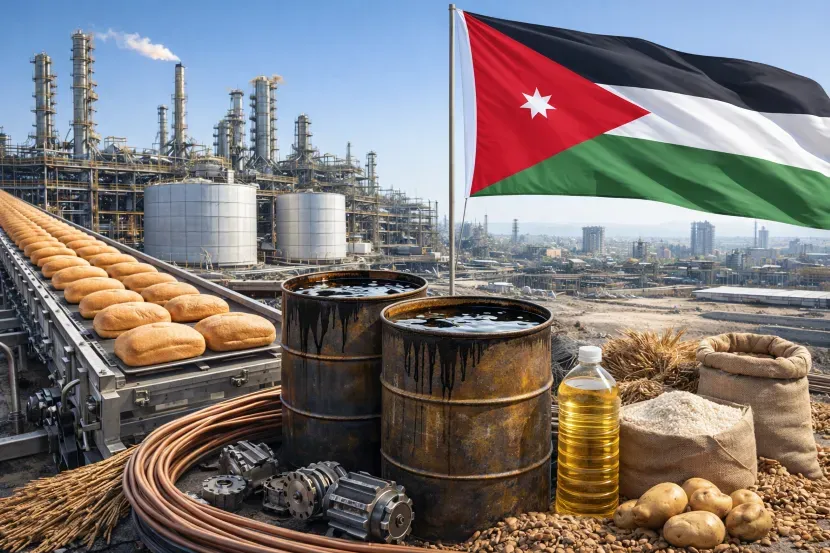
Amman | EcoPulse24
Jordan's producer prices continued their contractionary trend for the twelfth consecutive month, falling by 2.9% year-on-year in January 2026 compared to a 1.3% decline in December, marking the steepest drop since September 2023.
The annual decrease was mainly driven by a sharper fall in manufacturing sector costs, down 3.5% versus 1.8% in the previous month. Food product prices dropped by 5.1%, and refined petroleum products plunged 12.0%, compared to a 3.4% decline in December. These declines in key manufacturing inputs were the main contributors to the deeper contraction in the producer price index.
Conversely, price growth in the mining and quarrying sector slowed to 3.6% from 4.4%, as costs in other mining activities moderated to 3.3% from 4.6%. However, crude oil and natural gas extraction costs rebounded sharply by 22.2% after a 5.1% contraction the previous month, indicating volatility within the extractive sector.
Costs in the electricity, gas, steam, and air conditioning supply sector continued to rise by 0.8%, up from 0.3% in December, reflecting ongoing pressure from energy and related service costs.
On a monthly basis, the producer price index fell by 0.8%, matching the rate of decline seen in the previous month, underscoring a persistent downward trend in producer prices.
EcoPulse24 Analysis:
The deepening contraction in Jordan's producer prices reflects weak industrial demand momentum and falling costs for key inputs, particularly food and refined petroleum products. However, the sharp rise in oil and gas extraction costs highlights the extractive sector's sensitivity to global energy price movements. Continued disinflationary pressures at the producer level may ease consumer inflation in the near term, but also signal a subdued demand environment that requires balanced growth support to prevent broader economic weakness.
Explore Related Coverage
Sources & References
Editorial Note
Disclaimer
© 2025 EcoPulse24. All rights reserved.