Kuwait Launches Tender for 500 MW Solar Project as Energy Crisis Intensifies
Kuwait launched a 500 MW solar tender to address power shortages, inviting six global consortia to bid amid an urgent energy crisis.
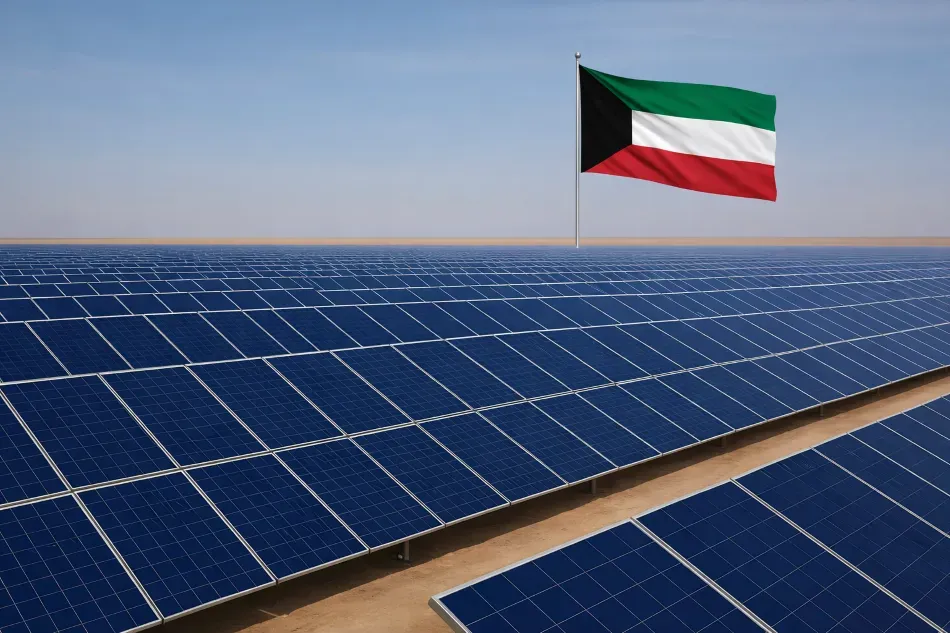
according to reuters, Kuwait has officially opened bidding for a 500-megawatt solar photovoltaic project, marking the OPEC member's second major renewable energy tender this year as it races to address chronic electricity shortages plaguing the nation.
The Kuwait Authority for Partnership Projects (KAPP) announced the tender in the official gazette on Sunday, inviting pre-qualified consortia to submit proposals for the Al Dibdibah Power and Al Shagaya Renewable Energy Phase III, Zone 2 Solar PV Independent Power Project.
The winning bidder will develop, finance, design, construct, and operate the facility under a 30-year power purchase agreement with Kuwait's Ministry of Electricity, Water and Renewable Energy, according to KAPP's statement.
Energy Crisis Drives Urgency
The tender comes as Kuwait grapples with severe electricity shortages that have forced the government to implement rolling blackouts in some areas since 2024. The crisis stems from multiple factors: rapid population growth, aggressive urban expansion, rising temperatures driven by climate change, and delayed maintenance at aging thermal power plants.
As an OPEC member state rich in hydrocarbon resources, Kuwait's struggle to keep the lights on has become an embarrassing vulnerability - one that renewable energy development aims to address while preserving valuable oil and gas for export markets.
Six International Consortia Compete
KAPP has invited six pre-qualified consortia to submit bids for the project, featuring some of the world's leading renewable energy developers:
Consortium Leaders:
- Jinko Power (China) - One of the world's largest solar developers
- Masdar (Abu Dhabi Future Energy Company PJSC, UAE) - Regional renewable energy giant
- Tianjin Zhonghuan New Energy Co. (China) - Major solar technology manufacturer
- EDF Renewables SA (France) - European renewable energy leader
- ACWA Power (Saudi Arabia) - Major Gulf region power developer
- Swift Current Management Services (SCF) (United States) - Renewable energy investment firm
Three additional companies have qualified as eligible contractors: Limak Yatirim Enerji (Turkey), TotalEnergies Renewables (France), and Kalyon Enerji (Turkey).
Project Structure and Location
The 500 MW solar facility will be located in the Shagaya Renewable Energy Park in Jahra Governorate, approximately 100 kilometers west of Kuwait City in the desert region. The project is part of Kuwait's broader Shagaya renewable energy development, which includes multiple phases of solar PV, concentrated solar power (CSP), and wind energy installations.
Under Kuwait's public-private partnership framework, the project will follow a specific ownership structure:
- 26-44% held by the strategic private sector partner (winning bidder)
- 50% offered to Kuwaiti citizens and local investors
- Remaining stake retained by the government
This structure aims to maximize local participation while leveraging international expertise and capital.
Accelerating Renewable Energy Timeline
Kuwait has dramatically accelerated its renewable energy project pipeline in 2025. The Al Dibdibah-Al Shagaya Phase III Zone 2 project represents the Gulf state's second major solar tender this year, following the larger 1.1 GW Zone 1 project for which bids were invited in June 2025.
Beyond solar development, Kuwait has moved forward with other major power projects:
- Al Khairan Power Project: KAPP opened bids in September 2025 for the first phase of this 1.8 GW conventional power project
- Al-Zour North Expansion: In August 2025, Kuwait signed contracts exceeding $3.27 billion with ACWA Power and Gulf Investment for phases 2 and 3 of the Al-Zour North power complex
From Minimal Solar to Regional Player
According to the International Renewable Energy Agency, Kuwait had just approximately 50 MW of installed solar PV capacity and 50 MW of concentrated solar power capacity by the end of 2024 - a minuscule amount for a nation of its size and wealth.
The 500 MW project, combined with the 1.1 GW Zone 1 development, would increase Kuwait's solar capacity by more than 1,500% - a dramatic leap that signals the government's commitment to energy diversification despite abundant fossil fuel reserves.
Timeline and Next Steps
The winning consortium will be responsible for all aspects of project delivery under a design-build-finance-operate-transfer (DBFOT) model. While KAPP has not publicly disclosed the bid submission deadline or contract award timeline, industry observers expect the selection process to conclude within 6-9 months based on similar recent tenders.
The 30-year power purchase agreement provides revenue certainty for investors while ensuring Kuwait secures long-term renewable electricity supply at fixed or predictable costs.
Regional Context: The Gulf's Solar Push
Kuwait's tender reflects a broader trend across the Gulf Cooperation Council (GCC) states, where oil-rich nations are paradoxically racing to develop massive solar capacity. Saudi Arabia, the UAE, and Oman have all announced multi-gigawatt solar programs aimed at reducing domestic fossil fuel consumption, freeing up hydrocarbons for export, and meeting climate commitments.
The presence of Saudi Arabia's ACWA Power and the UAE's Masdar among the bidders illustrates the increasingly competitive regional renewable energy market, where Gulf states are both competing for and collaborating on clean energy development.
Challenges Ahead
Despite the promising tender, Kuwait faces significant implementation challenges:
Project Execution Risk: The country has a mixed track record on large infrastructure projects, with some experiencing substantial delays. The original Al Dibdibah solar concept dates back several years and has been repeatedly restructured.
Grid Integration: Adding 1.6 GW of solar capacity (combined Zone 1 and Zone 2) will require substantial grid modernization to handle variable renewable generation.
Financing Environment: Global capital costs have risen significantly since 2021, potentially affecting project economics despite abundant solar resources in Kuwait's desert regions.
Political Stability: Kuwait's fractious relationship between its elected parliament and appointed government has occasionally derailed major projects, creating regulatory uncertainty.
The Bigger Picture
For Kuwait, the renewable energy push represents more than environmental credentials - it's a matter of energy security and economic pragmatism. By developing solar capacity to meet domestic electricity demand, Kuwait can preserve more of its valuable crude oil and natural gas for export markets where prices remain strong.
The 500 MW Al Dibdibah-Al Shagaya project, while modest by global mega-project standards, represents a critical step in Kuwait's energy transition. If successfully implemented alongside the larger Zone 1 development, these projects could establish Kuwait as a credible player in Gulf renewable energy - and provide a template for further expansion.
With six world-class consortia now competing for the contract, the stage is set for Kuwait to add substantial clean energy capacity while addressing the power shortages that have plagued its citizens. Whether the ambitious timeline holds and the projects deliver as promised remains to be seen.
Sources
Primary Reporting:
- Reuters/Refinitiv: "Kuwait invites bids for new 0.5-GW solar project" (November 16, 2025)
- TradingView News (Reuters): Kuwait tender announcement coverage
Industry Coverage:
- pv magazine: "Kuwait shortlists five bidders for 500 MW solar project" (October 7, 2025)
- Zawya: "Kuwait shortlists consortia for Al-Dibdibah Power and Al-Shagaya solar power project" (October 6, 2025)
- SaudiGulf Projects: KAPP announcements and project details
- Global Energy Monitor: Al Shagaya Solar Energy Park project database
Official Sources:
- Kuwait Authority for Partnership Projects (KAPP) official gazette
- International Renewable Energy Agency (IRENA) capacity data
Article by EcoPulse24 Editorial Team | Published November 17, 2025
Disclaimer: This article is based on publicly available information from government announcements, industry reports, and news coverage. Information about tender processes and project timelines is subject to change. This is for informational purposes only and should not be considered investment advice.
Sources & References
Editorial Note
Disclaimer
All rights reserved
Please review the Terms & Conditions.
© 2025 EcoPulse24.