National Security Concerns Prompt 25% Tariffs on Advanced AI Chip Imports, Reshaping Supply Chains
US imposes 25% tariffs on advanced AI chip imports to boost domestic production and address national security, impacting global supply chains.

Washington | EcoPulse24
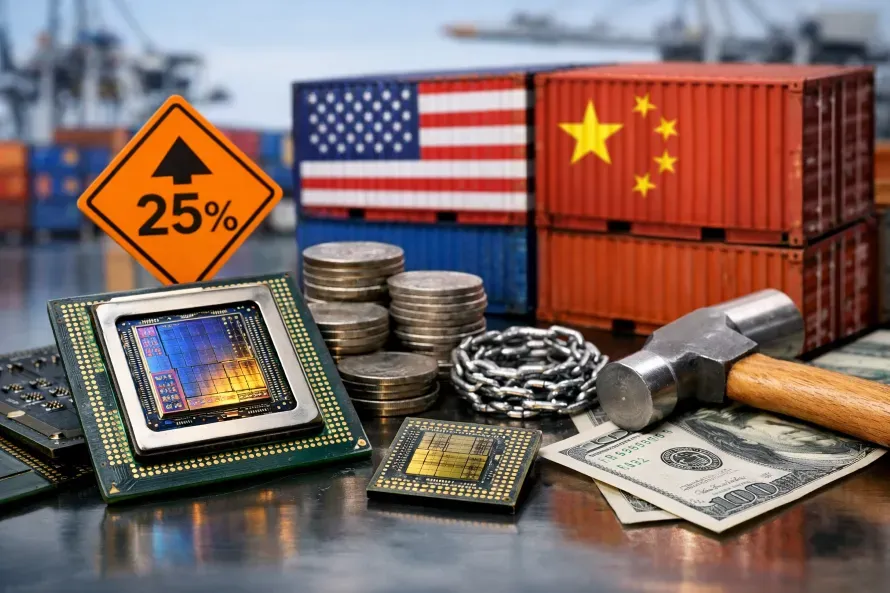
The U.S. administration has imposed a 25% tariff on selected imports of high-performance AI chips, including Nvidia's H200 and AMD's similar MI325X, under a new presidential order issued by the White House. The decision follows a nine-month investigation conducted under Section 232 of the Trade Expansion Act of 1962 and targets semiconductor categories that meet specific performance standards, as well as devices containing them.
This measure is part of a broader initiative aimed at encouraging chipmakers to ramp up domestic manufacturing and reduce reliance on foreign supply chains, particularly in Asia. According to the official announcement, the United States currently produces only about 10% of its chip requirements - a level seen as an increasing economic and security risk amid the growing adoption of artificial intelligence.
Analysis
This move reflects a shift in U.S. industrial policy from incentive-based support to the use of trade protection tools at the intersection of technology and national security. Imposing tariffs on select chips sends a clear regulatory signal to the global AI market and is set to realign supply chain dynamics among manufacturers, designers, and assemblers. In the near term, this could increase costs for devices that rely on these chips, while investments are expected to gradually shift toward localizing production and building domestic manufacturing capabilities, reshaping competition in the high-performance semiconductor sector.
Explore Related Coverage
Sources & References
Editorial Note
Disclaimer
© 2025 EcoPulse24. All rights reserved.