Norway’s Oil Dependence Deepens as Energy Shocks Slow Economic Diversification
Norway's oil and gas sector accounted for 57% of exports in 2025 as rising energy demand and geopolitical tensions complicate efforts

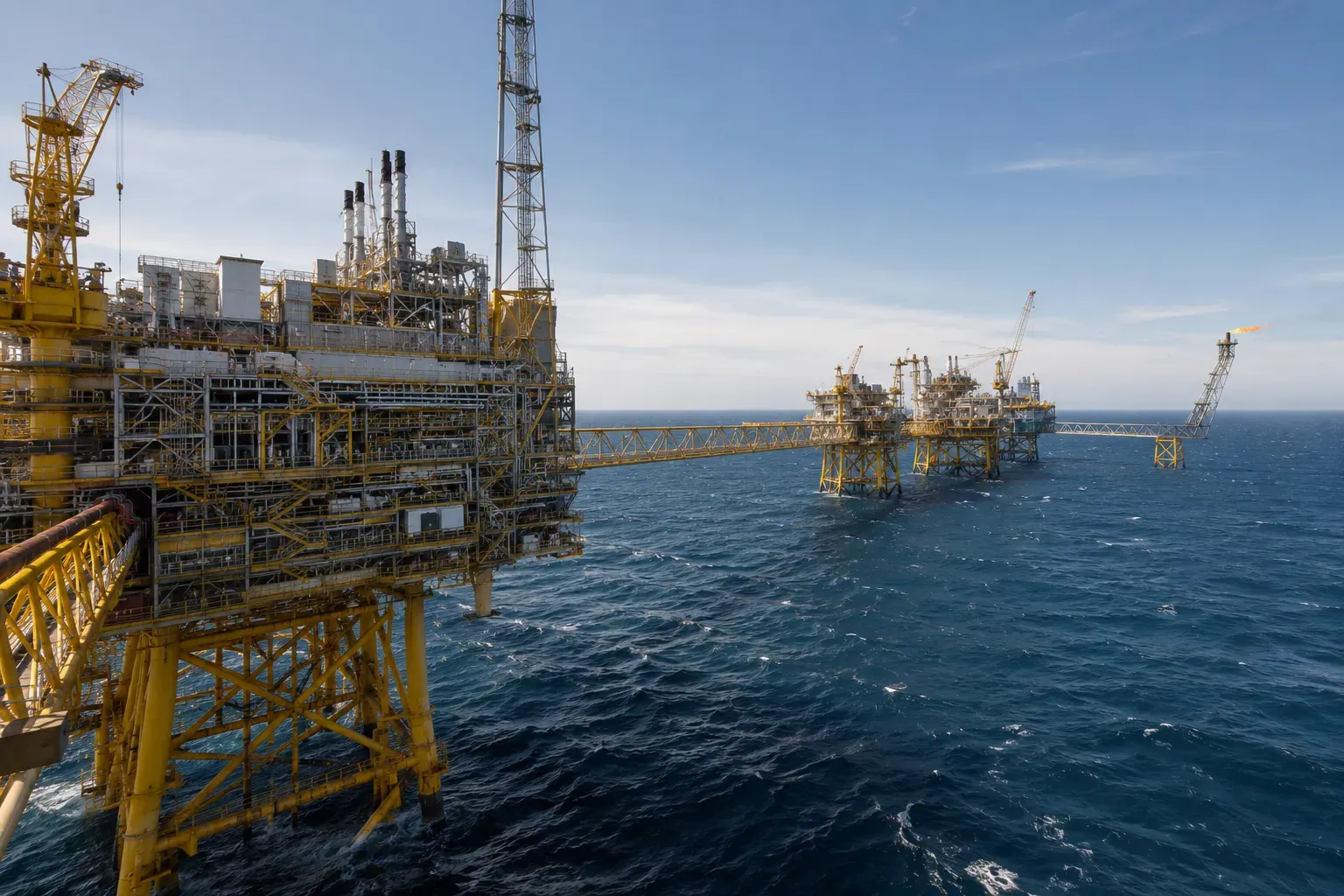
Oslo | EcoPulse24
Norway is facing a growing economic paradox. While soaring demand for its oil and natural gas exports continues to strengthen public finances and support economic growth, the same energy boom is making it increasingly difficult for the country to diversify beyond fossil fuels.
The challenge has become more pronounced following successive global energy crises, from the disruption of Russian supplies after the Ukraine conflict to renewed concerns over Middle East energy flows during the Iran war. These events have reinforced Norway's position as one of Europe's most important energy suppliers while simultaneously reducing the urgency of transitioning toward a broader economic base.
Despite years of political commitments aimed at reducing dependence on hydrocarbons, oil and gas remain at the center of the Norwegian economy.
Oil Still Dominates the Economy
Norway's petroleum sector continues to exert enormous influence over national output, exports, government revenues, and investment decisions.
According to the report, oil and gas accounted for 57% of all Norwegian goods exports in 2025, while petroleum activities contributed more than 20% of total GDP. Monthly crude oil export revenues also reached record levels following the outbreak of the Iran conflict as higher energy prices boosted earnings.
Key Norway Energy Facts
| Indicator | Value |
|---|---|
| Oil & Gas Share of Exports | 57% |
| Oil & Gas Share of GDP | More than 20% |
| Sovereign Wealth Fund | $2.3 Trillion |
| EU Pipeline Gas Supply Share | More than 50% |
| New Exploration Blocks Announced | 70 |
Source: Bloomberg, Eurostat
The country's sovereign wealth fund, valued at approximately $2.3 trillion, remains the world's largest state investment fund and has helped Norway avoid many of the fiscal challenges often associated with resource-dependent economies.
Yet economists increasingly argue that financial wealth alone cannot replace the need for a diversified productive economy.
Diversification Efforts Face Headwinds
Successive Norwegian governments have spent more than a decade promoting diversification initiatives designed to prepare the economy for a future when fossil fuel production eventually declines.
However, progress has been slower than policymakers hoped.
Measures of economic complexity and export diversification show Norway lagging behind its Nordic peers, with the gap widening over the past two decades.
Several strategic sectors expected to drive future growth have encountered significant setbacks.
Projects involving:
-
offshore wind,
-
green hydrogen,
-
battery manufacturing,
-
and renewable energy technologies
have faced financial and operational difficulties.
Earlier this month, battery producer Morrow Batteries ASA filed for bankruptcy after running out of funding, becoming the latest European battery venture to collapse following the failure of Sweden's Northvolt.
At the same time, a stronger Norwegian krone and rising global trade protectionism are making it harder for non-oil exporters to compete internationally.
Europe's Energy Security Keeps Norway at the Center
Norway's strategic importance has grown significantly as Europe seeks stable energy supplies amid geopolitical uncertainty.
The country now provides more than 30% of Europe's gas needs and over half of the European Union's pipeline gas imports, according to the report.
Rather than slowing investment in hydrocarbons, authorities have recently expanded future production plans.
Norway's Energy Ministry announced this month that it will offer 70 new exploration blocks across the North Sea, Norwegian Sea, and Barents Sea as part of its annual licensing round. Authorities have also approved the reopening of three gas fields scheduled to begin production in 2028 and continue operating until 2048.
Meanwhile, energy giant Equinor has become increasingly selective about renewable investments, prioritizing returns from its core oil and gas business. The company recently reduced its stake in renewable energy developer Scatec as part of a broader strategic refocusing.
EcoPulse24 Analysis
Norway's experience highlights one of the most important economic questions facing energy-producing nations today:
Can a country successfully diversify when its dominant industry remains highly profitable?
For more than a decade, policymakers have argued that Norway must prepare for a future beyond oil and gas. Yet every major energy shock has reinforced the sector's importance rather than diminished it.
The numbers tell the story.
Oil and gas still account for 57% of exports and more than one-fifth of GDP. At the same time, several flagship green-industrial initiatives have struggled to achieve commercial scale. While Norway has become a global leader in electric vehicle adoption and carbon-reduction policies, translating those achievements into large export industries has proven far more difficult.
The latest Middle East tensions have further strengthened the economic case for continued hydrocarbon production, as European governments prioritize energy security over rapid supply-side transitions.
For investors and policymakers, Norway offers a real-world case study of the challenges facing resource-rich economies. The transition toward a lower-carbon future may be widely accepted as a long-term objective, but when energy revenues remain strong and global demand persists, diversification becomes significantly harder to achieve.
The broader lesson extends well beyond Norway. Across the global energy landscape, geopolitical instability is once again increasing the value of reliable oil and gas suppliers, potentially slowing the pace of economic transformation that many governments had envisioned only a few years ago.
Sources & References
Editorial Note
Disclaimer
© 2025 EcoPulse24. All rights reserved.