NVIDIA Launches Halos, the Industry's First Full-Stack Safety System for Physical AI and Robotics
NVIDIA introduced Halos for Robotics, a full-stack safety architecture for humanoid robots and physical AI systems operating alongside people

San Jose | EcoPulse24
NVIDIA unveiled NVIDIA Halos for Robotics, describing it as the industry's first full-stack safety system for robotics and physical artificial intelligence, as the company seeks to address one of the biggest barriers to large-scale deployment of autonomous machines in real-world environments.
The platform provides a unified safety architecture that integrates AI computing, sensors, operating software, safety applications and certification tools into a single framework for robots designed to operate alongside humans.
The announcement was made at a time when factories, warehouses and logistics operators are increasingly exploring the deployment of autonomous and humanoid robots powered by artificial intelligence.
Safety Becomes the Next Major Challenge for Physical AI
The next generation of robots will increasingly work in dynamic environments alongside people, equipment and other autonomous machines.
Unlike traditional industrial robots that typically operate within isolated environments, modern AI-powered robots must continuously perceive, understand and react to changing surroundings in real time.
As a result, safety has emerged as one of the most critical challenges facing physical AI.
NVIDIA says Halos provides a standardized architecture designed to help developers build, validate and certify robotic systems that can operate safely in industrial environments.
Built on Nearly Two Decades of Autonomous Vehicle Safety Development
According to NVIDIA, Halos draws upon more than 18,600 engineering years of autonomous vehicle safety development.
The platform includes:
- NVIDIA IGX Thor industrial AI computing systems;
- Holoscan Sensor Bridge connectivity technologies;
- Halos Core safety software;
- AI-assisted safety applications;
- The NVIDIA Halos AI Systems Inspection Lab.
The company says the architecture is designed to simplify functional safety validation and accelerate the deployment of autonomous robots.
Agility Becomes First Industrial Partner
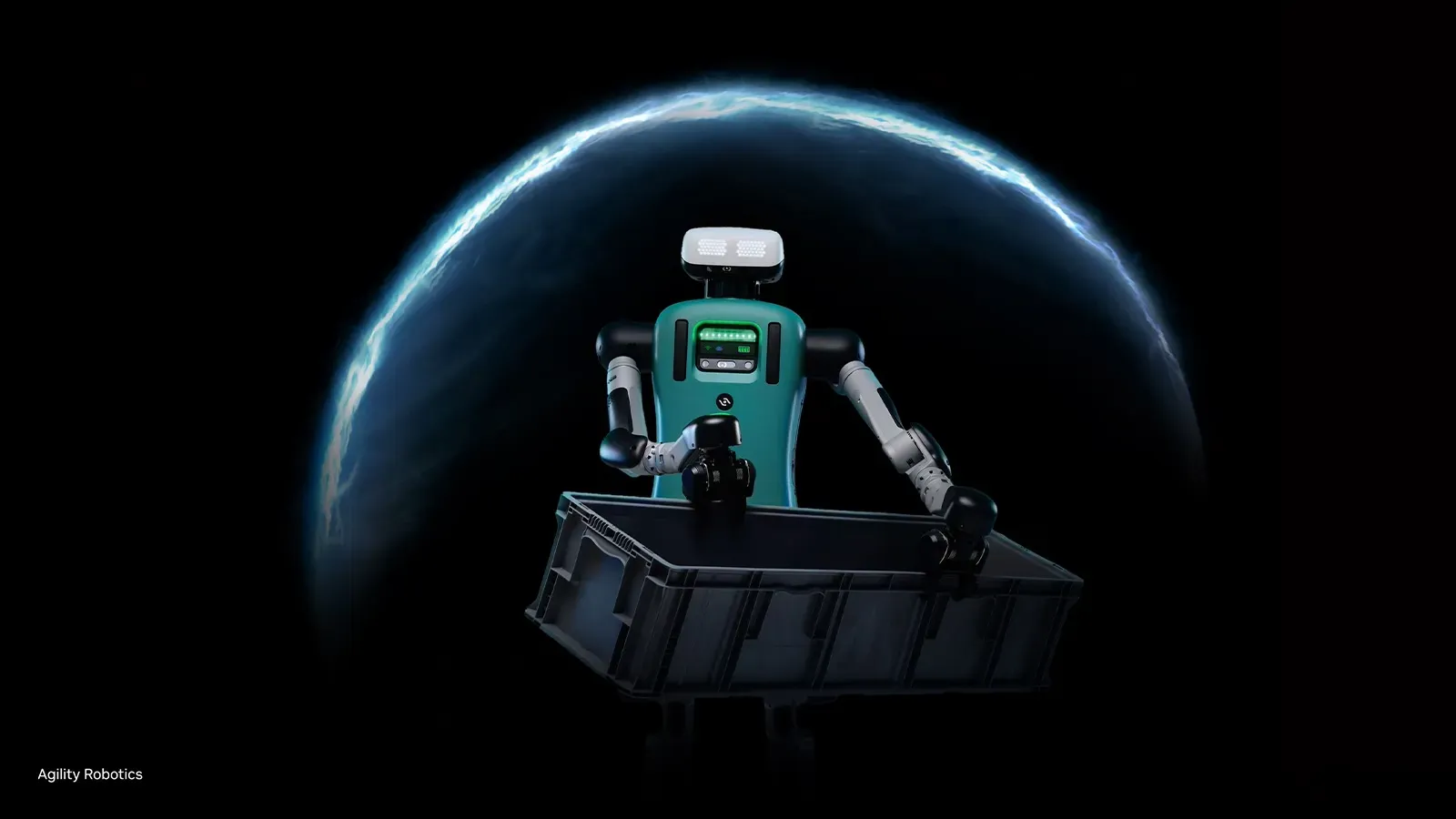
Humanoid robotics company Agility became the first company to adopt elements of NVIDIA Halos for its Digit humanoid robot.
Digit is designed to perform industrial tasks in manufacturing facilities, logistics operations and warehouses and is already being evaluated by customers including Amazon, GXO, Schaeffler and Toyota Motor Manufacturing Canada.
The collaboration will incorporate NVIDIA's industrial AI computing and safety software into Agility's proprietary safe-human-detection systems.
Preparing Robots for Certification
NVIDIA also announced the Halos AI Systems Inspection Lab, which it describes as the world's first program accredited by the ANSI National Accreditation Board for functional and AI safety assessments for physical AI.
The laboratory is designed to help developers prepare robotic systems for certifications issued by major safety organizations including:
- TÜV Rheinland
- TÜV SÜD
- UL Solutions
- SGS
- exida
- CertX
More than 40 companies are already participating in the broader Halos ecosystem.
EcoPulse24 Analysis
AI Is Leaving the Screen and Entering the Physical World
The significance of Halos extends beyond robotics software.
The announcement highlights a profound shift in artificial intelligence itself.
The first wave of generative AI largely remained inside digital environments, producing text, images and software code.
The next wave of AI is moving into the physical world.
Humanoid robots, warehouse automation systems and intelligent industrial machines are increasingly expected to perceive environments, make decisions and perform physical actions alongside people.
This transition creates entirely new categories of risk.
An AI model generating an incorrect paragraph may create inconvenience.
A robot making an incorrect decision can create safety hazards.
The challenge therefore is no longer merely making AI systems intelligent.
It is making them trustworthy.
By introducing Halos, NVIDIA appears to be positioning itself not only as the provider of computing infrastructure for artificial intelligence, but also as a provider of the safety architecture necessary for deploying autonomous machines at scale.
If physical AI becomes a major industrial platform over the next decade, safety standards may become as strategically important as processing power itself.
Sources & References
Editorial Note
Disclaimer
© 2025 EcoPulse24. All rights reserved.