NVIDIA Pushes AI Beyond Chatbots as It Enters PCs, Factories and Hospitals
NVIDIA unveiled major initiatives with Microsoft, TSMC and Foxconn that expand AI beyond chatbots into personal computers, semiconductor

Dubai | EcoPulse24
For much of the past three years, the artificial intelligence race has revolved around models, chatbots, and ever-larger computing clusters.
At NVIDIA's latest GTC Taipei announcements, however, the company's message became significantly broader.
AI is no longer just something users interact with through a chatbot.
It is increasingly becoming part of the infrastructure that powers computers, semiconductor factories, hospitals, and industrial operations.
Through a series of strategic announcements involving Microsoft, TSMC, and Foxconn, NVIDIA outlined a vision that extends far beyond AI assistants and cloud services. The company is positioning itself as the foundational layer for what could become the next phase of global AI adoption.
From Software Tool to AI Teammate
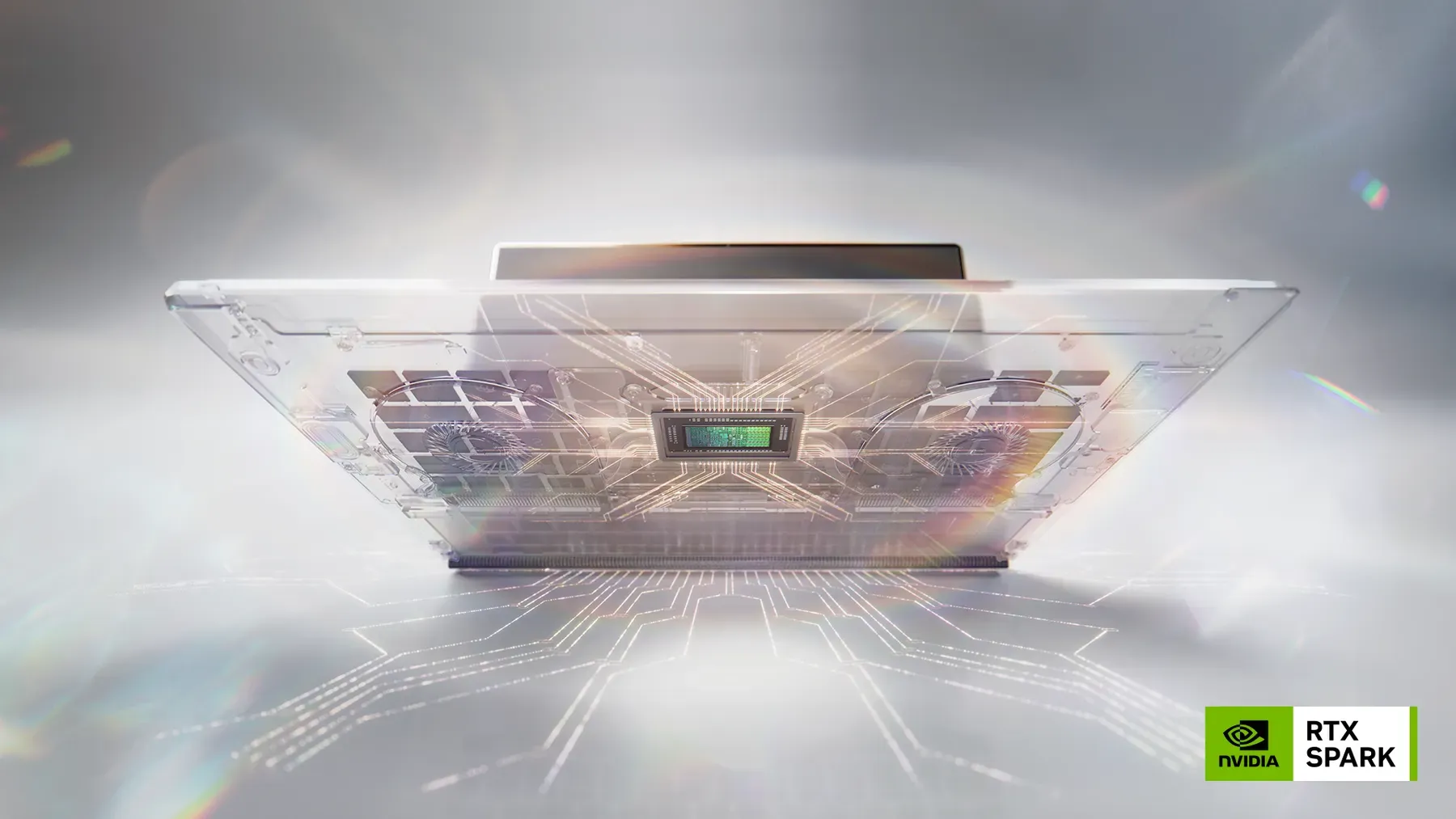
The most visible announcement came through NVIDIA's expanded partnership with Microsoft, where both companies introduced RTX Spark, a new AI-focused computing platform designed to transform Windows PCs into systems capable of running personal AI agents locally.
Unlike traditional laptops that launch applications and execute commands, the new architecture is built around AI agents capable of reasoning, coordinating tasks across applications, generating content, writing code, and interacting directly with local data.
RTX Spark delivers up to one petaflop of AI computing performance and supports up to 128GB of unified memory, enabling local execution of advanced AI models previously reserved for cloud infrastructure.
Microsoft CEO Satya Nadella described the initiative as part of a broader effort to bring "unmetered intelligence" to every desk and every home.
The announcement suggests that AI agents may become a standard feature of future personal computers, much as web browsers became essential during the internet era.
AI Moves Into Chip Manufacturing
While the PC announcement targets consumers and developers, NVIDIA's partnership with Taiwan Semiconductor Manufacturing Co. (TSMC) highlights a different transformation taking place behind the scenes.
TSMC is deploying NVIDIA accelerated computing and AI technologies throughout its semiconductor manufacturing operations, including computational lithography, transistor simulation, process optimization, defect inspection, and fab scheduling.
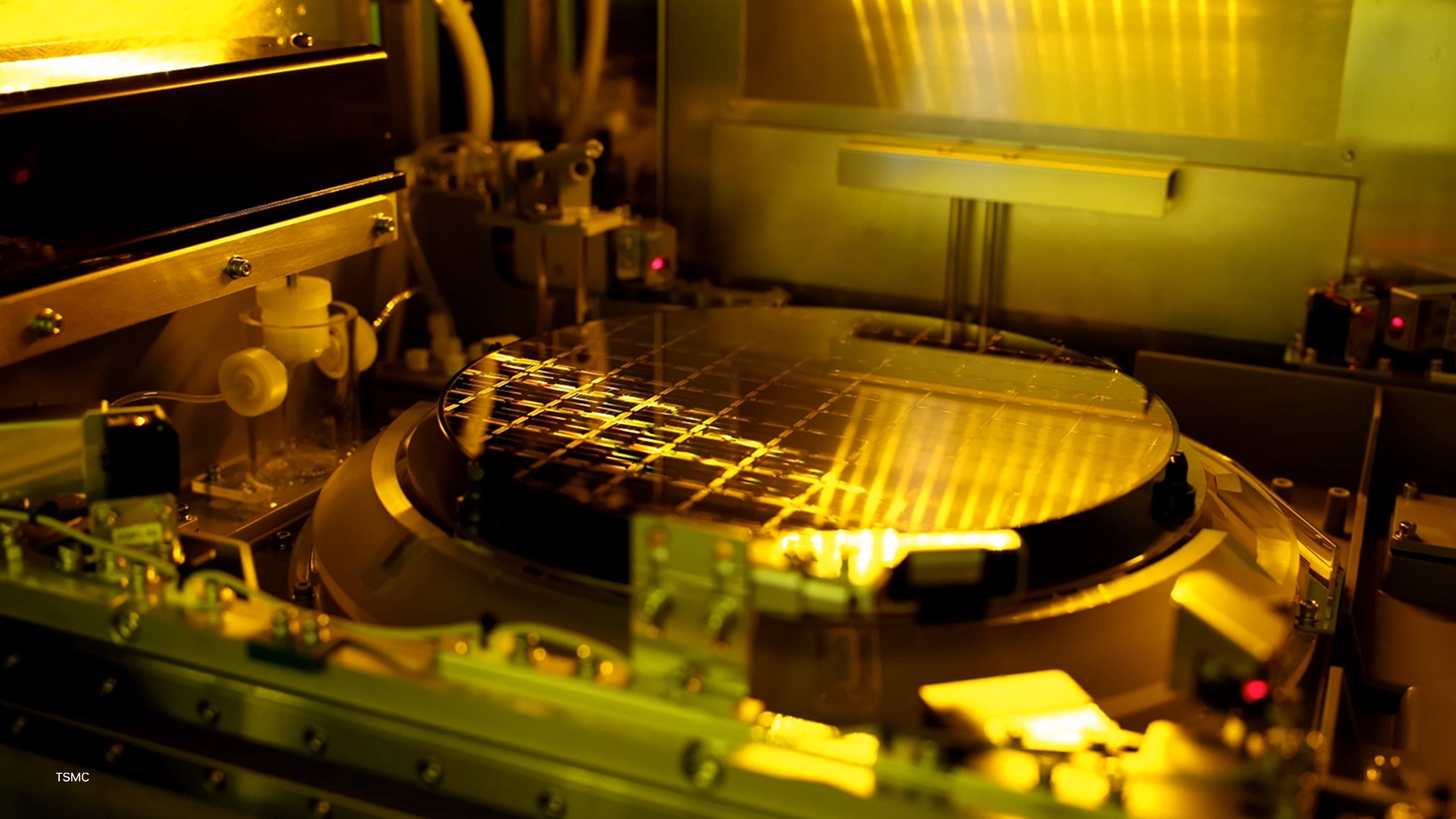
The world's largest chip manufacturer is already using NVIDIA technologies to accelerate simulations, improve manufacturing yields, and optimize production workflows.
Among the reported improvements:
| Area | Impact |
|---|---|
| Computational lithography | 20% – 50% improvement in cost efficiency or cycle time |
| Semiconductor material simulations | Up to 50x faster |
| Defect detection | Improved nanometer-scale inspection |
| Fab operations | Enhanced production scheduling and productivity |
The initiative reflects a growing industry trend in which AI is becoming embedded within the manufacturing process itself, helping optimize increasingly complex semiconductor production environments.
As chip geometries shrink and production complexity rises, AI is rapidly becoming a critical component of next-generation manufacturing infrastructure.
Hospitals Become AI-Native Systems
NVIDIA's third major announcement focused on healthcare.
Together with Foxconn and Taiwan's leading medical institutions, the company unveiled a large-scale deployment of agentic AI systems designed to support clinical operations across hospitals.
Under Taiwan's "Healthy Taiwan" initiative, backed by approximately $1.5 billion in investment, healthcare providers are deploying specialized AI agents capable of assisting with diagnosis, medical documentation, care coordination, imaging analysis, and operational workflows.
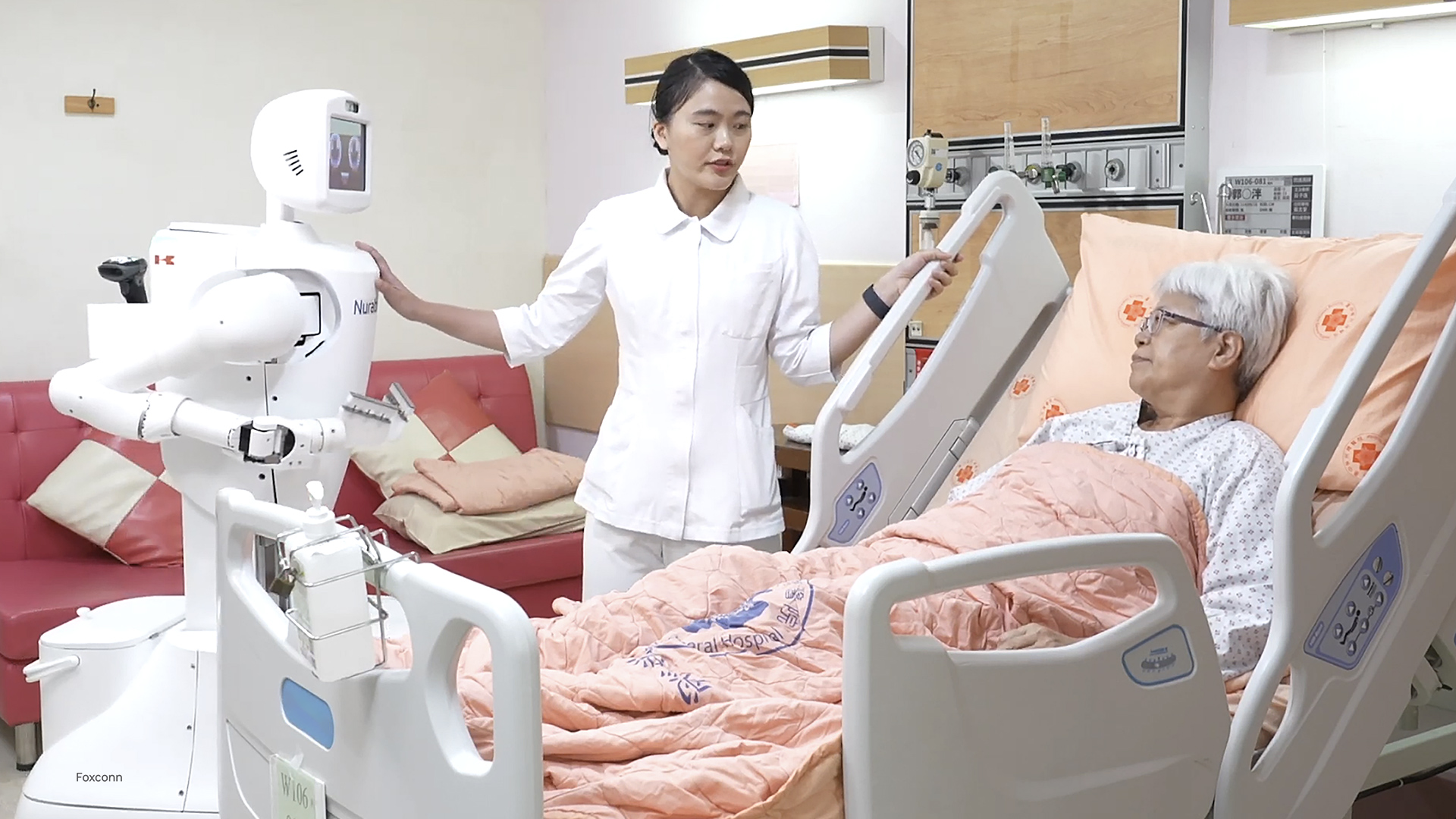
The deployment also extends into the physical world through collaborative hospital robots, including nursing assistants and surgical support systems powered by NVIDIA's AI platform.
The initiative already supports medical centers handling more than 14 million patient encounters annually, making it one of the most ambitious examples of AI integration into national healthcare systems.
A Bigger Strategic Shift
Taken individually, each announcement addresses a different sector.
Together, they reveal a much larger strategic direction.
Rather than focusing solely on AI models and cloud computing, NVIDIA is increasingly targeting the operational systems that power entire industries.
The company's technologies are now being positioned to support:
-
Personal computing
-
Semiconductor manufacturing
-
Healthcare operations
-
Industrial automation
-
Robotics
-
Digital twins
-
Enterprise AI infrastructure
In effect, NVIDIA is attempting to become the operating layer beneath the next generation of intelligent systems.
EcoPulse24 Analysis
The most important takeaway from NVIDIA's latest announcements is not any single product launch.
It is the evolution of AI itself.
Between 2023 and 2024, artificial intelligence was largely defined by foundation models and conversational interfaces.
During 2025, the focus shifted toward enterprise adoption and workflow integration.
The announcements unveiled in Taipei suggest that 2026 may mark the beginning of a new phase:
AI moving from applications into infrastructure.
Instead of asking how people use AI, the conversation is increasingly becoming about how AI runs factories, coordinates hospitals, optimizes supply chains, manages robots, and operates personal computing environments.
This shift carries major economic implications.
Industries that successfully integrate AI into core operations may achieve meaningful gains in productivity, efficiency, and scalability. At the same time, demand for advanced semiconductors, accelerated computing, robotics, and AI infrastructure is likely to expand far beyond today's cloud-centric market.
For investors, the message is equally significant.
NVIDIA is no longer positioning itself merely as a supplier of AI chips.
It is increasingly positioning itself as the foundational platform on which the next generation of digital economies will operate.
If that vision materializes, the long-term opportunity extends well beyond data centers - and into nearly every sector where software, automation, and intelligence intersect.
Explore Related Coverage
Sources & References
Editorial Note
Disclaimer
© 2025 EcoPulse24. All rights reserved.