Federal Reserve Divisions Pose Challenges for Rate Policy
Increasing divisions within the Federal Reserve regarding interest rate cuts threaten to complicate decision-making in 2026.

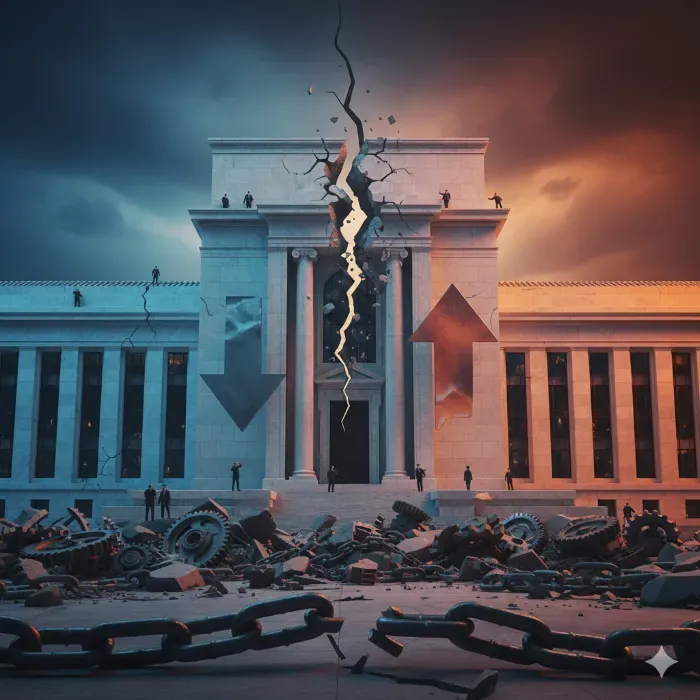
According to reports from international economic media, clear signs of widening disagreements have emerged within the U.S. Federal Reserve regarding the trajectory of interest rates, despite Chairman Jerome Powell's success in passing a new quarter-point cut during the December meeting. While Powell has attempted to downplay dissenting voices, details accompanying the meeting revealed an unusual split within the world's most powerful monetary institution.
In addition to three formal objections, quarterly forecast data indicated that six policymakers believe the interest rate should remain at the level prior to the recent cut, which was seen as a form of 'silent opposition' from members who do not have voting rights this year but wanted to express their rejection of the easing trend.
These signals confirm that the division extends beyond the voting members to include regional bank presidents, who often take a more cautious stance on inflation compared to Washington's Board of Governors. Data shows that eight out of 12 regional banks did not recommend cutting interest rates, reinforcing the belief that opposition was widespread.
Analysts believe this division may herald greater difficulties in 2026, especially with the impending appointment of a new Federal Reserve Chairman. Forecasts suggest that any incoming chairman - regardless of experience - may struggle to unify committee voices, particularly if differences persist regarding how to balance inflation risks with a slowing labor market.
While Powell asserts that differing viewpoints are natural in an economic environment where risks are trending towards simultaneous inflation and unemployment increases, some experts believe this situation could complicate decision-making, especially since the Fed has only one tool to influence the economic direction: interest rates.
EcoPulse24 Analysis: What Does This Mean for Markets?
-
The division within the Fed reflects a lack of unified vision regarding monetary policy direction in 2026.
-
The continuation of this disagreement could translate into higher volatility in stocks and bonds, as investor expectations shift with each statement.
-
Markets may begin to price in a notion that the interest rate cut cycle will be slower and more cautious than previously expected.
-
Any new Fed chairman will face a real challenge in forming a consensus within the open market committee, especially if economic pressures rise over the coming year.
Sources & References
Editorial Note
Disclaimer
Please review the Terms & Conditions.
© 2025 EcoPulse24. All rights reserved.