How Sharjah Turned Global Recognition into a Knowledge Economy Asset Through the House of Wisdom
Shurooq explains how Sharjah transformed its UNESCO World Book Capital title into a permanent institution supporting the knowledge economy.

Sharjah | EcoPulse24
From Global Recognition to a Permanent Development Strategy
When UNESCO named Sharjah the World Book Capital 2019, the distinction represented more than an international cultural accolade. For the Sharjah Investment and Development Authority (Shurooq), it became the foundation for a long-term development strategy aimed at embedding knowledge into the emirate's urban, cultural, and economic fabric.
Rather than allowing the recognition to remain a symbolic achievement, Sharjah transformed it into permanent civic infrastructure through the creation of the House of Wisdom, positioning knowledge as a strategic asset that supports innovation, education, and the broader knowledge economy.
Turning Symbolism into Long-Term Value
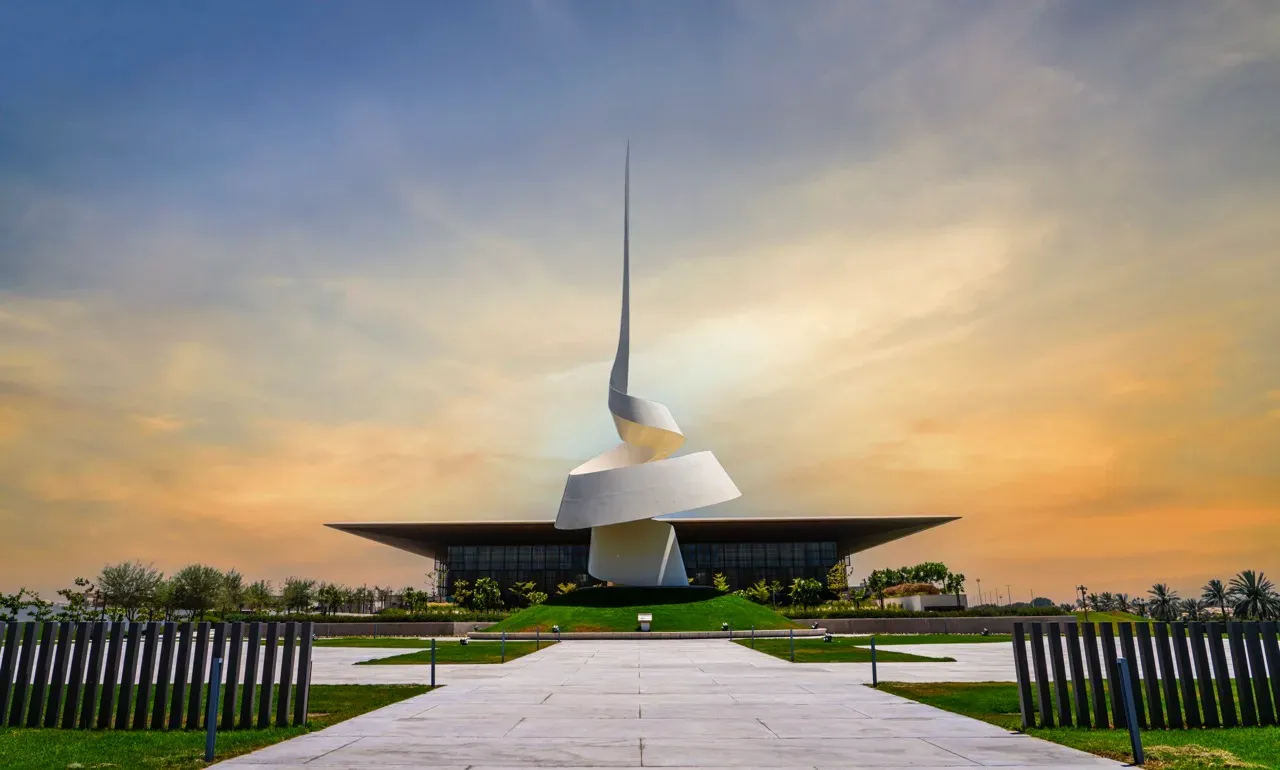
Shurooq explained that the journey began with The Scroll Monument, a landmark commemorating Sharjah's designation as UNESCO World Book Capital. Rather than serving as the project's conclusion, however, the monument became the starting point for a broader vision.
Completed in 2020, the House of Wisdom was conceived as the operational extension of that vision - a public institution designed not simply to preserve books, but to redefine how knowledge is accessed, shared, created, and experienced.
To realise the project, Shurooq appointed the internationally renowned architectural firm Foster + Partners, whose design philosophy aligned with the objective of creating a civic institution capable of serving generations rather than producing a standalone architectural icon.
Beyond a Library: Infrastructure for the Knowledge Economy
Today, the House of Wisdom houses more than half a million physical and digital titles, yet its function extends well beyond that of a traditional library.
The facility integrates lecture theatres, exhibition spaces, collaborative discussion rooms, fabrication and prototyping laboratories, digital learning environments, quiet research areas, and flexible community spaces designed to accommodate evolving methods of education and innovation.
According to Khawla Al Hashimi, Chief Projects Officer at Shurooq, the project began by redefining how knowledge is produced and shared rather than by designing a building.
"We did not start by designing a building," she said. "We started by defining how knowledge is accessed, shared, and produced today."
The project also incorporates inclusive design principles, including fully integrating Braille books into the main collection and creating dedicated spaces shaped through direct engagement with users rather than relying solely on policy.
Architecture Designed Around Knowledge
The building's architecture reflects its institutional purpose.
Designed around four primary structural cores, the House of Wisdom features expansive column-free spaces organised around a central courtyard that regulates daylight, ventilation, and circulation.
A 15-metre floating roof shades the glass structure from the region's intense sunlight, while fixed aluminium screens and adjustable bamboo panels carefully regulate daylight and privacy without disconnecting visitors from the surrounding gardens.
Rather than treating architecture as a visual statement, the project uses environmental design to support reading, learning, collaboration, and long-term public use.
Measuring Success by Daily Use
For Shurooq, success is measured not by architectural recognition alone but by the building's continued role in public life.
"It is easy to create a landmark," Al Hashimi said. "What is difficult is creating one that people return to repeatedly and incorporate into their daily routines."
This philosophy reflects Shurooq's broader development approach, where civic projects are expected to function as long-term public infrastructure that creates enduring social and economic value.
EcoPulse24 Data Snapshot
| Metric | Details |
|---|---|
| UNESCO Recognition | World Book Capital 2019 |
| Project Delivery | 2020 |
| Developer | Sharjah Investment and Development Authority (Shurooq) |
| Architect | Foster + Partners |
| Knowledge Collection | 500,000+ physical and digital titles |
| Core Facilities | Library, lecture halls, exhibition spaces, innovation labs, collaborative learning areas |
| Companion Landmark | The Scroll Monument |
EcoPulse24 Analysis
The House of Wisdom represents more than a cultural institution - it illustrates how governments can transform international recognition into long-term economic and intellectual infrastructure.
Rather than treating UNESCO's World Book Capital designation as a one-year celebration, Sharjah used it as the catalyst for creating a permanent knowledge institution that continues to generate public value years after the title was awarded. This approach reflects a broader shift in urban development, where cultural assets are increasingly viewed as economic infrastructure capable of supporting innovation, education, entrepreneurship, tourism, and talent attraction.
Viewed through this lens, the House of Wisdom is not simply a library. It is part of Sharjah's wider strategy to strengthen its position within the knowledge economy, where investment increasingly extends beyond physical infrastructure into intellectual capital, human development, and creative industries.
The project also demonstrates how architecture can function as an economic enabler rather than merely an iconic structure. By combining learning spaces, digital resources, collaborative environments, and community engagement within a single civic destination, the House of Wisdom contributes to building the ecosystem required for a modern knowledge-based economy.
As cities worldwide compete to attract investment, skilled professionals, research institutions, and creative industries, Sharjah's experience offers an example of how cultural recognition can be converted into a lasting development asset - one designed not only to preserve knowledge, but to produce it.
Sources & References
Editorial Note
Disclaimer
© 2025 EcoPulse24. All rights reserved.