Shell Forecasts Global LNG Demand to Surge 65% by 2050 Despite Middle East Disruptions
Shell expects global LNG demand to reach nearly 700 million tonnes by 2050 despite ME disruptions, as energy security drives long-term investments

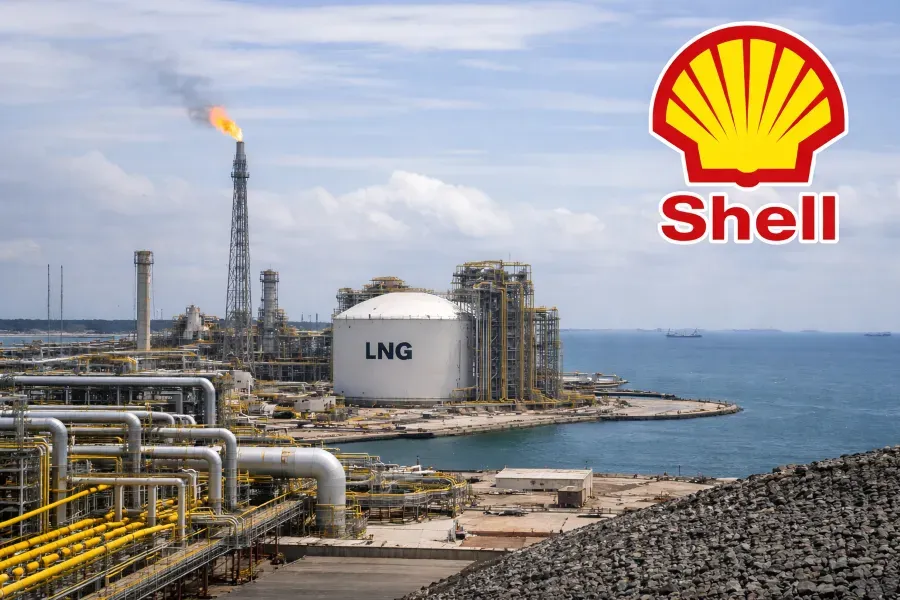
LONDON | EcoPulse24
Global demand for liquefied natural gas (LNG) is expected to climb by around 65% by 2050, reaching nearly 700 million tonnes annually, as countries increasingly prioritize energy security alongside decarbonization, according to Shell's LNG Outlook 2026.
The report projects that LNG will remain one of the world's most strategically important energy commodities over the coming decades despite recent geopolitical shocks, including severe disruptions to Middle Eastern energy exports during the conflict surrounding the Strait of Hormuz.
While the crisis temporarily removed roughly one-fifth of the world's monthly LNG supply, Shell believes the global market has demonstrated significantly greater resilience than during previous energy crises and remains positioned for long-term expansion.
Middle East Conflict Tested the LNG Market
According to Shell, approximately 422 million tonnes of LNG were traded globally in 2025, with volumes expected to increase during 2026.
However, military tensions around the Strait of Hormuz interrupted nearly 20% of monthly global LNG supply after shipping routes were disrupted, driving Asian spot LNG prices sharply higher and creating supply challenges across several importing countries.
Despite the disruption, the market avoided a prolonged supply crisis.
Additional liquefaction capacity in North America, stronger operational performance at existing export facilities and softer LNG demand from parts of Asia helped offset much of the lost Middle Eastern supply.
Shell said that if maritime traffic through the Strait of Hormuz returns to normal during the summer, total global LNG trade in 2026 could remain broadly in line with last year's levels before resuming stronger growth in 2027.
Shell: LNG Has Proven Its Resilience
Cederic Cremers, President of Integrated Gas at Shell, said the recent conflict demonstrated the industry's ability to adapt under extreme market stress.
"The conflict created a system-wide shock with disruption cascading across all segments of the economy, but the LNG industry has proved resilient and able to adapt to changing market conditions."
He added that although additional investment remains necessary across both supply and import infrastructure, the long-term outlook remains highly constructive.
"LNG will continue to be a stabilising force in the global energy system."
Global Supply Expansion Accelerates
Shell forecasts that approximately 180 million tonnes per year of new LNG liquefaction capacity will enter the market by 2030, improving global supply availability while helping moderate prices over the longer term.
Nevertheless, the report cautions that supply growth alone will not be sufficient.
Importing countries will also require significant investments in:
-
Regasification terminals
-
Pipeline infrastructure
-
Domestic gas transmission networks
-
Storage facilities
Without these complementary investments, many emerging economies could struggle to absorb additional LNG supplies.
Global LNG Supply Outlook
| Metric | Outlook |
|---|---|
| New LNG capacity by 2030 | 180 Mtpa |
| Additional supply required beyond projects under construction | ~200 Mtpa |
| Main investment focus | Liquefaction + import infrastructure |
Asia Will Drive the Next Wave of Growth
Shell expects South and Southeast Asia to become the world's largest engines of LNG demand over the coming decades.
By 2050, the two regions are projected to account for approximately 40% of global LNG imports, supported by rapidly growing electricity demand and the transition away from coal-fired generation.
Meanwhile, mature Asian economies continue developing new sources of gas demand.
In Japan, for example, electricity consumption from AI data centres is emerging as an increasingly important driver of natural gas demand.
New Sources of LNG Consumption Emerging
Beyond electricity generation, Shell highlighted several rapidly expanding end-use markets.
Among the fastest-growing is LNG bunkering for the shipping industry.
The company forecasts marine LNG demand will expand seven-fold to around 27 million tonnes annually by 2035, exceeding India's LNG imports recorded last year.
Europe is also expected to remain a major LNG consumer as domestic gas production continues to decline while renewable generation requires flexible backup capacity to balance intermittent supply.
Global LNG Demand Outlook
| Indicator | Projection |
|---|---|
| Global demand by 2050 | ~700 million tonnes/year |
| Growth vs 2025 | +65% |
| Forecast range | 610 – 780 Mt |
| South & Southeast Asia share of imports (2050) | ~40% |
Market Demonstrated Greater Resilience
One of the report's most notable conclusions concerns pricing dynamics.
Although Asian spot LNG prices temporarily exceeded $20 per MMBtu during the peak of the Middle East conflict, they remained substantially below the extreme levels reached following Russia's invasion of Ukraine in 2022.
Shell attributes this improvement to a more diversified global supply base and a larger share of LNG traded under long-term contracts.
Approximately two-thirds of global LNG trade now occurs through long-term agreements.
Consequently, buyers paid an average of approximately $11 – 12 per MMBtu during May despite the geopolitical crisis, compared with $7 – 11 per MMBtu before the conflict began.
LNG Market During the Middle East Crisis
| Indicator | Value |
|---|---|
| LNG supply disrupted | ~20% of monthly global supply |
| Peak Asian spot price | Above $20/MMBtu |
| Average contracted LNG price (May) | $11 – 12/MMBtu |
| Average contracted price (January) | $7 – 11/MMBtu |
A Decade of LNG Market Expansion
Shell also highlighted the structural transformation of the LNG industry over the past decade.
Since publishing its first LNG Outlook in 2017:
LNG Market Evolution Since 2017
| Indicator | Growth |
|---|---|
| Global LNG trade | 264 → 428 Mt (+60%) |
| China's LNG imports | +250% |
| LNG-importing countries | 36 → 49 |
| LNG-fuelled vessels | 77 → 800+ |
EcoPulse24 Analysis
Shell's latest outlook reinforces an increasingly important conclusion for global energy markets: the energy transition is becoming additive rather than substitutive.
Rather than replacing natural gas, the rapid expansion of renewable energy is increasing demand for flexible fuels capable of balancing intermittent power generation. LNG is emerging as one of the primary beneficiaries of that shift.
Equally significant is the report's assessment of market resilience. The disruption of nearly one-fifth of global monthly LNG supply through the Strait of Hormuz would likely have triggered a far deeper crisis only a few years ago. Instead, diversified production from North America, stronger operational performance, and long-term contractual structures prevented a systemic market breakdown.
For Gulf producers - including QatarEnergy, ADNOC/XRG, and other regional exporters - the outlook provides continued support for large-scale LNG investments. Shell's expectation that roughly 200 million tonnes per year of additional liquefaction capacity will still be required beyond projects already under construction suggests the current investment cycle is far from complete.
The report also highlights the emergence of AI infrastructure as a structural source of future gas demand. Data centres, particularly in advanced Asian economies, are beginning to reshape electricity consumption patterns, adding a new long-term demand driver alongside industrial growth and coal-to-gas switching.
Ultimately, Shell's projections suggest that LNG will remain a cornerstone of global energy security for decades. While geopolitical tensions may continue to create short-term volatility, the industry's expanding infrastructure, increasingly diversified supply base, and rising demand across Asia and Europe point toward a structurally larger global LNG market through the middle of the century.
Sources & References
Editorial Note
Disclaimer
© 2025 EcoPulse24. All rights reserved.