South Korea’s 3% Unemployment Rate Masks Slowing Job Creation and Persistent Pressure in Productive Sectors
South Korea's 3% jobless rate hides slow job growth, weak sectors, and ongoing structural labor market challenges.

Seoul | EcoPulse24
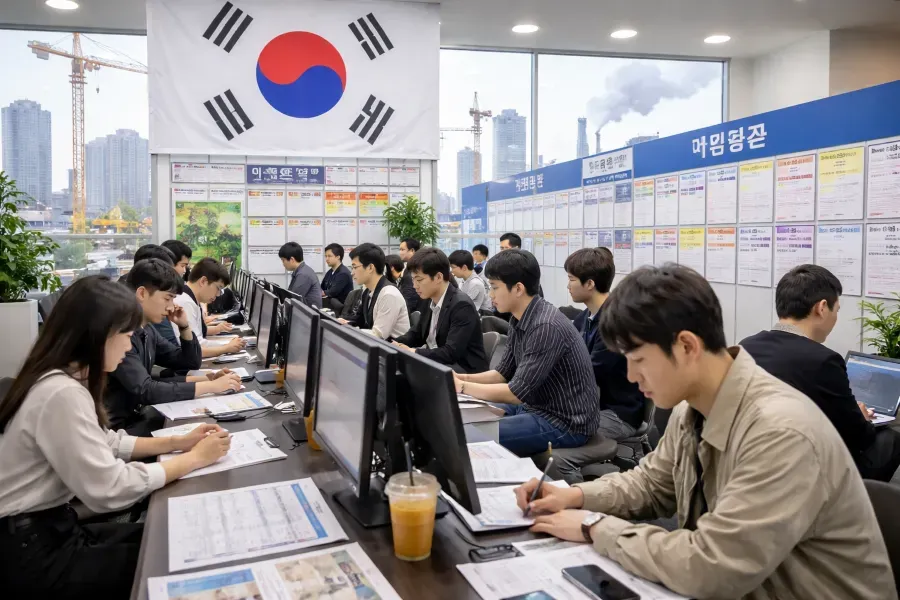
The improvement in South Korea’s unemployment rate in January 2026 presents a mixed picture for the labor market, combining a lower official jobless rate with a slowdown in job creation and persistent structural challenges in key industries. The seasonally adjusted unemployment rate declined to 3% from 3.3% in December, which had been a one-year high, giving the impression of an improving employment landscape. However, this does not fully capture the underlying challenges in Korea’s labor market.
Despite the lower unemployment rate, the number of unemployed rose to 1.21 million, up by 128,000 or 11.8% year-on-year, though slightly below December’s 1.22 million. This discrepancy points to statistical effects related to labor force size rather than a genuine improvement in job opportunities.
The Korean economy added 108,000 jobs in January, raising total employment by 0.4% year-on-year to 27.99 million. Yet, this marks the slowest job growth in 13 months, reflecting lost momentum in the labor market. This slowdown follows a decline of 52,000 jobs in December 2024, highlighting the fragility of the recovery in some productive sectors.
Manufacturing and construction remain the weakest links in the labor market, pressured by sluggish external demand, rising financing costs, and subdued real estate investment. These factors have limited firms’ ability to expand hiring, despite some positive macroeconomic indicators, leaving the labor market in a fragile balance.
Among age groups, youth unemployment has declined for the 21st consecutive month, a seemingly positive trend that also points to deeper structural changes, such as young people leaving the labor force or moving to less stable jobs. This underscores long-term challenges in matching skills to market demands, especially amid Korea’s technological transformation.
Labor force participation edged up 0.2% year-on-year to 63.6%, but fell from December’s 64.1%. This monthly drop signals a degree of worker caution amid slow growth and a lack of strong signs of a sustained employment recovery.
EcoPulse24 Analysis:
Labor market data from South Korea reveal a clear paradox: the nominal improvement in unemployment masks a decline in the quality and pace of job growth. The drop to 3% does not necessarily signal labor market strength, given the slowest job creation in over a year and ongoing pressure on manufacturing and construction. These indicators suggest the labor market remains vulnerable to swings, and any further economic slowdown could quickly affect employment. Policymakers need to focus on supporting productive sectors and stimulating investment, while addressing structural imbalances in youth employment, to ensure unemployment improvements are based on genuine, sustainable job growth rather than temporary statistical factors.
Explore Related Coverage
Sources & References
Editorial Note
Disclaimer
© 2025 EcoPulse24. All rights reserved.