SpaceX IPO Nears: Gulf Investors Are Poised for Their First Real AI Windfall
SpaceX plans to raise up to $75 billion through an initial public offering, selling 555.6 million shares at $135 each

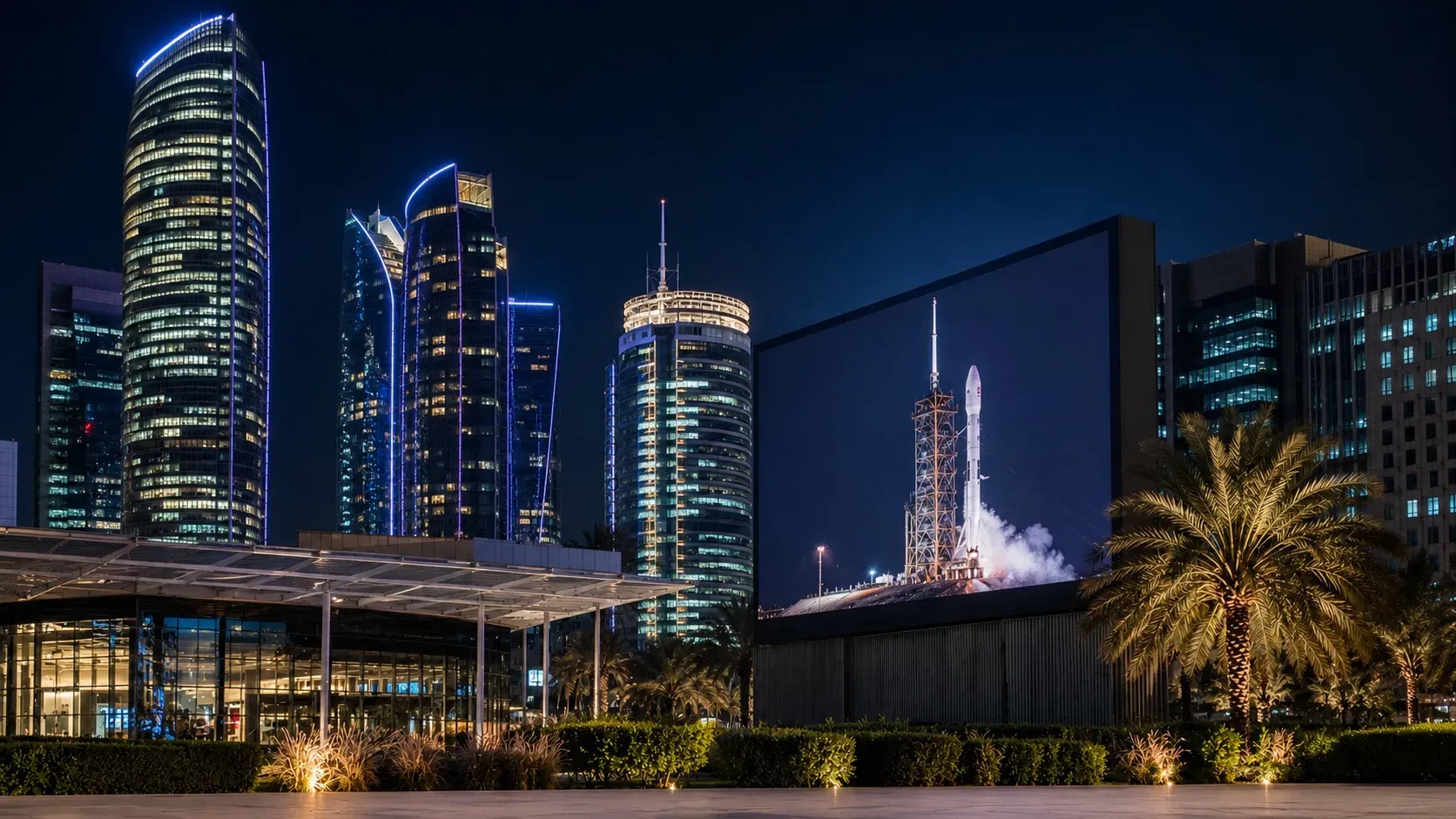
Abu Dhabi | EcoPulse24
Years of private bets are approaching a public verdict
For years, Gulf sovereign funds and family offices have committed billions of dollars to artificial intelligence - backing frontier model developers, chip infrastructure firms, data centres, and the founders building the technology that is reshaping the global economy. The financial logic was clear. The financial proof was not. That may be about to change. SpaceX plans to raise up to $75 billion through an initial public offering, selling 555.6 million shares at $135 each, at a market valuation of approximately $1.77 trillion - a transaction that would eclipse Saudi Aramco's 2019 listing as the largest IPO ever completed, and deliver the first public-market crystallisation of value for a Gulf investor community that has been building its position quietly, and patiently, for years.
The deal in numbers
SpaceX intends to sell shares at $135 each, giving it a market valuation of approximately $1.77 trillion. Elon Musk will not sell any personal shares in the offering and is expected to retain an 82.4% voting majority after the listing. SpaceX's valuation is estimated at roughly 80 to 95 times trailing revenue - a multiple that leaves the company particularly vulnerable to shifts in liquidity conditions and interest-rate expectations.
Prince Alwaleed: from Twitter to a decade-high fortune
The chain of events that brought Saudi Arabia's most prominent private investor to the threshold of a SpaceX windfall began fifteen years ago. Prince Alwaleed bin Talal backed Twitter in 2011, before Elon Musk had entered the ranks of the world's billionaires. That early stake became a gateway - Twitter's acquisition by Musk created a pathway into xAI, which in turn carries exposure to SpaceX following the two companies' merger in February 2026. Should the IPO achieve its targeted valuation, the Saudi investor's combined stake could exceed $10.5 billion - a figure that would mark one of the most patient and structurally connected investment returns in the Gulf's modern financial history.
Saudi Arabia's two-track exposure
The Kingdom's financial position in the SpaceX listing extends well beyond a single investor. HUMAIN, the artificial intelligence startup backed by Saudi Arabia's Public Investment Fund, invested $3 billion into xAI earlier this year before the company merged into SpaceX in February. PIF confirmed that its holdings subsequently converted into SpaceX equity. Saudi Arabia is also considering becoming an anchor investor in the IPO itself, given that it already holds significant pre-IPO positions and would be entering at the pre-IPO price. The Kingdom is therefore approaching the SpaceX listing from two directions simultaneously - as an existing equity holder through converted xAI shares, and as a potential anchor buyer in the public offering.
The Gulf's AI investment map - confirmed positions
| Entity | Country | Confirmed Exposure |
|---|---|---|
| HUMAIN / PIF | Saudi Arabia | $3B into xAI → converted to SpaceX equity |
| Kingdom Holding (Prince Alwaleed) | Saudi Arabia | xAI via Twitter/X stake → SpaceX |
| MGX | UAE | Anthropic + OpenAI + xAI |
| IHC + Alpha Dhabi | UAE | Direct SpaceX stake since 2022 |
| Qatar Investment Authority | Qatar | Anthropic + xAI (Series E) |
| Oman Investment Authority | Oman | xAI (Series C, December 2024) |
Sources: Bloomberg, AGBI, Arabian Business, company announcements
SpaceX is no longer a pure AI play - and that matters
A critical distinction for investors evaluating the SpaceX listing is what they are actually buying. SpaceX is not OpenAI or Anthropic. SpaceX absorbed Elon Musk's xAI in February 2026, meaning buyers are not getting exposure to a pure model-maker - they get rockets, satellite internet provider Starlink, and an AI arm whose consumer model, Grok, courts controversy. SpaceX is increasingly behaving like an infrastructure landlord rather than a model lab: it has signed Anthropic to a approximately $15 billion-a-year lease on its Colossus supercomputer, with orbital data centres pitched as the next step. For Gulf investors who entered through xAI specifically for its AI model exposure, the merged entity represents a more complex and diversified underlying asset than the original investment thesis suggested.
War disrupts infrastructure - but equity stakes hold
The regional conflict adds a layer of complexity that no investment roadshow will fully address. Attacks at the height of the Iran war disrupted multiple Amazon Web Services facilities in the Gulf. Work on a Meta undersea cable project was paused. Analysts expect delays to at least some of the planned data centre construction across the region. Gulf states find themselves in an unusual position: their local infrastructure ambitions are facing headwinds at precisely the moment their equity stakes in the world's leading AI companies are approaching a public-market test.
EcoPulse24 Analysis
The SpaceX IPO is not simply a financial event - it is the first objective stress test of a thesis that Gulf sovereign capital has been building for the better part of a decade. Private-market valuations are consensual: they reflect what a limited group of sophisticated investors agreed to pay in negotiated rounds. Public markets are something else entirely. They represent the aggregated judgment of millions of participants who have no strategic relationship with the issuer, no geopolitical alignment with the region, and no incentive to sustain a valuation beyond what the fundamentals justify.
At 80 to 95 times trailing revenue, SpaceX enters the public market at a multiple that demands sustained investor confidence in its long-term growth trajectory across rockets, Starlink, xAI, and orbital infrastructure simultaneously. That is a demanding ask in an environment where the 30-year US Treasury yield has crossed 5% and the cost of capital for high-growth, long-duration assets has risen materially - as Friday's Nasdaq selloff demonstrated with precision.
What makes the Gulf's position analytically interesting is the structural nature of its exposure. These are not passive index investors who bought a technology ETF. They are entities that entered at specific points in the value chain - some through model developers, some through infrastructure, some through the founder's earlier ventures - and built interconnected positions across the AI ecosystem over years. The SpaceX IPO will not validate or invalidate each of those individual decisions. What it will do is provide, for the first time, a public price signal for the broader asset class that Gulf capital helped build.
The deeper question the listing poses is one of translation: does private-market conviction, backed by geopolitical relationships and sovereign capital deployment, translate into public-market value creation at scale? The answer will matter well beyond the Gulf. It will set a pricing benchmark for Anthropic and OpenAI as they advance their own IPO preparations - and it will either confirm or complicate the AI investment thesis that has defined global capital allocation for the past three years.
For the Gulf, the stakes are both financial and strategic. A successful listing at or near the $1.77 trillion target validates years of patient positioning. A disappointing public debut would raise harder questions - not about the individual investment decisions, but about whether the private-market valuations that underpinned the Gulf's AI strategy reflected genuine enterprise value or the premium of exclusivity that dissolves when a broader market is asked to agree.
Explore Related Coverage
Sources & References
Editorial Note
Disclaimer
© 2025 EcoPulse24. All rights reserved.