Gulf sovereign capital shifts toward strategic infrastructure control through $30 billion Abu Dhabi-led partnership
The partnership will target investments across energy, transportation, logistics, digital infrastructure, water and waste management

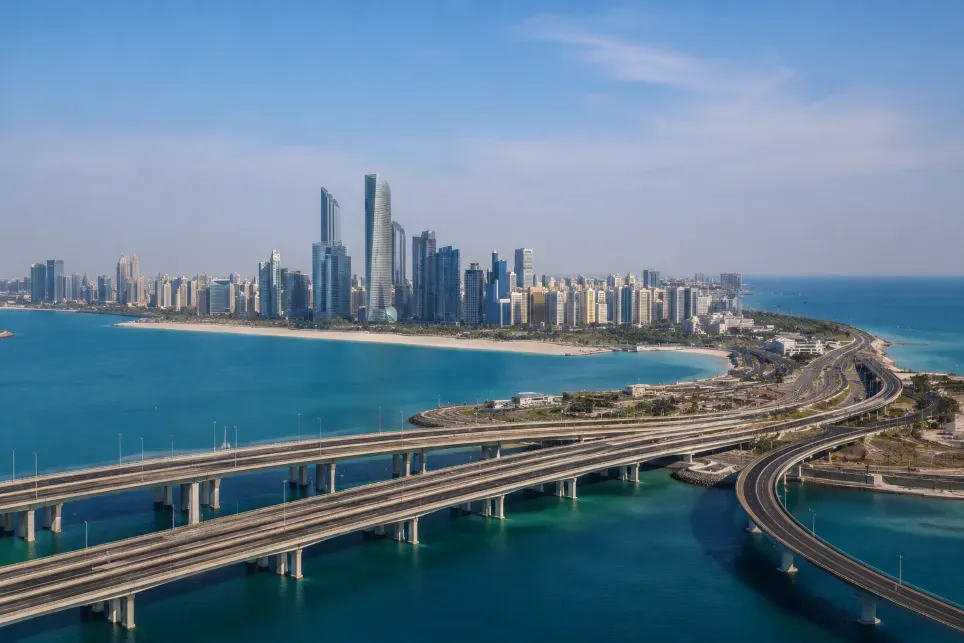
Abu Dhabi | EcoPulse24
Abu Dhabi infrastructure platform backed by ADNOC, BlackRock GIP and Temasek targets GCC and Central Asia
Abu Dhabi is accelerating its push into strategic infrastructure ownership through a new $30 billion investment platform bringing together ADNOC, BlackRock’s Global Infrastructure Partners, Temasek and sovereign-backed investment vehicle L’IMAD, signaling a broader Gulf shift toward long-duration control of energy and trade-linked assets.
According to Bloomberg, the partnership will target investments across energy, transportation, logistics, digital infrastructure, water and waste management throughout the Gulf Cooperation Council, Central Asia and selected MENA markets. The platform will pursue both greenfield and brownfield opportunities using a combination of equity and debt financing structures.
The initiative reflects how Gulf sovereign investors are increasingly moving beyond passive capital allocation models toward infrastructure strategies tied directly to economic influence, supply-chain positioning and long-term geopolitical resilience.
L’IMAD Chief Executive Officer Jassem Al Zaabi said infrastructure represents a core pillar of the fund’s investment strategy, particularly in markets supported by structural demand trends.
The involvement of ADNOC inside the platform is particularly significant because it links Abu Dhabi’s energy expansion strategy with broader logistics, transport and industrial infrastructure ambitions. Gulf energy producers are no longer focusing solely on upstream production growth, but increasingly targeting ownership across the full value chain supporting global commodity flows.
The partnership also highlights the rising strategic importance of Central Asia within Gulf investment planning. As global trade corridors continue to shift following years of geopolitical fragmentation and supply-chain disruption, infrastructure assets connecting Asia, the Middle East and energy-export routes are attracting increasing sovereign capital attention.
The participation of BlackRock GIP reinforces institutional appetite for infrastructure assets capable of generating stable long-term cash flows during periods of elevated geopolitical and inflation uncertainty. At the same time, Temasek’s involvement adds an Asian strategic dimension tied to regional logistics, industrial connectivity and long-horizon economic integration.
Target sectors within the $30 billion infrastructure platform
| Sector | Strategic Focus |
|---|---|
| Energy | Energy-linked infrastructure assets |
| Transport | Regional transport networks |
| Logistics | Supply-chain and port infrastructure |
| Digital Infrastructure | Connectivity and data-related assets |
| Water | Utility and infrastructure projects |
| Waste Management | Environmental and industrial services |
EcoPulse24 Analysis
The broader significance of this partnership lies in what it says about the evolution of Gulf sovereign wealth strategy. Abu Dhabi is increasingly positioning itself not simply as a provider of global liquidity, but as an active architect of strategic infrastructure systems linked to energy security, industrial resilience and trade connectivity.
This marks a structural transition away from purely financial investment models toward state-backed ownership of real assets capable of shaping long-term economic influence. Infrastructure has become a geopolitical asset class, particularly after recent disruptions across global shipping lanes, energy networks and industrial supply chains.
The combination of ADNOC, BlackRock GIP and Temasek creates a hybrid platform blending sovereign capital, institutional infrastructure expertise and Asian strategic alignment. That structure gives the venture far broader implications than a traditional regional infrastructure fund.
The inclusion of sectors such as digital infrastructure and water also signals that Gulf capital is increasingly targeting systems considered essential to future economic resilience rather than relying exclusively on hydrocarbon-linked expansion.
Meanwhile, the focus on both greenfield and brownfield assets suggests the platform is designed not only to build new infrastructure, but also to acquire operational strategic assets capable of generating immediate cash flow and regional influence.
The timing is equally important. Global investors are reassessing infrastructure exposure amid persistent geopolitical fragmentation, rising energy security concerns and growing pressure on supply-chain resilience. Gulf sovereign funds appear increasingly willing to use this environment to expand their role as long-term infrastructure consolidators across emerging economic corridors.
In practical terms, this could position Abu Dhabi as one of the defining infrastructure capital hubs linking Gulf energy systems, Asian industrial growth and future trade-route development over the coming decade.
Explore Related Coverage
Sources & References
Editorial Note
Disclaimer
© 2025 EcoPulse24. All rights reserved.