US Inflation Rises to 4.2% in May, Reaching Highest Level Since 2023 as Energy Costs Accelerate
Washington | EcoPulse24 US inflation accelerated to 4.2% in May, reaching its highest annual level since 2023, as rising gasoline prices and housing costs pushed consumer prices higher amid ongoing en

Washington | EcoPulse24
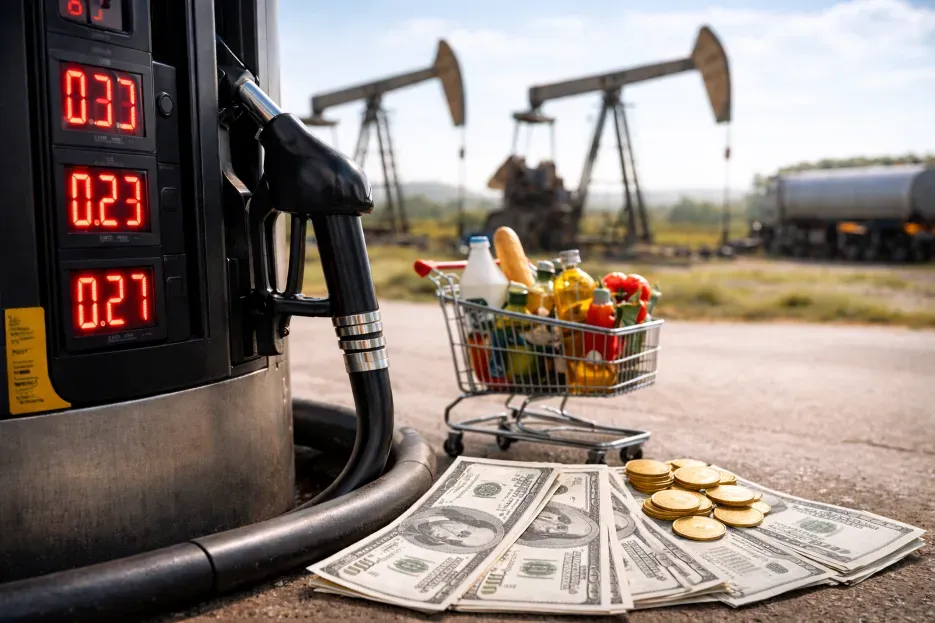
US inflation accelerated to 4.2% in May, reaching its highest annual level since 2023, as rising gasoline prices and housing costs pushed consumer prices higher amid ongoing energy market volatility and geopolitical tensions.
Data released by the US Bureau of Labor Statistics showed that the Consumer Price Index (CPI) increased 0.5% on a monthly basis and 4.2% from a year earlier, matching market expectations and confirming that inflationary pressures have intensified in recent months.
Inflation Accelerates for a Third Consecutive Month
The latest reading marked a notable increase from April's annual inflation rate of 3.8%, extending a three-month trend of accelerating price growth across the US economy.
The report suggests that higher energy costs are increasingly feeding into consumer prices, reversing part of the disinflationary progress that had been observed over the past year.
While the increase was widely anticipated by economists, it nevertheless represents the strongest inflation reading in more than three years.
Gasoline and Housing Drive Price Growth
According to the report, gasoline prices were among the largest contributors to the monthly increase in consumer prices.
Energy markets have experienced significant volatility in recent weeks as investors assess the impact of Middle East tensions on global oil supply and transportation costs.
Housing costs also remained a major source of inflationary pressure, continuing to account for a significant share of overall price growth across the economy.
The combination of rising fuel costs and persistent shelter inflation has become a key challenge for policymakers seeking to bring inflation closer to the Federal Reserve's long-term target.
Core Inflation Edges Higher
Core CPI, which excludes food and energy prices, rose 2.9% year-over-year in May, up from 2.8% in April.
On a monthly basis, core inflation increased 0.2%, indicating that underlying inflation pressures outside the energy sector remained relatively contained.
The moderation in core inflation compared with headline CPI suggests that energy-related factors were the primary driver behind the latest acceleration in consumer prices.
Markets Receive Confirmation, Not a Surprise
Financial markets had largely priced in a 4.2% annual inflation reading ahead of the release.
As a result, the report is being viewed more as confirmation of existing inflation pressures rather than a new inflation shock.
Investors had been concerned that inflation could exceed expectations and force a significant reassessment of interest-rate expectations. Instead, the data broadly matched forecasts, limiting the risk of an immediate market repricing.
Key US Inflation Figures – May 2026
| Indicator | May 2026 | April 2026 |
|---|---|---|
| CPI (YoY) | 4.2% | 3.8% |
| CPI (MoM) | 0.5% | 0.6% |
| Core CPI (YoY) | 2.9% | 2.8% |
| Core CPI (MoM) | 0.2% | 0.4% |
Federal Reserve Outlook Remains in Focus
The inflation report arrives at a critical time for monetary policy expectations.
With inflation still more than double the Federal Reserve's 2% target, policymakers are likely to remain cautious about easing financial conditions too quickly.
At the same time, the absence of a major upside surprise may allow officials to continue monitoring economic and energy-market developments before considering any further policy adjustments.
Investors will now turn their attention to upcoming employment, energy and inflation data to determine whether the recent acceleration represents a temporary energy-driven spike or the beginning of a broader inflationary trend.
EcoPulse24 Analysis
The May CPI report represents one of the first major economic tests of how recent energy market disruptions are affecting the broader US economy. Rising oil prices and geopolitical tensions have reintroduced energy as a significant inflation driver after much of the past year was characterized by easing price pressures.
What makes this report particularly important is not merely the 4.2% inflation reading itself, but the source of the increase. Most of the acceleration came from gasoline and shelter costs, while core inflation remained relatively stable. This distinction suggests that inflation has not yet broadened into a widespread economy-wide price surge.
For markets, the key takeaway is that inflation accelerated exactly as expected. Investors were not looking for higher inflation; they were looking for a surprise. The absence of such a surprise reduces the risk of an immediate shift in Federal Reserve expectations, even as inflation moves further away from the central bank's target.
Looking ahead, the sustainability of energy prices will become increasingly important. If oil prices remain elevated through June and transportation costs continue to rise, the inflationary impact could spread into additional sectors of the economy, creating a more persistent challenge for policymakers.
The report also highlights the growing connection between geopolitics and inflation. Developments in energy-producing regions are now feeding directly into inflation expectations, interest-rate outlooks and global asset prices. As a result, investors are likely to monitor both economic indicators and energy markets with equal attention in the months ahead.
Ultimately, the May inflation report confirms that energy has re-emerged as a major macroeconomic force. Whether this proves to be a temporary shock or the beginning of a broader inflation cycle will be one of the most important questions facing global markets during the second half of 2026.
Sources & References
Editorial Note
Disclaimer
© 2025 EcoPulse24. All rights reserved.